
Guide
Window U-Factor Rating Explained for DFW Homes
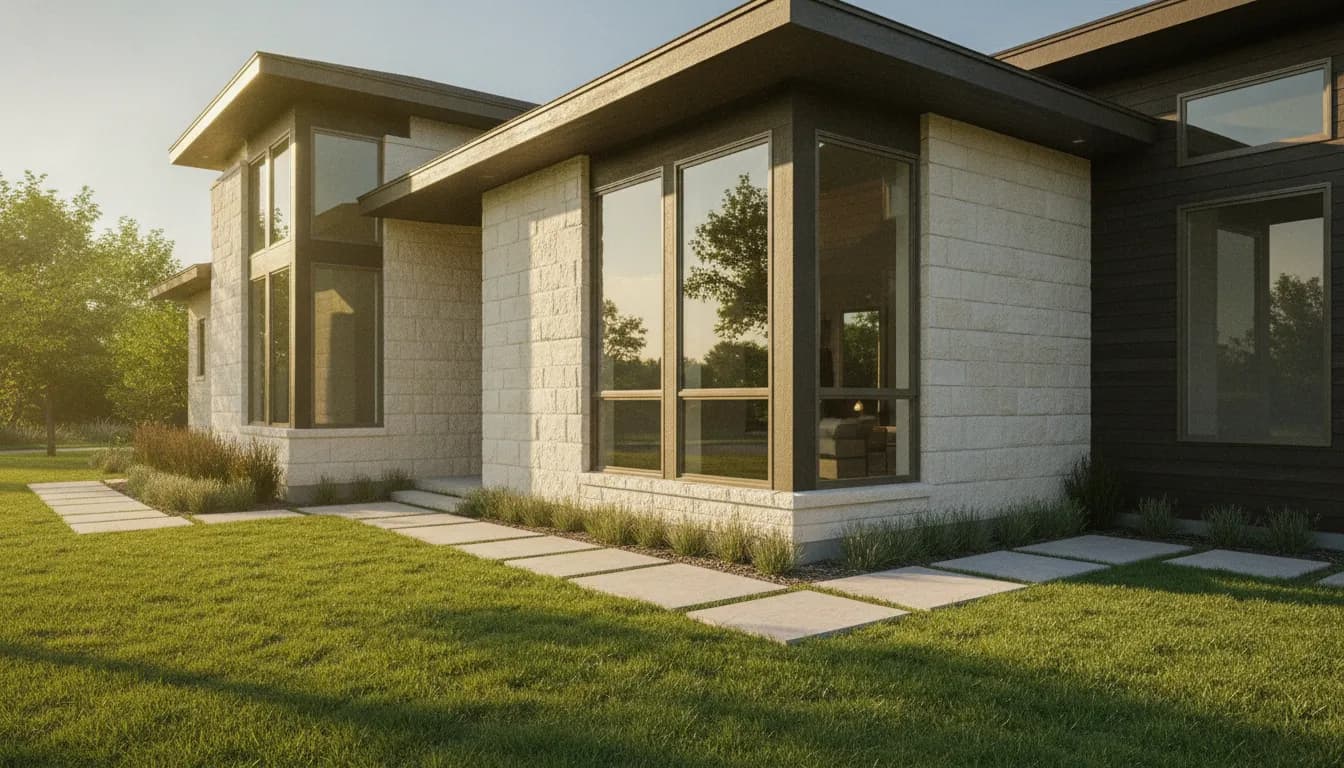
Window U-factor rating explained: it is the whole-window score for how fast heat moves through the unit. A lower U-factor means slower heat transfer and better insulation.
Dallas, Fort Worth, and Rockwall homeowners often see this decimal on a window quote and skip past it. That number is one of the clearest ways to compare heat flow before talking about style or price. This guide shows what the rating covers, how it differs from R-value and SHGC, and where to find it on an NFRC label.
Talk with SunSmart about window performance for your DFW home.
Window U-Factor Rating Explained as a Whole-Window Number
U-factor is the rate of heat transfer through a window, door, or skylight. It is the heat that moves through one square foot of the product in one hour for each degree of temperature difference between inside and outside. A lower number means the product slows that heat flow.
The rating covers the whole window, not just the center of the glass. A certified label can include the glass, frame, spacers, and dividers in the assembled unit. That is why two windows with similar glass can still show different U-factors once the frame is included.
The National Fenestration Rating Council publishes independent ratings and the NFRC label used to compare windows. On that label, U-factor shows how well the product keeps heat from escaping. NFRC lists a typical range of 0.20 to 1.20. A lower number is better at keeping heat in. The same idea works in reverse during a Texas summer: less heat also moves in from outdoors.
U-factor vs. R-value: which number should you use?
U-factor and R-value describe related ideas, but they are not the same label. U-factor is the rate of heat transfer. R-value is resistance to heat flow. For windows, shoppers usually see U-factor on the NFRC label, not R-value.
- Lower U-factor: less heat moves through the window.
- Higher R-value: the material resists heat flow more.
- For windows: compare the certified whole-window U-factor. Do not convert a glass-only R-value and treat it as the same thing.
A good U-factor does not finish the decision. The window can still have the wrong solar heat gain for that side of the house, high air leakage, or a loose installation. Read the full label, then ask how the unit will be sealed into the opening.
SunSmart's guide to Low-E glass covers coatings in more detail. The broader energy-efficient windows guide for Texas shows how the pieces fit a whole-home plan. Product choice and install work also come together on the residential window replacement page.
What U-factor should a Texas homeowner look for?
There is no single U-factor that fits every Texas home. County, window direction, glass area, shade, frame, and the current product rules all change the target. A west-facing family room and a shaded north window can justify different glass even when the U-factor looks similar.
Use this comparison order:
- Start with the whole-window NFRC label. Match style and size when you can. A center-of-glass number is not the certified whole-window number.
- Check the current climate rules. Use the ENERGY STAR climate-zone finder instead of an old chart or a sales claim.
- Read U-factor and SHGC together. U-factor is insulation. SHGC is how much solar heat the product lets in. Texas cooling loads make both matter.
- Ask what creates the rating. Glass layers, coatings, gas fill, spacers, and frame design all change the tested number.
- Include the install. Measurement, alignment, flashing, and perimeter sealing change how the window behaves after it is in the wall.
ENERGY STAR windows, doors, and skylights are made by a partner, tested and certified by NFRC, and rated to meet EPA guidelines for the climate zone. The ENERGY STAR product criteria change by zone, and the criteria can be updated. Confirm the current version before you treat a number as a pass or fail. A very low U-factor is not automatically the best choice if the solar-heat number or the daylight does not fit that opening.
How U-factor works with SHGC and Low-E glass
U-factor answers how readily heat moves through the window. SHGC answers how much solar heat enters when the sun hits the glass. Low-E coatings can change both, depending on the coating and where it sits in the glass package. This section is only the pairing. A full side-by-side of the two ratings belongs in its own comparison, and coating types belong in the Low-E guide linked above.
| Rating | What it describes | Why it matters in DFW |
|---|---|---|
| U-factor | Heat transfer through the whole window. | Helps judge insulation in summer heat and winter cold fronts. |
| SHGC | Solar heat admitted through the product. | Helps manage strong Texas sun and cooling demand. |
| Visible transmittance | How much daylight passes through. | Helps balance light with glare. |
| Air leakage | Air movement through the product in a test. | A separate score from U-factor. Sealing the frame still matters. |
A sunny west opening may need a lower SHGC even when two windows share a similar U-factor. A shaded opening may allow more daylight. The home's layout decides the mix, not one number for every room.
Finding U-factor on a window energy label
On an NFRC label, find the field marked U-Factor. It is a decimal, often something like 0.27 or 0.30. Between similar products, the lower decimal means less measured heat transfer through the complete unit. For a walkthrough of every field on the label, use SunSmart's guide to reading a window energy label. This section stays on the U-factor row.
- Confirm you are reading U-Factor, not SHGC or visible transmittance.
- Compare the same window type and a similar size.
- Write down SHGC next to U-factor, especially on sun-facing walls.
- Check air leakage if drafts are part of the complaint.
- Ask whether the quote is a whole-window rating or only the center of the glass.
These ratings are lab comparisons. They are not a promise of a specific bill drop. Walls, attic insulation, ducts, shade, thermostat settings, and install quality all change comfort and energy use. If a proposal says only that a window is energy efficient, ask for the tested assembly behind that phrase.
How DFW weather and window direction change the choice
DFW homes get long cooling seasons, hard sun, and short cold snaps. Picking the smallest U-factor on a brochure can miss the solar-heat problem that actually makes a room uncomfortable. U-factor limits conductive heat transfer. SHGC describes solar energy through the glass. You need both.
Note which rooms feel hottest or coldest, and when. A west room may cook in the afternoon. A shaded north opening may need a different balance of daylight and solar gain. Large glass areas react more than small windows. Those notes give a clearer starting point than one rating for the whole house.
Questions to ask about a DFW window package
- Is the U-factor a whole-window value from an NFRC label?
- What SHGC is proposed for each sunny opening?
- Does the package use Low-E glass, and where is the coating?
- How do the frame, spacer, gas fill, and window style change the rating?
- Will the proposal list the product series and the ratings?
The NFRC label does not measure your sill, flashing, or the gap around the frame. A useful proposal connects the label to measurement, water management, insulation, and air sealing. It should also say what happens if the opening is out of square or if hidden damage shows up after the old window comes out. That is how you compare the product promise with the work around it.
A simple way to log the numbers
Write one line per opening before you compare quotes. Include the room, the direction it faces, the rough size, the U-factor, the SHGC, and whether the number is whole-window or center-of-glass. A short list keeps a 0.27 on a small shaded window from being treated as equal to a 0.27 on a large west wall.
Bring that list to the consultation. It gives the conversation a starting point that is about your house, not a brochure average. If two companies quote different series, the list also shows whether you are comparing the same opening or only the same price range.
How to compare U-factor quotes
Two quotes can print similar numbers for different products. Before you compare price, confirm window type, style, size, glass package, and frame. A lower U-factor only helps when the test values describe comparable assemblies.
Ask to see the NFRC label or the manufacturer sheet for the exact series in the quote. It should name the product and show U-factor, SHGC, visible transmittance, and air leakage. If you only get a center-of-glass value, ask for the whole-window rating.
- Match the product: same style, size, frame material, and pane count.
- Match the exposure: east, west, south, or shaded.
- Match the goal: winter heat loss, summer solar control, glare, or a balance.
- Match the install scope: measurement, flashing, sealing, insulation, and trim.
Price still matters, but it should not replace the label. Homeowners sizing a project can use the window replacement cost calculator. Local context is on the Dallas window replacement and Rockwall window replacement pages. Those pages do not replace the NFRC numbers.
When the lower number is not the better buy
A lower U-factor can cost more because of an extra pane, a different frame, or a more complex glass package. That premium is easier to judge when you know which problem you are solving. If the room is hot because of afternoon sun, SHGC and shade may matter more than shaving a few hundredths off the U-factor. If the room feels cold during a front, or the glass is large and poorly insulated, the U-factor difference is more likely to be the point.
Also watch for a quote that improves the glass number while changing the frame to a more conductive material. The whole-window test is there so the frame does not disappear from the comparison. Ask for the rating of the exact unit, including the operating style you will actually install. A fixed window and an operating window in the same series can test differently.
What U-factor can and cannot tell you
U-factor is a standard way to compare heat transfer. It does not predict a monthly bill, and it does not guarantee every room will feel the same after replacement. Comfort also depends on the walls, attic, ducts, shade, thermostat, and the condition of the opening.
Install quality matters in older DFW homes. A strong rating can still disappoint if the opening is measured wrong or gaps stay around the frame. Ask how the crew will handle uneven openings, trim, water, and insulation. SunSmart's guide to preparing for window replacement day covers the day-of checklist. For how ENERGY STAR applies in Texas, see ENERGY STAR windows explained.
Use the rating as a filter, then confirm it in writing. A practical close looks like this: the proposal names the series, shows the whole-window U-factor and SHGC for the quoted configuration, and describes the sealing and insulation work around the frame. If any of those three is missing, you do not yet have enough to compare that quote with another one. The decimal on a brochure is only the start of the window U-factor rating explained for a real house.
Request a no-pressure window consultation with SunSmart. Bring the labels or quotes you are comparing and ask which U-factor and SHGC fit each opening.
Frequently Asked Questions
Is a lower window U-factor always better?
A lower U-factor generally means less heat transfer, but it is not the only factor. Also compare SHGC, air leakage, daylight, frame design, window direction, and how the unit will be installed.
What is a good U-factor for replacement windows in DFW?
A good U-factor meets the current rules for your location and fits that opening's sun and design. Use the ENERGY STAR climate-zone finder and compare full NFRC labels. Do not rely on one universal DFW number.
Does U-factor measure air leakage?
No. U-factor measures heat transfer through the window in a standard test. Air leakage is a separate rating on the NFRC label. The gap around the installed frame still needs to be sealed.
Do Low-E windows always have a lower U-factor?
Low-E coatings can improve thermal performance and solar control, but the result depends on the full glass package, frame, spacer, and configuration. Read the certified whole-window U-factor and SHGC instead of assuming every Low-E window matches.
Where do I find a window's U-factor?
Look for the U-Factor field on the NFRC label or the product performance sheet. If a quote lists only a center-of-glass value, ask for the certified whole-window rating before you compare it.