
Guide
ENERGY STAR Windows Explained for Texas Homes
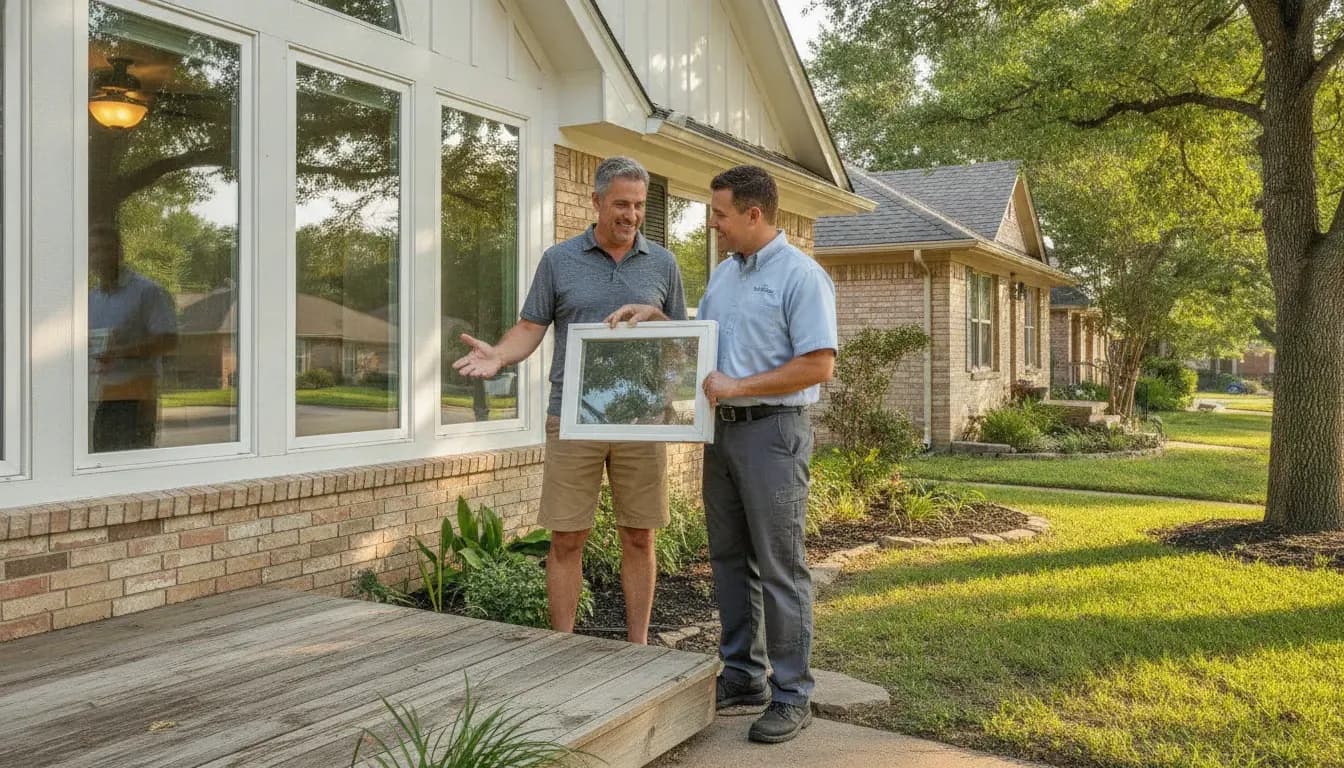
If you searched for "energy star windows explained texas," you are probably trying to make sense of product labels, window quotes, and promises about lower energy use. ENERGY STAR is more than a marketing phrase. It is a certification program with performance criteria that account for where a product will be used. For a homeowner in Rockwall, Dallas, Fort Worth, or elsewhere in DFW, the right starting point is the current ENERGY STAR label for the home's climate zone.
Talk with SunSmart about planning an energy-efficient window upgrade for your Texas home.
What Does ENERGY STAR Certification Mean for Windows?
ENERGY STAR certified windows are products that have been independently certified and verified to meet the program's energy-performance criteria. The label is location-specific, so a product qualified for one climate zone is not automatically the right reference for another. Certification helps shoppers compare tested performance instead of relying only on broad claims such as "energy efficient."
The program is administered by the U.S. Environmental Protection Agency. For residential windows, ENERGY STAR criteria focus on how a window manages heat flow and solar heat gain. The program also uses climate-zone guidance because the best balance of insulation and solar control depends on local conditions.
That distinction matters in Texas. A window can have a strong-looking rating in one category and still be a poor fit if it admits too much solar heat for a hot, bright location. ENERGY STAR is a useful first filter, not a substitute for reviewing the full NFRC label, the opening, the glass package, and the installation plan.
- Certification: The product line has met the applicable ENERGY STAR criteria for a defined location or zone.
- Verification: The stated performance is checked through the program's certification process.
- Climate fit: The correct label and criteria depend on where the window will be installed.
- Product choice: Certified windows are available in multiple frame materials and styles.
- Installation still matters: A certified product cannot compensate for poor measurement, gaps, or inadequate sealing.
How Are ENERGY STAR Window Ratings Set by Climate Zone?
ENERGY STAR climate-zone criteria balance two competing goals: slowing unwanted heat transfer and controlling solar heat entering through the glass. The label and product guidance are therefore tailored to regional conditions. In a hot Texas market, solar control deserves close attention, while insulation remains important during the heating season and whenever cooled air must stay inside.
Climate zones are not simply a ranking from good to bad. They are a way to match a window's performance to the weather patterns where it will serve. ENERGY STAR's consumer guidance tells shoppers to determine their zone, ask a dealer or contractor for products certified for that zone, and confirm the product in the ENERGY STAR Product Finder.
For a Texas homeowner, the practical workflow is:
- Identify the climate-zone guidance that applies to the home.
- Ask whether the specific window line is ENERGY STAR certified for that zone.
- Review the NFRC label for the actual window configuration, not just the brand name.
- Compare U-factor and SHGC with the home's orientation, shading, room use, and comfort concerns.
- Confirm that the installation plan protects the intended performance.
Program criteria can change as ENERGY STAR updates its specifications. That is why a current product listing or label is more reliable than an old screenshot, an outdated sales sheet, or a generic number copied from another climate.
Texas Is in the South Climate Zone: Which Specs Matter?
For Texas homes, use ENERGY STAR's South climate-zone guidance as the starting point, then confirm the current criteria for the exact product. Lower SHGC is especially important in a hot, sunny climate because it limits solar heat entering the room. U-factor also matters because it describes resistance to non-solar heat flow.
U-factor measures how readily heat passes through the complete window. A lower U-factor generally indicates better insulating performance. While homeowners often associate insulation with winter, it also helps reduce unwanted heat flow into an air-conditioned home.
Solar Heat Gain Coefficient, or SHGC, describes how much solar heat the window allows indoors. A lower SHGC generally blocks more solar heat. That can be important for west- and south-facing rooms, large glass areas, rooms with limited shade, and homes that feel hottest near their windows.
Some ENERGY STAR South-zone guidance uses an SHGC threshold around 0.23 or lower, but homeowners should not treat that figure as a universal pass or fail rule for every product. Product type, program version, label date, and current ENERGY STAR criteria all matter. Use the current certification record and NFRC label for the window being quoted.
Glass is only one part of the decision. Frame material, spacer design, operating style, visible transmittance, air leakage, orientation, exterior shading, and installation quality can affect the result. A professional consultation should connect the ratings to the actual room instead of selecting a number in isolation.
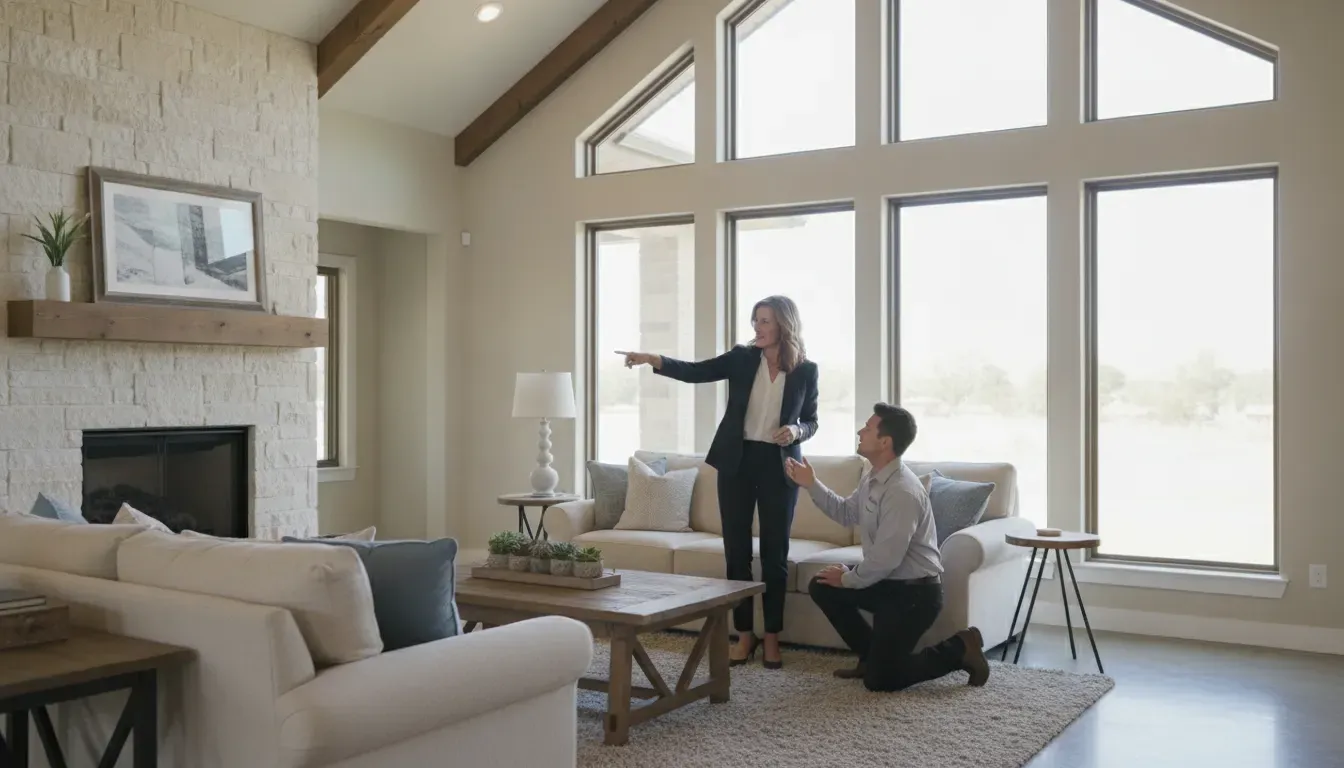
Window ratings make the most sense when they are discussed alongside the home's orientation, shade, and comfort goals.
ENERGY STAR Windows vs. Standard Replacement Windows
ENERGY STAR certification gives a replacement window a documented performance benchmark for its intended climate zone. A standard replacement window may still be a reasonable choice, but the phrase "standard" does not tell you how it performs. Compare the actual ratings, product configuration, and installation scope rather than assuming that one label alone predicts comfort or savings.
| Question | ENERGY STAR certified option | Unverified or standard option |
|---|---|---|
| What does the label communicate? | The product meets applicable ENERGY STAR criteria for a defined climate zone. | The term alone does not establish a comparable certification or climate-zone fit. |
| How should performance be compared? | Review the ENERGY STAR designation together with the current NFRC ratings. | Request the same U-factor, SHGC, and product details before comparing. |
| What does it say about local fit? | It provides a climate-specific benchmark, subject to the current program rules. | Local suitability must be established from the actual performance data. |
| Does it guarantee lower bills? | No. Results also depend on the home, weather, shading, behavior, and installation. | No. A generic efficiency claim is not a substitute for measured specifications. |
| What should an installer explain? | Why the product is certified for the home and how it will be installed. | Which ratings apply, what is included, and how the proposed product fits the home. |
ENERGY STAR certification should make comparison easier, not end the conversation. Two certified windows can have different U-factor, SHGC, visible transmittance, air leakage, frame, and operating-style characteristics. If one quote lists only a brand and a package name, ask for the actual product data.
SunSmart's Texas energy-efficient windows guide covers the broader relationship among Low-E glass, gas fills, smart glass, and installation. This certification-focused article is narrower: it explains how to use the ENERGY STAR benchmark before moving into a product and installation decision.
How Can You Verify That a Window Is Truly ENERGY STAR Certified?
Verify certification by matching the product line and configuration to current ENERGY STAR resources and the NFRC label. Do not rely only on a contractor's phrase, a logo in a brochure, or a product family name. Ask for the exact window information, check the climate-zone designation, and make sure the paperwork describes the unit being quoted.
Use this checklist when reviewing a quote:
- Look for the current ENERGY STAR label next to the NFRC label when available.
- Confirm that the label or product record applies to the home's climate zone.
- Write down the manufacturer, series, model, operating style, and glass configuration.
- Record the U-factor and SHGC for the exact configuration under consideration.
- Ask the installer to identify the product in the ENERGY STAR Product Finder or other current program resource.
- Check whether the quoted window differs from the sample or display model.
- Ask how the installer will measure, seal, insulate, and finish each opening.
- Keep the product label and performance information with the project records.
If the installer cannot provide the product details, pause before comparing the quote. That does not automatically mean the product is unsuitable, but it means you do not yet have enough information to evaluate the claim responsibly.
For more background on the glass technology that often appears in an efficient window package, read SunSmart's guide to what Low-E glass does for windows. Low-E is a coating technology. ENERGY STAR is a broader certification framework. They are related, but they are not interchangeable terms.
What Does ENERGY STAR Certification Not Tell You?
ENERGY STAR certification is valuable, but it does not answer every question about a replacement project. It does not promise a specific reduction in one home's utility bill, certify the workmanship of a particular installer, or determine whether replacement is the right solution for every opening. Those decisions require a home-specific review.
Certification alone does not tell you:
- Whether the window's size and operating style suit the opening.
- Whether the frame and glass choices fit the home's design and maintenance preferences.
- Whether exterior shade, overhangs, or room orientation change the best selection.
- Whether the existing opening has moisture, structural, or trim conditions that need attention.
- Whether the installation will preserve the performance represented by the product data.
- Whether the overall project is a good fit for the homeowner's timing and goals.
This is where an education-first consultation can add value. A homeowner should leave with a clear explanation of the ratings, the tradeoffs, the installation approach, and the questions that still need answers. A certification logo is a starting point for a better decision, not a reason to skip due diligence.
SunSmart helps DFW homeowners plan window and door upgrades through precision measurement, professional installation, and straightforward guidance. If you are comparing options, bring the product labels and quotes to the conversation so the recommendations can be tied to your home rather than a generic sales pitch.
Frequently Asked Questions
What does the ENERGY STAR label mean on a window?
The label means the window has been independently certified and verified to meet ENERGY STAR energy-performance criteria for a defined climate zone. It is a useful benchmark, but homeowners should still review the complete NFRC ratings, product configuration, and installation plan.
Are ENERGY STAR windows worth it in Texas?
ENERGY STAR windows can be a useful choice in Texas when the product is certified for the applicable climate guidance and fits the home's needs. Look closely at SHGC, U-factor, orientation, shade, frame, glass package, and installation quality instead of treating the logo as a guarantee of a particular result.
What window rating matters most for a Texas home?
SHGC deserves close attention in a hot, sunny Texas climate because it indicates how much solar heat enters through the window. U-factor also matters for controlling heat flow. The best choice depends on the room, window orientation, shading, glass, frame, and current ENERGY STAR criteria.
How do I know if a window is ENERGY STAR certified?
Ask for the exact product and configuration, check the current ENERGY STAR climate-zone designation, and compare it with the NFRC label and product information. A contractor should be able to explain how the quoted product meets the applicable criteria and where to verify it.
Does ENERGY STAR certification guarantee lower energy bills?
No. Certification indicates that the product meets a defined performance benchmark. Actual comfort and energy use also depend on the home's construction, weather, shading, window orientation, HVAC system, homeowner behavior, and installation quality.