
Guide
Energy Efficient Windows Texas: A Homeowner Guide
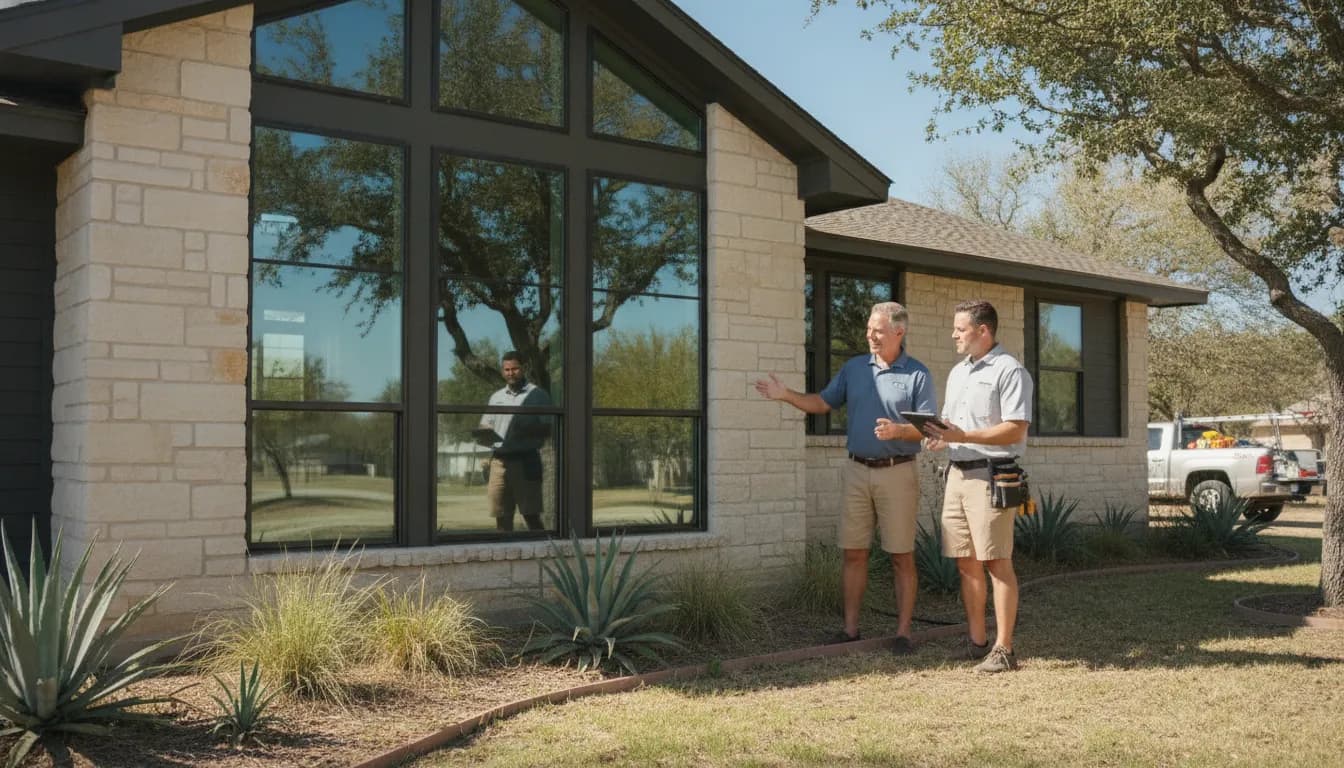
Texas homeowners often notice window problems as rooms that feel hotter in the afternoon, glare near sun-facing glass, or cooling that seems to run constantly. The phrase "energy efficient windows texas" usually reflects a practical question: which combination of glass, frame, ratings, and installation best fits the home? Solar heat gain, glass orientation, frame construction, air leakage, and installation quality all shape how a window performs.
Talk with SunSmart about window options for your Texas home
In North Texas, a window has to manage long periods of cooling demand while still providing daylight, ventilation, privacy, and a clear view. Low-E coatings, insulated glass, argon fills, and climate-appropriate ratings can each contribute to better performance. Smart glass may add active control in selected applications. However, no single feature guarantees comfort or a particular energy result.
This guide explains how the major technologies work, how to read performance ratings, and which questions can help you compare a complete window rather than a sales claim. It is written for homeowners in Rockwall, Dallas, Fort Worth, and the wider DFW area who want a practical, education-first way to plan a replacement project.
Energy Efficient Windows Texas Homeowners Can Compare for DFW Heat
Texas window selection starts with the conditions around each opening. A west-facing window may receive intense afternoon sun, while a shaded north-facing opening may have different priorities. A large living-room opening may need careful glare and heat control, while a bedroom may place more emphasis on insulation, privacy, and quiet operation. The same specification is not automatically right for every room.
Begin by identifying the comfort problem. Is the room too hot near the glass? Does direct sun create glare? Do you feel a draft around the frame? Does condensation appear on the interior surface? Are the windows difficult to open, or are seals visibly damaged? These observations help connect a product recommendation to the home's actual needs.
Start with orientation and shading
Window orientation changes how sunlight reaches the glass. East-facing windows receive lower morning sun. West-facing windows can receive strong afternoon exposure when outdoor temperatures are already elevated. South-facing windows may have substantial seasonal exposure, while overhangs, trees, neighboring structures, and exterior shades can reduce direct sunlight.
Window size and room use matter as well. A home office may need a balance between daylight and screen glare. A kitchen may benefit from useful natural light without excessive afternoon heat. A bedroom may call for privacy and consistent comfort. Discussing these details before choosing a product helps avoid treating every opening as if it has the same performance target.
Evaluate the complete opening
Energy performance depends on more than the glass. The frame, sash, seals, spacer, drainage paths, and installation details all contribute to the finished assembly. Air leakage around an opening can undermine the comfort benefits expected from a well-rated product. Existing moisture damage, an opening that is out of square, or deteriorated materials may also affect the installation plan.
The practical goal is a window that fits the opening, operates correctly, manages water, and supports the home's thermal envelope. A careful assessment is more useful than choosing a product from a list of features without discussing the room where it will be installed.
Which Window Features Matter Most for Texas Comfort?
High-performance windows combine multiple components. Glass helps manage sunlight and radiant heat. The insulated space between panes supports thermal resistance. The frame and seals influence heat transfer and air movement. Installation connects the manufactured product to the existing wall opening.
Low-E coatings
Low-E means low emissivity. A Low-E coating is a thin layer applied to glass that helps manage radiant heat transfer. Depending on the coating and its location in the insulating glass unit, it can help reflect unwanted solar heat while allowing useful daylight into the room.
Low-E is not a single universal product. Coating design, pane arrangement, visible transmittance, and solar heat gain characteristics all matter. The most suitable glass package depends on the home's exposure and the homeowner's preference for daylight, glare control, and appearance. Read SunSmart's explanation of Low-E glass for a closer look at the component. Homeowners comparing frame choices can also review the vinyl window guide for DFW homes.
Double-pane glass and argon fills
Double-pane glass uses two panes separated by an insulating space. The space reduces direct heat transfer compared with a single pane. It may be filled with argon, an inert gas used in insulated glass units to support insulation between the panes.
Argon is one part of a sealed glass unit. It should not be treated as a stand-alone guarantee of performance. Ask whether the quoted specification includes the exact glass package, frame, and operating style being considered. For a basic comparison of construction types, see the double-pane and single-pane window guide.
Frames, seals, and spacers
Frame material affects thermal behavior, durability, maintenance, and the way the window fits the home. Vinyl is one frame option used in residential replacement projects, and SunSmart's offerings include vinyl windows selected for Texas conditions. The right decision still depends on the complete unit, the opening, the home's design, and the homeowner's priorities.
Seals help limit air and moisture movement. Spacers separate the panes at the edge of the insulated glass unit. Ask how the frame, seals, spacer, and drainage features work together. A glass feature cannot correct a poorly sealed perimeter or an installation that leaves gaps around the opening.
What Energy Efficient Windows Texas Homes Need for Summer Comfort
Performance labels make it easier to compare windows when you read the ratings together. Each rating answers a different question, so one number should not be used as a substitute for the entire specification.
| Rating or feature | What it describes | Question to ask |
|---|---|---|
| U-factor | How readily heat moves through the window assembly. | What is the whole-window U-factor for the exact configuration? |
| Solar Heat Gain Coefficient | How much solar heat the window admits. | Does the SHGC fit this room's orientation, shading, and use? |
| Visible transmittance | How much visible light passes through the glazing. | Will the glass provide the daylight level and glare control the room needs? |
| Air leakage | How much air can pass through the window assembly under test conditions. | How will the finished opening be measured, sealed, and checked? |
| Condensation resistance | How the window handles moisture under test conditions. | How do indoor humidity and ventilation affect this opening? |
U-factor and insulation
U-factor describes heat flow through the window. A lower U-factor generally indicates greater resistance to heat transfer. Compare whole-window values, not only center-of-glass numbers, because the frame, edge construction, sash, and spacer affect the finished assembly.
SHGC and Texas sun
Solar Heat Gain Coefficient, or SHGC, describes the fraction of incident solar radiation admitted through the window. It is especially important in a cooling-dominated climate. A room with strong west-facing exposure may need a different solar-control balance than a shaded room.
A lower SHGC is not automatically the best answer for every space. Consider the amount of glass, exterior shade, room use, desired daylight, and the home's orientation. The useful question is whether the rating supports the comfort goal for that particular opening.
Visible transmittance and daylight
Visible transmittance describes how much visible light passes through the glass. It helps homeowners think about the tradeoff between daylight and glare. A glass package that reduces solar heat may also change the appearance and brightness of a room. Compare visible transmittance with SHGC rather than evaluating either rating alone.
Air leakage and condensation resistance
Air leakage ratings describe the window under test conditions, while installation determines how the product connects to the wall. Ask how the installer will address perimeter gaps, sealants, flashing, and the existing opening. Condensation resistance can support product comparisons, but it is not a promise that condensation will never occur. Indoor humidity, ventilation, outdoor weather, and room temperature also matter.
What Does ENERGY STAR Certification Tell Texas Homeowners?
ENERGY STAR certification gives homeowners a consistent screening tool for comparing eligible window products. The program identifies products that meet defined efficiency requirements for applicable climate zones. Its criteria are useful because they focus attention on documented product performance rather than a single promotional feature.
Review the current ENERGY STAR residential windows, doors, and skylights criteria when researching the program. Confirm that the exact configuration under consideration is covered. A manufacturer's catalog may include multiple frame materials, glass packages, sizes, and operating styles, and the certification status may not be identical across every combination.
Use the label as a starting point
- Confirm the product and configuration being proposed.
- Compare U-factor, SHGC, and visible transmittance together.
- Consider air leakage and condensation resistance when they are relevant to the project.
- Match the ratings to room orientation, shading, daylight needs, and comfort concerns.
- Ask how the product will be measured, sealed, flashed, and tested after installation.
Certification does not replace project-specific planning. It helps narrow the field to products that meet recognized criteria. The final decision should also account for the condition of the existing opening, the home's appearance, operation, maintenance expectations, and the installation plan.
Is Smart Glass Practical for Texas Homes?
Smart glass, also called dynamic glazing, can change its solar-optical properties instead of remaining equally clear all day. Electrochromic glazing responds to an electrical input. Thermochromic glazing responds to the temperature of the glass. These systems can offer active control over light and solar heat in applications where changing conditions create a persistent comfort or glare problem.
The UC Davis fenestration research summary describes dynamic glazing technologies and their potential applications. Smart glass should be evaluated as a complete system, including controls, power, installation, operation, and maintenance.
Where dynamic glazing may help
A large west-facing opening, a room with severe afternoon glare, or a space where preserving the exterior view is important may justify a closer look at dynamic glazing. Active tinting can provide a type of control that fixed tint, blinds, or curtains cannot provide in the same way.
However, smart glass is not automatically the best fit for every Texas home. It can add system complexity. Homeowners should ask how the glass is controlled, what happens during a power interruption, how settings are maintained, and whether the installer has experience with the selected product. The system also needs to fit the homeowner's daily habits and long-term maintenance expectations.
Compare the system with simpler options
For a smaller opening or a home where simplicity is the priority. A well-selected conventional window may address heat gain, insulation, glare, and air leakage without electronically controlled glass. The right comparison is not ordinary glass versus the most advanced technology. It is the complete solution that best fits the room, exposure, comfort goal, budget, and maintenance preference.
How Should You Compare a Window Proposal?
Once you understand the ratings and technologies, use a repeatable process to compare proposals. This keeps the discussion focused on documented details and the conditions of your home.
- Describe the room problem. Note afternoon heat, glare, drafts, condensation, difficult operation, or visible seal failure.
- Map the exposure. Identify the opening's direction, exterior shade, approximate size, and nearby conditions that affect sunlight.
- Request the complete specification. Ask for the frame, glass package, pane count, Low-E configuration, gas fill, and operating style.
- Compare the whole-window ratings. Review U-factor, SHGC, visible transmittance, air leakage, and condensation resistance together.
- Check certification details. Confirm whether the exact configuration is covered by the efficiency program or other documented standard being discussed.
- Ask about the opening. Discuss measurements, existing materials, moisture, flashing, insulation, sealants, drainage, and what happens if the opening is out of square.
- Clarify operation and care. Review how the window opens, locks, vents, drains, and will be maintained over time.
- Compare the installation plan. A window recommendation is incomplete until the plan explains how the product will be connected to the home and checked after installation.
This process makes it easier to compare a premium-sounding feature with the actual needs of the home. It also creates a useful record of why one glass package, frame, or operating style was recommended for one room rather than another.
What Does Professional Installation Add to Window Efficiency?
Professional installation connects a manufactured window to the conditions of the existing opening. Measurements determine fit. The installation sequence affects how the opening is sealed and protected. Final adjustments affect operation, locking, and the homeowner's experience after the project is complete.
Before work begins, ask how the installer will inspect the opening and identify unexpected conditions. The plan may need to address deteriorated materials, moisture, an uneven sill, or a wall transition. Ask how flashing, sealant, insulation, and perimeter sealing will be handled. These details matter because a product's published rating describes a tested unit, while the finished home contains the unit plus its connection to the wall.
Questions to ask during the consultation
- How will each opening be measured?
- What existing conditions could change the installation approach?
- How will the perimeter be sealed against air and moisture movement?
- How will the window be checked for operation and fit after installation?
- What documentation will identify the exact glass and frame configuration?
- How should the homeowner care for and operate the installed window?
A careful installation discussion does not require a homeowner to memorize every technical term. It gives the homeowner a clear way to connect the product recommendation to the opening, the room, and the intended comfort improvement.
When Should a Texas Homeowner Consider Window Replacement?
Replacement may be worth evaluating when windows create recurring comfort, operation, or maintenance problems. Common signals include persistent drafts, rooms that are difficult to keep comfortable, damaged seals. Panes that are difficult to operate, visible deterioration, or glass that allows excessive glare for the way the room is used.
These signs do not prove that replacement is the only solution. Shading, weatherstripping, hardware repair, ventilation, and humidity management may address some issues. A room-by-room assessment can help distinguish a product problem from an installation, shading, or indoor-environment problem.
SunSmart's guide to when to replace windows in Fort Worth provides additional planning questions for local homeowners. For homeowners comparing project scope and replacement considerations, the replacement-window planning guide can help organize the conversation without relying on an unsourced price promise. If an opening has an unusual size or shape, SunSmart's custom-window guide offers another planning reference.
The goal is not to replace windows because one technology sounds impressive. The goal is to understand the condition of the existing openings, identify the comfort or performance issue, and select a complete solution that fits the home.
Frequently Asked Questions
What are the best energy efficient windows for Texas homes?
The best choice depends on the room, orientation, shade, comfort problem, frame, glass package, ratings, and installation plan. Many Texas homeowners compare Low-E coatings, insulated glass, argon fills, whole-window U-factor, SHGC, visible transmittance, and air leakage. A room-by-room assessment is more reliable than choosing one feature as the universal answer.
Is Low-E glass worth considering in the Texas heat?
Low-E glass is worth considering because its coating can help manage radiant heat transfer and solar heat while allowing useful daylight. The result depends on the coating design, glass package, room exposure, and installation. Compare the complete window specification rather than treating Low-E as a guarantee of a specific comfort or energy outcome.
Does argon gas make a window more energy efficient?
Argon fills the insulating space between panes in a sealed insulated glass unit. It can support insulation, but it is only one part of the window system. Ask about the full glass package, frame, seals, spacer, whole-window ratings, and installation details before deciding whether a proposed unit fits the home.
Should Texas homeowners choose smart glass?
Smart glass may be useful for large or highly exposed openings where changing glare and solar heat are persistent concerns and active control is valuable. It adds controls and system complexity, so homeowners should compare power, operation, maintenance, and installation requirements with a conventional window that uses appropriate glazing and shading.
Which window rating matters most in a Texas climate?
No single rating answers every selection question. SHGC helps describe solar heat admission, U-factor helps describe heat transfer, and visible transmittance helps describe daylight. Air leakage and condensation resistance add more context. Compare the ratings together and match them to each opening's orientation, shading, room use, and installation plan.