
Guide
A Homeowner Checklist: Garden Windows Kitchen
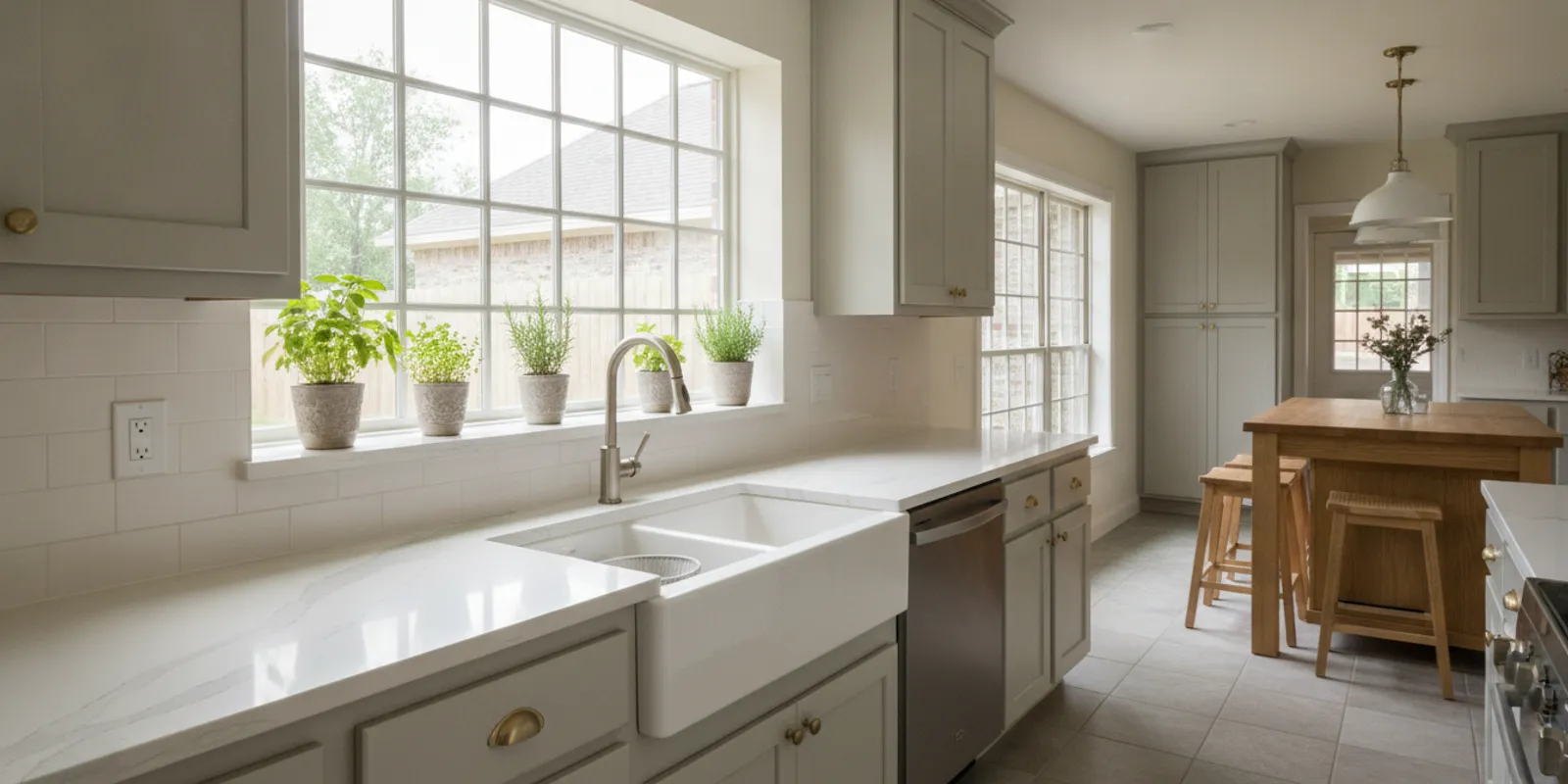
A garden window can bring light, a little display space, and a closer view of the outdoors to a kitchen. But garden windows kitchen plans need more thought than choosing a style from a photo: the window projects beyond the wall, so fit, exposure, maintenance, and installation all matter. This checklist helps DFW homeowners decide whether the idea suits a particular room before comparing replacement options.
Talk through your kitchen window options
What is a garden window, and how does it differ from a regular window?
A garden window is a projecting window assembly, often installed above a kitchen sink. Unlike a flat window that stays within the wall plane, its glass enclosure extends outward and may include a bottom shelf and sloped top. Side panels may be fixed or operable, depending on the product. The added ledge gives homeowners a place for small plants or decorative items and changes how the window relates to the room.
That projection is the defining feature, not a guarantee of a particular amount of daylight, ventilation, or usable space. Those outcomes depend on the opening, orientation, nearby shade, glass, product design, and installation. Look at the specific proposed unit and the room together. SunSmart's residential window replacement information is a useful starting point if you are weighing a new unit rather than a cosmetic change.
Some homeowners use the shelf for herbs, but it is still a window ledge exposed to light, temperature changes, and cleaning needs. It is not automatically a greenhouse. A New Mexico State University publication describes creating an indoor garden by converting or expanding a window area; that is a related idea, but it does not establish that every garden window will suit every plant or kitchen. See NMSU's guide to buying or remodeling a small home for that limited example.
Are garden windows for kitchens a good fit in DFW homes?
They may be worth considering when a homeowner wants a projecting focal point over a sink or counter and the exterior wall can accommodate it. In Rockwall, Dallas, Fort Worth, and elsewhere in DFW, compare the room's actual exposure rather than assuming the same window will behave the same way in every home. A west-facing opening, a shaded wall, and a kitchen sheltered by a porch can have very different light and heat conditions.
Think about your priority. If you want a ledge for a few small pots, the projecting design may help. If you mainly want an unobstructed view, a flat picture window could be simpler. If you need airflow, confirm whether the proposed side sections open, how they operate, and whether that arrangement suits the opening. For a broader comparison of glazing and other features, see this guide to window choices for Texas heat.
Also consider the architecture and the exterior. The projection changes the home's outside appearance and needs a compatible fit with the wall, trim, and surrounding features. A distinctive shape or opening may call for a made-to-fit solution; SunSmart's custom window options can help frame that discussion. Do not assume that a standard unit will fit an existing opening just because the rough dimensions seem close.
What should you check before choosing a kitchen garden window?
Use this checklist to turn a general preference into questions that can be answered for your home:
- Opening and wall: Where is the existing window, and what is around it inside and outside? Ask how the proposed unit will fit the opening and whether the surrounding trim or finish needs attention.
- Projection: How far will the assembly extend, and what will be below and beside it outdoors? Consider walkways, landscaping, exterior features, and any place where the projection could be in the way.
- Room use: Will the window sit above a sink, counter, or work area? Think about reach, faucet clearance, splashes, and how easily you can clean the glass and shelf.
- Light and exposure: Note the direction the window faces and any nearby shade. Decide whether the goal is a brighter feeling, a place for plants, or simply a different view, then discuss what the selected glass and design can reasonably provide.
- Ventilation: Identify whether opening sections are important. Confirm which parts operate, how to reach their controls, and how the design affects use of the existing opening.
- Care: Consider fingerprints, dust, water marks, plant debris, and access to outside glass. A projecting assembly can have more surfaces to clean than a simple flat window.
- Interior and exterior finish: Ask how the shelf, side panels, trim, and exterior transition will look when complete. Confirm what is included in the installation scope.
- Performance priorities: Discuss glass and frame choices in relation to the room's exposure and comfort concerns. SunSmart's overview of Low-E glass and its purpose can help you prepare, but the exact product specification matters.
- Measurement and installation: Ask who will verify dimensions, how the fit is planned, and what preparation is needed inside the kitchen. A window that projects outward still depends on accurate planning where it meets the wall.
If you are comparing frame materials, consider the relevant upkeep and appearance questions alongside the design. SunSmart provides information about vinyl window options, but the best choice depends on the full product and installation details, not on material name alone.
How does a garden window compare with other kitchen window options?
Compare the job each type is meant to do. The table is a decision aid, not a ranking: actual dimensions, operation, glass, and product availability vary. Confirm the specifications of each option you are considering.
| Option | What it changes | Questions to ask | May suit a homeowner who wants |
|---|---|---|---|
| Garden window | Projects outward and can create a glass-sided ledge | How far does it project? Which panels open? How will it be cleaned and finished? | A distinct focal point and a small display or plant area |
| Picture window | Provides a fixed, generally flat glazed area | Is ventilation needed elsewhere? What dimensions and glass are appropriate? | A view and daylight without an operable sash in that unit |
| Casement or awning window | Uses an operable sash that opens outward in a specified direction | Will the sash clear nearby features? Is the handle reachable? | An operable window, subject to product configuration |
| Horizontal slider | Uses a sash that moves horizontally within the frame | How much opening area is available? What are the cleaning and operation needs? | A familiar flat-window layout with a sliding operation |
Each alternative has tradeoffs, and products differ. For a picture-window project, review this picture window replacement guide. If operation matters, compare styles such as casement windows for Texas homes or learn how double-pane and single-pane windows differ. These references can help you shape questions; they cannot replace checking the measurements and features of an actual proposal.
How do glass, sunlight, and plants affect the decision?
A shelf with plants may sound appealing, but plan for the conditions in that specific location. Observe the kitchen at different times of day. Does direct sun reach the existing opening? Is the window shaded by a roof overhang or nearby trees? Will plants sit close to hot or cold glass? Think about whether the shelf will be used for plants year-round or only occasionally.
Choose plants based on the light and care you can provide, not on the window label. Avoid placing items where they obstruct an operable panel, interfere with a handle, or make cleaning difficult. Water and soil can leave marks or spills, so use containers that are easy to move and protect the shelf. Keep the area practical for the kitchen's everyday work.
For comfort, discuss the window's glass and complete assembly, not just whether it is called a garden window. Glass selection, frame details, orientation, shading, and installation all contribute to how a window performs. The ENERGY STAR windows guide for Texas homes provides background on the program and efficiency considerations. Ask what ratings apply to the exact product being proposed and how those relate to your priorities.
What should you expect from planning and installation?
Start with a review of the existing opening and the intended design. A projecting unit has to meet the wall cleanly and align with the interior and exterior. A qualified project discussion should establish what is being measured, which product is proposed, how it will operate, and what finish work is included. Avoid making a decision from a photo or nominal size alone.
Ask how the installer will address the transition between the window and the home, including sealing and insulation details. Confirm how the work area will be protected, what needs to be moved from the counter or sink, and how the finished area will be checked. The point is not to prescribe a one-size-fits-all method; details depend on the opening and product. SunSmart's window replacement preparation guide offers a practical starting list for homeowners.
Timing depends on the project scope and conditions, so ask for expectations specific to your opening rather than assuming a standard duration. You can review general questions in this guide to window replacement timing. Before approving work, make sure you understand the product, dimensions, operation, finishing details, and any responsibilities for preparing the room.
How can you compare proposals without overcommitting?
Request comparable details when reviewing options. A useful proposal should make it possible to see what product and configuration are included, how the opening was measured, what installation and finish work are covered, and what remains outside the scope. If two options differ, identify whether the difference is in the projection, operable sections, glass, frame, measurements, or installation details.
Do not treat a broad price range found online as a quote for your kitchen. Opening size, product configuration, existing conditions, and installation scope affect the work. SunSmart's replacement window cost guide can help you understand cost factors to ask about, while a project-specific review is needed for a particular home. Ask for a clear explanation of assumptions before comparing totals.
If you are deciding whether to update one opening or several, consider the home's priorities and project plan rather than assuming everything must be done at once. This overview of replacing windows all at once or in phases provides questions for thinking through scope. For SunSmart's company background and approach, see about SunSmart Windows.
What should you ask before selecting a garden window?
- Does the proposed unit fit the measured opening and the style of this kitchen?
- How far will it project, and what exterior conditions should be checked?
- Which panels open, and how will I reach and clean them?
- What glass and frame configuration is being proposed, and why does it fit this room?
- How will the inside shelf, trim, and exterior transition be completed?
- What preparation should I make, and what is included in the written project scope?
Clear answers help you compare a garden window with a flat replacement or another operable style based on your actual priorities. SunSmart serves homeowners in Rockwall, Dallas, Fort Worth, and the wider DFW area with window and door replacement guidance. You can review its window and door replacement services as you prepare for a conversation.
Request a no-pressure window consultation
Frequently asked questions
Can a garden window be installed above a kitchen sink?
It may be an option, but suitability depends on the opening, available wall space, projection, counter and faucet clearance, and the proposed product. Have the opening measured and discuss reach, cleaning, and finish details before selecting a design.
Do garden windows open?
Some designs include operable side sections, while other parts may be fixed. Confirm exactly which panels move, their direction of operation, how the handles are reached, and how the configuration meets your ventilation needs.
Are garden windows good for growing herbs?
They can provide a ledge for small pots, but growing conditions depend on the amount and direction of light, indoor temperature, plant choice, and care. Observe the specific kitchen and keep plants and containers clear of operating parts and easy-to-clean surfaces.
Are garden windows energy efficient?
That depends on the specific product, glass, frame, installation, and room conditions. Ask for the exact ratings and product information for the proposed unit, and compare those details with the needs of your home rather than relying on the style name alone.
What is the main downside of a garden window?
The outward projection and additional surfaces can require more planning and cleaning than a flat window. It may also be unsuitable where exterior clearance, the wall, or kitchen layout does not support the design. Compare alternatives before deciding.
A garden window can be a thoughtful kitchen feature when the projection, exposure, fit, and maintenance suit the home. Compare the real product and installation details with your priorities, then choose the option that makes sense for your room.