
Guide
How Long Does Window Replacement Take in Texas?
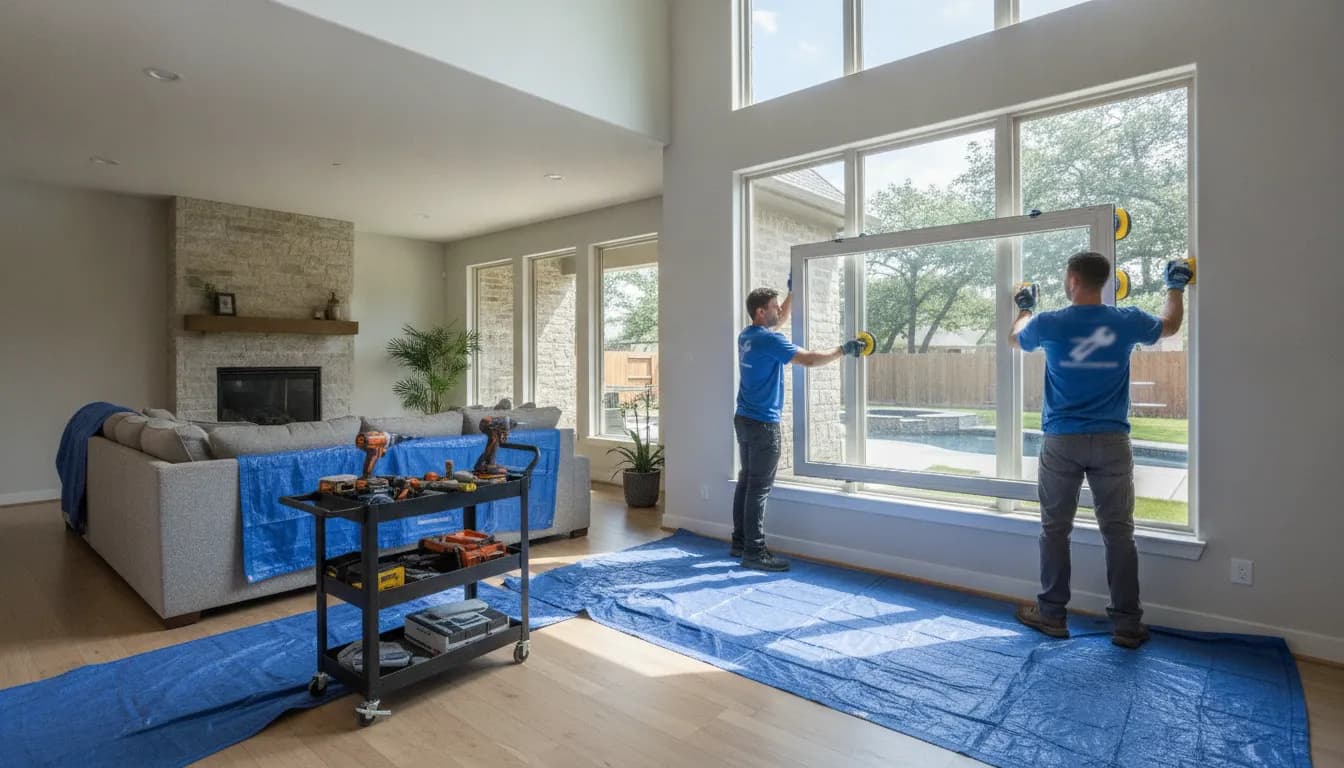
Replacing windows is easier to plan when you separate the consultation, product ordering, and work at your home. Each stage has its own timing, and the installation schedule depends on the number of windows, the products selected, and conditions at the property.
For most Texas residential projects, how long does window replacement take? A single-window project may be completed the same day, while most whole-home replacements take one to two days. SunSmart also describes the initial in-home consultation as a 90-minute educational assessment. Product-dependent ordering and delivery time must be confirmed for each project rather than assumed.
That distinction matters for homeowners in Rockwall, Dallas, Fort Worth, and across DFW. A clear plan should explain what happens before installation, what can affect the schedule, and how the crew protects your home and completes cleanup. Starting with a residential replacement consultation helps connect those expectations to your home's layout and project scope.
Request a no-pressure consultation with SunSmart to plan your window replacement timeline.
How Long Does Window Replacement Take in Texas?
For a Texas homeowner, the on-site replacement itself may take the same day for one window or about one to two days for a whole-home project. That is separate from the consultation and the time needed for the selected products to be prepared and scheduled.
SunSmart describes the initial in-home consultation as a 90-minute educational assessment. During that visit, the project can be discussed in detail, including the home's existing windows, priorities, product choices, measurements, and installation considerations. The consultation is a planning appointment, not a promise that installation will begin that day.
After product selections and measurements are confirmed, the ordering and scheduling stage depends on the specific products and project. There is no universal SunSmart ordering or delivery window to apply to every Texas replacement project. Product specifications, custom sizing, availability, and the home's requirements can all affect when installation can be placed on the calendar. A project plan should therefore distinguish the time before installation from the time the crew spends at the home.
Typical window replacement planning stages
| Project stage. | Planning expectation. | What changes it. |
|---|---|---|
| In-home consultation. | About 90 minutes. | Questions, measurements, product discussion, and site conditions. |
| Product and scheduling. | Product-dependent; confirm the project schedule. | Selected materials, custom sizing, availability, and project details. |
| Single-window installation. | May be completed the same day. | Window type, access, existing conditions, and scope of work. |
| Whole-home installation. | Often one to two days. | Window count, layout, access, weather, and site conditions. |
For whole-home and larger residential projects, SunSmart's planning guidance uses one to two days as a practical reference, depending on the number of windows and site conditions. That range is not a guaranteed completion date. A smaller project may be finished sooner, while access challenges or conditions discovered during preparation may change the pace. The installation service includes professional work and full cleanup, so the useful question is not only how fast the windows are replaced, but whether the project is planned carefully and completed with the home protected.
How Long Does a Window Replacement Appointment Take?
For homeowners in Rockwall, Dallas, Fort Worth, and the wider DFW area, SunSmart describes the in-home consultation as a 90-minute educational assessment. This is the planning appointment, not the time required to manufacture, deliver, or install replacement windows.
During the visit, set aside enough time to discuss your goals, review the existing windows, consider suitable product options, and talk through the project scope. Having a list of rooms, window concerns, and questions ready can make the conversation more useful. If you are unsure whether you need a specific style or feature, bring that question forward rather than feeling expected to make an immediate decision.
The consultation also gives both sides an opportunity to clarify what happens next. Product selection, measurements, ordering, and scheduling are separate steps, and the timing between the appointment and installation depends on the specific project and products selected. There is no single lead-time number that accurately applies to every home.
Quick question: Is the 90-minute appointment the installation time?
No. The 90-minute appointment is an educational in-home assessment. Installation is scheduled separately after project details are confirmed. For context, SunSmart's residential replacement page explains the broader installation process, while the on-site work itself varies with the number of windows and site conditions.
That distinction helps you plan without confusing a consultation with a completion promise. A single-window project may be completed the same day as installation, while whole-home work commonly takes one to two days according to SunSmart's project guidance. Those are installation expectations, not appointment lengths, and your confirmed schedule should reflect your home's access, window count, and project requirements.
What Is the Lead Time From Quote to Installation?
The time between a quote and installation depends on the product and the project, so it cannot be reduced to one standard SunSmart number. A replacement window is selected, measured, ordered, reviewed, and scheduled for installation. Each step needs to fit the home, the scope of work, and the homeowner's priorities.
Measurements and product choices shape the schedule
Accurate measurements come before a final order. The team needs to understand each opening, identify the appropriate replacement approach, and account for existing conditions. Custom sizing, unusual openings, access concerns, or additional preparation can require more planning than a straightforward replacement.
Product selection also matters. Frame material, glass configuration, operating style, color, and other specifications must be confirmed before the order is placed. If you are still comparing options, resources on replacement window cost factors can help you understand how choices affect the overall project. The goal is not to rush the order. It is to make sure the selected windows are appropriate for the home and the intended performance.
Scheduling should be confirmed for your specific project
Because product specifications, custom sizing, availability, and project conditions vary, the most useful schedule is the one confirmed for your selected products and project, rather than a generic estimate found online. Ask which items have been finalized, whether measurements require any follow-up, when the products are expected to be ready, and what needs to happen before an installation date can be reserved.
It is also worth asking how site conditions or changes to the scope could affect the plan. Window count, opening condition, access, and the type of installation can influence the work. A precise conversation at the quote stage helps prevent avoidable surprises later.
For homeowners weighing the project beyond scheduling, this guide to Dallas window replacement benefits provides useful context on comfort, efficiency, and home value. Once the products and measurements are confirmed, SunSmart can explain the next scheduling step for a home in Rockwall, Dallas, Fort Worth, or the wider DFW area.
What Changes the Window Replacement Timeline?
Two homes can schedule similar window projects and still need different amounts of installation time. The main variables are the number of windows, the installation method, access to each opening, the home's layout, weather, and what the crew finds once work begins. Understanding these factors gives homeowners in Rockwall, Dallas, Fort Worth, and throughout DFW a more useful planning framework than relying on a single universal timeline.
Window count and installation method
A larger project naturally involves more openings, but the work does not always move at the same pace for every window. Pella describes a pocket, or insert, replacement as a method that leaves the existing frame in place. Its published example says a pocket replacement typically takes about one hour per window. A full-frame replacement removes the entire window frame and can take four to six hours per window, depending on conditions. These are general examples from Pella, not a SunSmart promise or a guaranteed schedule. Read Pella's explanation of installation methods and timing for the distinction.
The right method depends on the existing frame, the desired result, and the condition of the opening. A full-frame approach may involve more removal and preparation, while an insert approach may involve fewer steps. A professional assessment can clarify which method fits each opening rather than assuming every window in the home should follow the same process.
Access, layout, and site conditions.
Windows that are easy to reach from a clear interior and exterior work area are generally simpler to stage than openings blocked by furniture, landscaping, tight side yards, steep grades, or multiple stories. Home layout also affects how installers move materials and protect finished surfaces. Pella notes that installation timing varies with home layout, installation type, and weather. Rain, high winds, extreme heat, or other unsafe conditions may require schedule adjustments so the work can be completed responsibly.
Existing site conditions can add preparation as well. Trim, surrounding materials, or concealed damage may need careful attention after the old unit is removed. That is why an estimate of the work should distinguish known project requirements from conditions that can only be confirmed during installation.
For homes dealing with intense DFW summers, selecting energy-efficient windows for Dallas heat is a separate product and performance decision from estimating installation time. Discuss both the window specifications and the home's access conditions during planning, then confirm the expected sequence and schedule before work begins.
What Happens on Window Installation Day?
Installation day is a sequence of careful checks, not simply a matter of taking out an old window and putting in a new one. The exact pace depends on the number of windows, the installation method, access, and site conditions. A professional process should protect your home while confirming that each unit fits, seals, operates, and is finished properly.
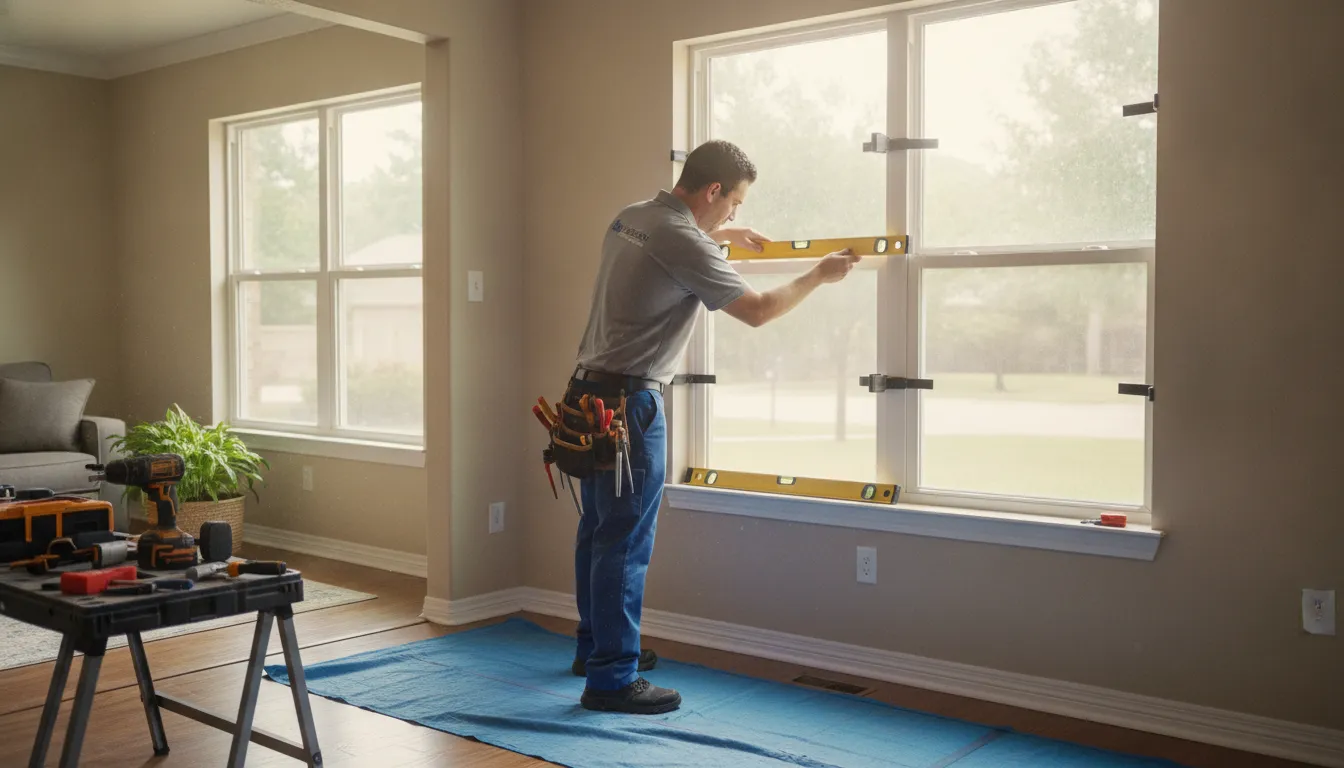
Professional installation includes protecting the work area, setting the replacement window, sealing the opening, and checking operation.
- Protect the work area. Before work begins, installers move belongings away from the window and protect nearby floors and surfaces. This creates a safer path for the crew and helps limit dust or debris in the room. You may want to remove fragile items, curtains, blinds, and décor before the crew arrives.
- Remove the existing unit. Installers carefully remove the interior or exterior trim and stops that hold the existing window in place. The old unit is then removed with care to avoid unnecessary damage to the surrounding opening.
- Inspect and prepare the opening. The rough opening is checked to confirm that the replacement window is correctly sized. The jamb is cleaned, and any damage that could affect the fit is addressed. Depending on the opening, flashing may also be replaced or existing cavities prepared for insulation.
- Dry-fit and level the replacement window. The window is placed in the opening before final fastening so the fit can be evaluated. Installers use shims to level and align the unit, helping the sash and frame operate as intended.
- Seal and secure the unit. Once the position is correct, the window is secured with mechanical fasteners according to the manufacturer's specifications. The rough opening is insulated and sealed with appropriate materials, such as backer rod or low-expansion spray foam. Exterior edges are caulked to help create a weather-resistant connection.
- Reinstall or finish the trim. Existing trim may be reinstalled, or replacement trim may be used where needed. This step gives the opening a finished appearance and covers the transition between the new window and the surrounding wall.
- Test operation and review the result. Each window should open, close, lock, and remain aligned without unnecessary force. The exterior edges should be checked for a complete seal. If energy efficiency is part of your selection, ask how the installed product's features, such as Low-E glass and argon options, support the product's intended performance. ENERGY STAR provides the current reference for qualifying residential windows, doors, and skylights: its Version 7.0 criteria.
- Clean up the work area. The old materials and installation debris should be removed, and the protected areas should be left clean. SunSmart's service model includes full cleanup, so the final walkthrough can focus on operation, finish quality, and any questions about caring for the new windows.
Understanding these steps makes it easier to evaluate a proposed schedule. A careful installation may take longer than a rushed one, but precision at each stage supports comfort, protection, and long-term performance.
How Should You Prepare for Replacement Window Installation?
A little preparation can help the installation stay organized and make it easier to protect your home. Since project timing depends on the number of windows and site conditions, confirm the planned work areas and schedule with your installer before installation day.
- Clear the work areas. Move furniture, decorations, plants, and other belongings away from each window. Create enough room for installers to work safely inside and outside where applicable.
- Protect floors and nearby surfaces. Ask what floor and furniture protection will be used, and identify any especially delicate flooring, wall coverings, or furnishings before work begins.
- Remove or discuss window treatments. Take down curtains, blinds, shades, and hardware if your installer asks you to do so. If you are unsure whether a treatment can remain in place, clarify that before the appointment rather than waiting until the crew arrives.
- Plan for children and pets. Keep children and pets away from active work areas, tools, open window openings, and exterior paths. Decide in advance which rooms can remain accessible during the project.
- Confirm the project details. Ask whether the order reflects the correct window styles, sizes, glass choices, and installation approach. If you are still weighing options, this guide can help you compare single- and double-pane windows.
- Ask schedule questions. Confirm when products are expected, which windows are included, whether weather or site conditions could change the plan, and how schedule updates will be communicated. A project-specific timeline is more useful than a generic lead-time estimate because products, measurements, access, and site conditions vary.
Before work starts, also ask what cleanup is included and how removed materials will be handled. SunSmart's service model includes professional installation and full cleanup, but reviewing the expected final condition gives everyone the same understanding. After installation, walk through the work areas and confirm that the windows operate properly and that the agreed cleanup is complete.
Talk with SunSmart about your window replacement timeline and request a no-pressure consultation.
Frequently Asked Questions
How quickly can a window be replaced?
A single-window project may be completed the same day, depending on the product, measurements, access, and site conditions. Larger projects need more planning, so the practical timeline should be confirmed after the home and project scope are assessed.
How long does it take to take out a window and replace it?
Removal and replacement time varies by window count, installation method, access, and the condition of the opening. Most whole-home residential replacements take one to two days, but that is a planning range rather than a guaranteed schedule for every home.
Do window installers need to come inside?
Yes. Installers generally need interior access to protect the room, remove the existing window, set and seal the replacement, check operation, and complete cleanup. Clear furniture and belongings away from the window before the scheduled work.
Do you have to remove blinds when replacing windows?
Usually, blinds, shades, and curtains should be removed or moved out of the work area before installation. This gives the crew safe access and helps protect the window treatments from dust or accidental damage. Ask what must be removed when confirming your project plan.
Plan Your Window Replacement Timeline
A clear plan can help you understand each step, from the initial conversation through installation and cleanup, before work begins.