
Guide
What to Know Before: Window Replacement Vs Repair
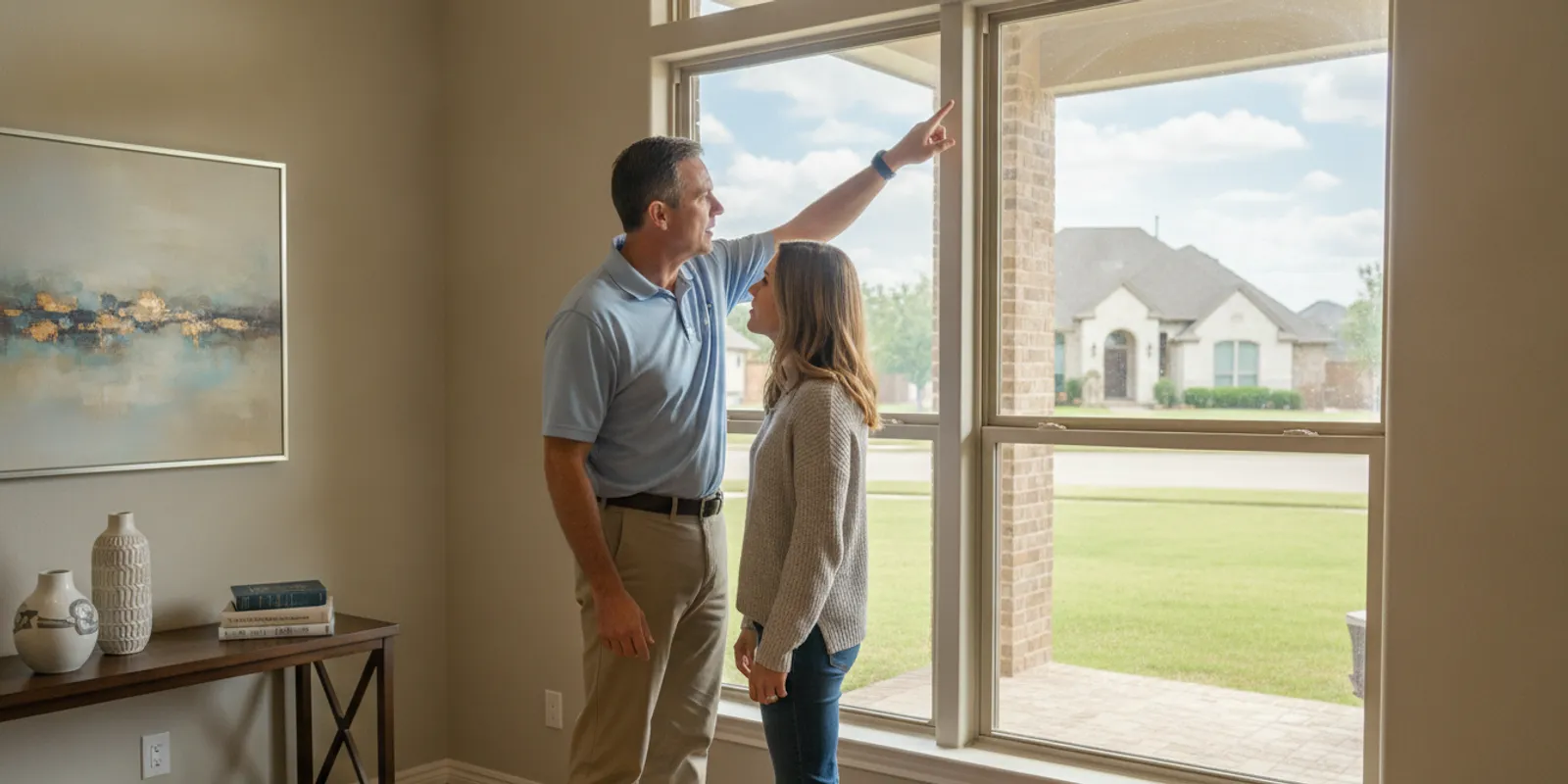
When a window sticks, leaks, feels drafty, or develops condensation, the first question is whether a repair can solve the problem or whether replacement is the better long-term choice. For DFW homeowners weighing window replacement vs repair, the answer depends on what has failed, whether the frame and opening remain sound, and how the window performs day to day. A symptom alone does not tell the whole story.
Discuss your window concerns with SunSmart
What should you check before choosing window replacement vs repair?
Start by identifying the specific problem rather than assuming the whole window needs to come out. A window has several parts that can fail independently: glass, sash, frame, hardware, weatherstripping, seals, and the connection between the window and the wall. A local repair may address one part while leaving the rest of the window in service.
Look at the window from inside and outside, if it is safe to do so. Note when the problem occurs, whether it affects one window or several, and whether it changes with rain, wind, or temperature. Photographing the issue can help you describe it accurately during an assessment. Avoid forcing a stuck sash or disturbing damaged glass.
- Operation: Does the sash open, close, and latch without unusual force? Is the difficulty limited to one window?
- Air and water: Can you feel air movement around the sash or frame? Is there staining or moisture after rain?
- Glass: Is a pane cracked, or does moisture appear between panes rather than on the room-side surface?
- Frame and surrounding area: Is there visible damage, softness, separation, or evidence that water has affected the opening?
- Comfort: Does the room near the window feel noticeably less comfortable, or is outside noise a concern?
These observations do not diagnose the cause. For example, water near a window may come from the window, the surrounding opening, or another part of the wall. A proper inspection should trace the issue before anyone recommends a solution. For a broader overview of the residential window replacement process, see what an assessment can cover.
When can a window repair make sense?
Repair is worth considering when the problem is limited, the main frame and opening remain in good condition, and a practical replacement part or adjustment can restore the window's function. Examples may include a worn latch, a loose handle, a minor hardware issue, or weatherstripping that no longer seals as it should. The exact repair depends on the window design, its condition, and whether compatible components are available.
A cracked pane or a failed insulated-glass seal does not automatically mean every part of the window must be replaced. In some window systems, the glass unit can be changed separately. In others, the condition of the sash, frame, or parts availability may make a limited repair difficult. Ask the person assessing it to explain which component has failed and what the proposed work would address.
Repair can also be a reasonable first step when the window otherwise meets your needs and you want to resolve a clearly identified issue. If you are dealing with moisture between panes, read about what condensation inside window panes can indicate. The location of the moisture matters: room-side condensation and moisture trapped between panes are different conditions and can point to different causes.
Before approving a repair, ask whether it is intended to restore operation, improve the seal, address water entry, or replace damaged glass. These are not interchangeable outcomes. A repair that fixes one symptom may not improve other concerns, such as an aging frame or uncomfortable room conditions. Get clarity on what will remain unchanged.
When does window replacement make more sense?
Replacement becomes more compelling when several parts are failing, the window no longer operates reliably, or repair would address only one of multiple ongoing problems. It may also be a better fit if the existing window does not meet your priorities for comfort, ease of use, sound control, or energy performance, and a component repair cannot meaningfully change that.
Look for a pattern across the home. One sticking sash might call for a focused assessment. Several windows with difficult operation, recurring air leakage, damaged components, or persistent comfort concerns suggest a broader evaluation. That does not automatically mean every window needs replacement. A room-by-room review can identify which units are problematic and whether the cause is consistent or varies by opening.
Replacement is also worth discussing when the window's design or condition makes the needed repair impractical. Custom sizes, older configurations, and unavailable parts can affect what options are feasible. SunSmart's custom window information explains why accurate measurements and a window suited to the opening matter. An assessment should confirm dimensions and installation conditions rather than rely on rough estimates.
For homes in Rockwall, Dallas, Fort Worth, and the wider DFW area, consider how strong sun and heat affect the rooms you use most. A replacement can offer a chance to choose glass and frame features around your priorities, but product labels and specifications still need to be compared. See this guide to choosing windows for Texas heat and the explanation of Low-E glass and what it does for more context.
How do repair and replacement compare?
Use this comparison to organize the conversation with an installer or repair professional. It is a decision aid, not a diagnosis: the condition of the individual window determines the practical options.
| Consideration | Repair may fit when | Replacement may fit when |
|---|---|---|
| Scope of the issue | One identifiable component or adjustment is the main concern. | Several components or recurring issues affect the same window or multiple windows. |
| Frame and opening | The frame and surrounding opening appear sound and suitable to keep. | Condition or installation concerns call for a complete evaluation of the window and opening. |
| Desired outcome | You want to restore a specific function, such as latching or smooth operation. | You want to address broader performance or usability goals that a small repair will not meet. |
| Parts and fit | A compatible repair part is available and can address the diagnosed fault. | Parts are unavailable, the configuration is unsuitable, or a replacement unit better matches the opening. |
| Next step | Confirm the exact part, work scope, and what the repair will not change. | Compare measurements, product specifications, installation scope, and how the opening will be finished. |
There is no responsible one-size-fits-all cost rule. The price of either option depends on the window type, size, condition, access, materials, and scope of work. Compare written descriptions of the proposed work, not just a single total. A repair estimate should say what part is being fixed; a replacement estimate should explain what is included in removal, installation, sealing, and cleanup.
Research on homeowner window replacement decisions also considers costs, value, and factors that influence replacement choices; see the Window Market Insights Report for residential homeowners. A report can provide broader context, but it cannot determine the condition of a specific window in your home.
What should DFW homeowners ask during an assessment?
Whether you are speaking with a repair technician or considering replacement, ask for the reasoning behind the recommendation. Useful questions make it easier to separate an immediate fix from a long-term upgrade.
- What part has failed? Ask the assessor to identify the component and show you the issue where possible.
- What is causing the symptom? Find out whether the cause is the glass, hardware, weather seal, frame, installation, or something outside the window.
- What will this work fix? Ask what should improve and what will not change after the proposed repair or replacement.
- Are there alternatives? If a repair is possible, ask how it compares with replacing the unit. If replacement is recommended, ask whether all windows need it or only specific ones.
- What is included? Confirm parts, removal, installation, sealing, finishing, disposal, and cleanup as applicable.
- How will the new unit fit? For replacement, ask how measurements are taken and how the installer will address the opening and surrounding trim.
- What product details can I compare? Request the relevant glass, frame, and performance information in writing. The window energy performance label guide can help you understand product information.
SunSmart describes its approach as education-first, with precise measurement and professional installation. You can review its window and door services and its company background and local approach before deciding whether to request a consultation. A useful conversation should leave you with a clearer picture of the condition, options, and trade-offs, not a decision made under pressure.
How do energy and comfort goals affect the choice?
Repair and replacement do not offer the same scope for changing a window's overall performance. A repair can correct a specific fault, such as a poor latch or worn seal. It generally will not transform the glass configuration, frame design, or other characteristics of the existing unit. If comfort is the main concern, first determine whether the window itself is the source and then decide whether the available repair can address it.
With replacement, you can compare product features that relate to your goals, including glass construction, Low-E options, frame material, and how the window opens. For example, a home with different room needs may benefit from reviewing how double-pane and single-pane windows differ and the basics of vinyl window options. Do not assume a feature alone guarantees a particular bill reduction or comfort result; the whole opening, installation, home conditions, and product selection matter.
Use ENERGY STAR as an efficiency reference when comparing eligible window options, and review the product information rather than relying on a broad label such as “energy efficient.” Ask which specifications are relevant to your home and climate. To understand how different ratings fit into a selection, see this overview of energy-efficient windows for Texas homes. A good comparison focuses on the features you value and the evidence provided for the products under consideration.
Think through the actual pattern in the home. If one sash is hard to latch but the window otherwise operates well, ask whether a hardware adjustment or replacement part can solve that particular issue. If one pane has visible damage, ask whether a compatible glass-unit repair is possible and whether the frame remains suitable. If several windows are uncomfortable, hard to operate, or showing similar problems, request an opening-by-opening assessment rather than assuming a single repair or a full-home project is automatically right.
For a replacement decision, installation quality and preparation matter alongside the selected product. Ask how the old unit will be removed, how the opening will be checked, and how the new unit will be sealed and finished. This helps you compare proposals on the work being done, not only on the window label. SunSmart's DFW window replacement guide offers additional context, and its window replacement day preparation guide explains what homeowners can expect around installation day.
How can you decide without replacing more than necessary?
Use a simple sequence to make the decision specific to each opening:
- Record the symptoms. List what happens, where, and when. Separate observable facts from assumptions about the cause.
- Ask for a diagnosis. Have the window and surrounding area assessed so the recommendation addresses the source, not just a visible symptom.
- Compare scopes. Request a repair option where practical and a replacement option when appropriate. Ask what each would resolve and leave in place.
- Prioritize the windows. Note which openings affect daily comfort, safety, access, or operation most. You may not need the same solution for every window.
- Review written details. Compare product specifications, installation work, schedule expectations, and terms before authorizing a project.
- Choose for the long term. Consider durability, maintenance, fit, and the performance goals that matter to your household, not only the immediate symptom.
For one homeowner, repairing a sound window's latch may be the sensible answer. For another, an assessment may find that a group of poorly functioning units has issues a small repair cannot resolve. The important distinction is between a targeted fix that addresses the cause and a temporary response that leaves the main concern untouched.
Request a no-pressure window consultation
Frequently asked questions
Does a draft always mean I need replacement windows?
No. Air movement may be related to weatherstripping, hardware, installation, or another part of the building. Have the source identified before choosing between repair and replacement.
Can you replace window glass without replacing the whole window?
Sometimes. Whether a glass unit can be replaced separately depends on the window's construction, the condition of the sash and frame, and the availability of a suitable unit. Ask what parts will remain and what the glass work will address.
Should I replace every window at once?
Not necessarily. The condition and priorities can vary from room to room. An assessment can help distinguish windows that need attention from those that are still functioning acceptably, so you can compare a staged plan with a larger project.
Is condensation a reason to replace a window?
It depends on where the condensation forms and why. Moisture on the room-side surface differs from moisture trapped between panes. Identify the location and cause first, then ask whether cleaning, ventilation changes, a glass-unit repair, or replacement is relevant.
How do I compare repair and replacement proposals?
Compare the diagnosed problem, work scope, parts or product specifications, installation details, and what each option will not fix. Clear written explanations make the trade-offs easier to understand.
The right decision is the one that addresses the actual condition of each window and matches the needs of your home. A careful assessment can help you weigh repair and replacement without committing to more work than the situation calls for.