
Guide
What to Know Before: Window Frame Rot Replacement
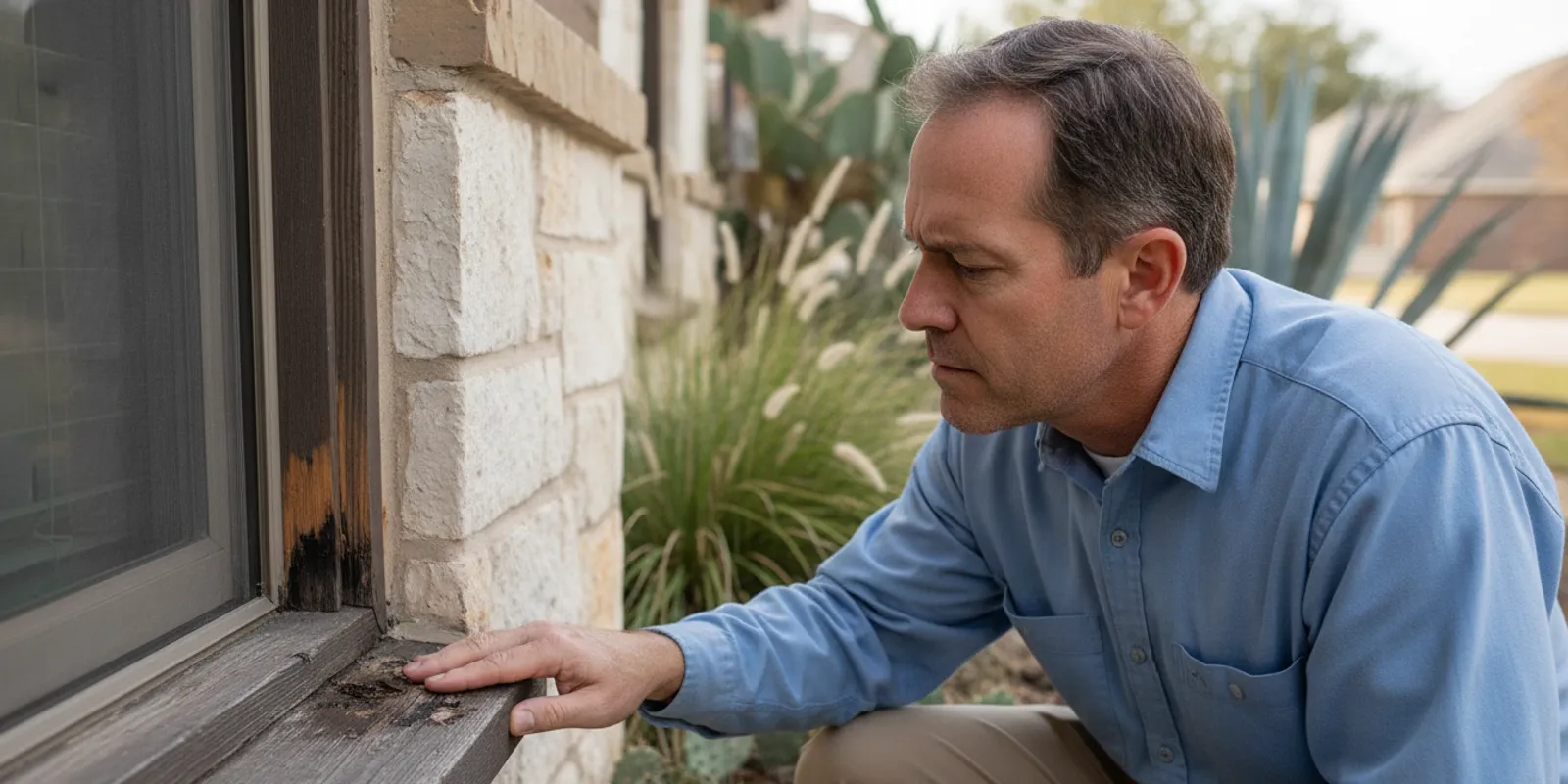
Window frame rot replacement is worth considering when moisture damage has weakened the frame, spread beyond a small repair area, or returned after earlier fixes. A stained or peeling surface does not automatically mean the whole window must go. The first step is to learn where the damage ends, what caused it, and whether the window can still be secured and sealed properly.
Ask SunSmart about your window concerns
What does window frame rot look like?
Rot is decay in wood caused by prolonged moisture. It may affect the sill, jambs, exterior trim, or other wood components around a window. The source can be a failed seal, poor drainage, damaged paint or caulk, or water entering from somewhere above or beside the opening. Finding the source matters: replacing a window without addressing ongoing water entry can leave the new installation at risk too.
Look for soft or crumbly wood, darkened areas that stay damp, peeling paint, swelling, loose trim, or a sill that has begun to break down. You may also notice a musty smell or water marks near the opening. These clues call for a closer look, but appearance alone cannot show how far the damage extends. A surface coating can hide a weakened area, and discoloration may have another cause.
Do not assume every draft, condensation mark, or damp spot means frame rot. For example, moisture on glass can have causes that differ from water soaking into the wood. If you are sorting through symptoms, this guide to condensation inside window panes explains why it is useful to identify where moisture appears before choosing a remedy.
When should window frame rot replacement be considered?
Replacement becomes a stronger option when the frame has lost enough sound material that a repair cannot provide a stable, weather-tight opening. The decision depends on the location, depth, and spread of the decay, as well as the condition of the surrounding wall and the window itself. A single small damaged section is different from deterioration across a sill and both jambs.
Consider a professional assessment when:
- Wood gives way easily or crumbles in more than one area.
- The sill or jamb is visibly distorted, split, or no longer holds adjoining parts firmly.
- Water damage has returned after caulking, painting, or a previous patch.
- The sash is difficult to operate or will not close and latch securely, and the frame may be part of the problem.
- You see evidence that moisture may have reached the wall or rough opening around the window.
- The window has other problems, such as failed seals or poor operation, and repairing the frame alone would not resolve the larger concerns.
These are reasons to investigate, not a do-it-yourself pass or fail test. A qualified installer can inspect the frame and discuss whether the affected component can be repaired or whether the opening needs a replacement window. For a broader overview of what a replacement project involves, see SunSmart's residential window replacement service.
Can a rotted window frame be repaired instead?
Sometimes. A repair may be practical when damage is limited to a small, accessible area and the rest of the frame remains solid. The moisture source must also be corrected. Depending on the specific condition, the work could involve removing damaged material, replacing a section, restoring a sill or trim component, and renewing protective finishes. The right method depends on what is damaged and how the window is built.
A patch is not a lasting answer if water continues to enter, if decay extends behind the visible surface, or if the surrounding frame cannot hold the sash and seals in place. Covering a soft section with new trim may hide the symptom without restoring the part that supports the window. Ask what material is affected, what will be removed, how the water source will be addressed, and how the repair will be checked after the work.
It is also useful to separate the window frame from the rough opening and nearby wall. The frame is part of the window assembly; the rough opening is the space in the wall where the unit sits. Damage may be limited to one, or moisture may have affected more than one area. A recommendation should explain which parts have been inspected and whether any concealed areas remain uncertain. If the scope depends on what is found during removal, ask how that possibility will be documented and discussed before additional work proceeds.
Compare the proposed work, not just the labels or totals on estimates. One plan may cover removal and installation only, while another may describe repairs to affected surrounding material or steps to address water entry. Ask each provider to identify what is included, what is excluded, and what conditions could change the scope. This makes the options easier to compare and helps prevent an apparent low-cost fix from being mistaken for a complete solution to a larger moisture problem.
There can also be a middle ground. A specialist may be able to replace or repair a component rather than remove the entire window, depending on its construction and the extent of damage. Do not assume that a visible mark means a full replacement is required, but do not choose a cosmetic patch without understanding what is behind it.
What is the difference between a component repair and full replacement?
The terms can describe different amounts of work. A repair may address a limited part of the existing frame. A replacement may preserve some existing structure or remove more of the old assembly, depending on the opening and project plan. The important question is what parts will remain, how those parts will be evaluated, and whether the planned work provides a stable, properly sealed installation.
| Option | When it may fit | What to clarify |
|---|---|---|
| Localized wood repair | Damage is small and the surrounding frame is sound. | What caused the moisture, what material will be replaced, and how will the repair be protected? |
| Component replacement | A sill, trim piece, or other part is damaged, while other window parts may remain usable. | Which parts stay, how their condition is verified, and how the new component joins and seals. |
| Window replacement | Damage is extensive, the frame is no longer dependable, or other window problems also need attention. | What removal and installation scope is planned, what happens if concealed damage is found, and how the opening will be sealed. |
| Opening or surrounding-wall repair plus window work | Inspection indicates moisture may have affected material beyond the window assembly. | Who assesses each affected area and how the window work coordinates with the needed building repairs. |
This comparison is about scope, not a price quote. Actual work depends on the window, the damage, access, and any concealed conditions. Consumer Reports' replacement-window buying guide notes that replacement costs can vary; national averages should not be treated as a quote for a specific DFW home.
How should you check a suspected rotted window frame?
Start with a careful visual review. From inside and outside where safely accessible, note stains, gaps, peeling finishes, damaged caulk, and any places where water appears to collect. Take photographs and write down when you notice moisture, including after rain or when indoor conditions change. This helps distinguish a one-time mark from a recurring concern.
Avoid forcing tools into the frame or removing trim just to test it. Probing can damage sound material, and concealed areas may require an installer or other qualified professional to assess. Keep the inspection focused on observations: where the wood looks damaged, whether it feels soft with light pressure, and whether the sash opens and closes normally. Do not climb onto a roof or lean from an upper-floor opening to inspect exterior trim.
- Locate the visible signs. Record whether they are on the sill, jamb, trim, or wall beside the window.
- Look for a moisture path. Check for cracked or missing exterior sealant, damaged finishes, or signs of water above the opening.
- Note how the window works. Record sticking, difficulty latching, or a sash that appears out of square without forcing it.
- Ask for an inspection of the full affected area. Have the assessment distinguish the window frame from adjacent trim and wall materials.
- Request the proposed scope in plain language. Understand what will be repaired or replaced and what remains in place.
If the window is in an unusual opening or needs a made-to-fit unit, SunSmart's information on custom windows can help you understand why measurements and fit are part of the planning discussion. For window material questions, review the details of vinyl windows and compare them with the needs of your home rather than assuming one frame type suits every project.
What should you ask before approving window frame rot replacement?
Make sure the recommendation follows the evidence. Ask the installer to show you where the frame is damaged and explain whether the damage is limited to the window assembly or appears to extend into the opening. A clear explanation helps you compare repair and replacement scopes without relying on a vague label such as “bad frame.”
- Which specific parts are damaged, and how far does the visible damage extend?
- What signs indicate that the frame can or cannot be repaired?
- What is the likely source of moisture, and is that source included in the proposed work?
- Will trim or wall materials need separate evaluation or repair?
- Which parts of the existing window or opening will remain after installation?
- How will measurements, fit, insulation, and sealing be handled?
- What could change if removal reveals hidden damage, and how will that be discussed before extra work?
- What maintenance or follow-up should you expect after the project?
When replacement is being considered, performance deserves attention alongside the frame condition. The U.S. Department of Energy's Building America Solution Center recommends maximum U-values of 0.3 or lower and windows meeting ENERGY STAR criteria for the appropriate climate in its complete window and frame replacement guidance. Ask how the proposed window's energy information fits your project and local climate; do not judge a unit by one number alone.
SunSmart serves homeowners across Rockwall, Dallas, Fort Worth, and the wider DFW area with educational guidance and precision planning. You can also review its guide to windows for Texas heat and its overview of Low-E glass when comparing comfort and energy features.
How do you plan a replacement project in DFW?
Once an assessment confirms replacement is the appropriate scope, plan around the specific opening rather than selecting a window by appearance alone. An older home, a nonstandard opening, or prior water damage may affect what must be measured and checked. Ask how the installer will account for the sill, surrounding structure, fit, and sealing. Precise measurements are important because a replacement unit must suit the opening as it exists, not simply match a rough estimate.
Also consider how the room is used. Think about ventilation, ease of operation, light, privacy, and the home's exposure to sun and weather. If several windows are involved, ask whether the condition is consistent across all of them; damage in one opening does not prove that every window needs replacement. SunSmart's window replacement day preparation guide can help you think through the practical steps once a project is scheduled.
For a local consultation, share your observations and ask for an explanation of the available scope. SunSmart's Rockwall, Dallas, and Fort Worth pages provide local window replacement information. The aim is not to replace a careful inspection with a checklist; it is to arrive prepared to discuss what you have seen and what you want the work to accomplish.
Request a no-pressure window consultation
Frequently asked questions
Does one soft spot mean I need a whole new window?
Not necessarily. A small, isolated area may be repairable if the surrounding frame is sound and the moisture source is corrected. An inspection is needed to determine whether damage extends beyond what is visible.
Can I paint over a rotted window frame?
Paint may improve the appearance of sound wood, but it does not restore wood that has decayed or stop an unresolved water source. Find out whether the material is still solid before treating the surface.
Can a new window fix water leaking around an old one?
Replacement may address problems in the window assembly, but leaks can also come from surrounding trim, siding, flashing, or other areas. Ask for the likely water path to be identified and for the proposed scope to state what it will and will not address.
Should every window in the house be replaced if one frame is rotted?
No. Each opening should be assessed on its own condition and the homeowner's goals. One damaged frame does not establish that other windows have the same problem.
What is the first step if I suspect rot?
Note the location and visible signs, avoid disturbing the frame, and arrange an assessment if the wood is soft, the damage is recurring, or the window no longer works properly. Ask the professional to explain the evidence and compare repair with replacement.
Window frame rot replacement is a decision about the condition of the whole opening, not just the appearance of a damaged patch. With the moisture source investigated and the project scope explained, you can choose a repair or replacement plan that fits the actual condition of your window.