
Guide
Vinyl Windows Dallas: Vinyl vs Aluminum in DFW Heat
For most Dallas–Fort Worth homeowners, quality vinyl is the stronger frame choice for the local climate. Vinyl is a poor conductor of heat, so it resists heat transfer more effectively than aluminum, which conducts heat readily unless it carries an effective thermal break. Vinyl also needs little routine maintenance and pairs well with efficient glass packages.
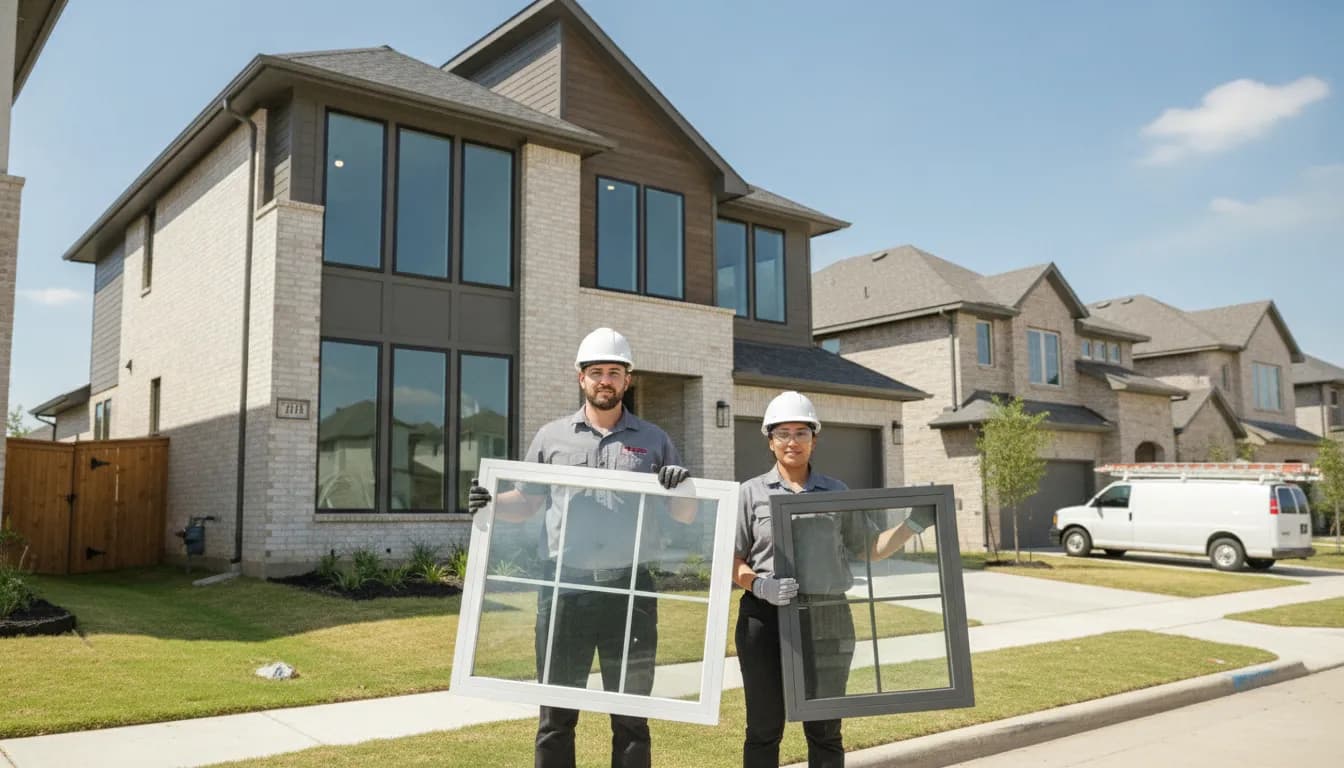
Why window material matters in the Dallas climate
Dallas–Fort Worth asks a lot of its windows. Summer temperatures regularly climb past 100°F, direct sun heats the glass and the frames, and the air conditioner can run for hours to keep rooms comfortable. Add humidity, rapid weather swings, and rising electric bills, and the frame material becomes more than a cosmetic choice. It affects how much heat enters your home, how hard your HVAC works, and how much maintenance your windows need over the years.
For most DFW replacement projects the decision comes down to two common materials: vinyl and aluminum. Both can be made into durable window systems, but they respond differently to Texas conditions. Aluminum is strong and lightweight, yet metal conducts heat readily. Without an effective thermal break, that heat can move through the frame and undermine the insulating performance of the glass. Vinyl naturally resists heat transfer, which makes it a practical starting point for homeowners focused on comfort and efficiency.
Vinyl vs aluminum: thermal performance in Texas heat
During long, hot summers, a frame that readily conducts heat makes it harder for your air conditioner to keep the house comfortable. Vinyl and aluminum respond very differently to that pressure.
| Performance factor | Vinyl frames | Aluminum frames |
|---|---|---|
| Heat conductivity | Low. The material acts as a natural insulator and slows heat transfer through the frame. | High. Conducts heat readily, so more outdoor heat can move toward the interior. |
| Thermal break | Does not rely on a separate thermal break to provide basic frame resistance. | Typically needs a thermal break to interrupt the conductive path through the metal frame. |
| Maintenance | No routine painting or sealing; resists moisture, rust, and corrosion. | Does not rot, but unprotected or damaged finishes can oxidize or corrode over time. |
| Performance ratings | Compare the complete window's published U-Factor and SHGC, not the frame alone. | A higher-quality thermal break can improve performance, but it does not change aluminum's basic conductivity. |
The U.S. Department of Energy identifies vinyl among the frame materials that provide greater thermal resistance than metal, including aluminum. For a DFW project, vinyl offers a simpler path to strong thermal resistance because the frame itself is less conductive.
Durability and lifespan in North Texas weather
DFW weather puts window frames through repeated cycles of heat, humidity, intense sunlight, and sudden storms. Vinyl and aluminum can both serve homeowners well, but they age differently in this climate.
- Heat, humidity, and corrosion. Vinyl is naturally resistant to moisture, rust, and corrosion, which matters during humid stretches when condensation or wind-driven rain reaches the frame. Aluminum does not rot, but exposed or damaged finishes may oxidize over time and need inspection.
- UV exposure and thermal movement. Intense Texas sun is a genuine test for any exterior product, which is why manufacturing quality and installation standards matter. Aluminum tolerates heat and impacts well, but it expands and contracts with temperature swings, placing stress on joints, seals, and surrounding materials over many seasons.
- Expected service life. Quality vinyl windows are commonly built to last decades in DFW when manufactured for the local climate and installed properly. The practical question is not which frame lasts longest on paper, but which stays dependable, low-maintenance, and comfortable through its service life.
For many DFW homeowners, properly installed vinyl offers the balance: dependable operation, manageable maintenance, and consistent comfort, while resisting the moisture and corrosion concerns common to metal frames.
Energy efficiency and monthly savings
Window performance is not a minor comfort detail in Dallas. It affects how hard your air conditioner works through long, intensely hot summers and how quickly rooms heat up in the afternoon.
- Start with U-Factor and SHGC. U-Factor measures how readily a window conducts heat; lower is better for insulation. SHGC measures how much solar heat enters the window; a lower SHGC matters in DFW because the direct sun arrives for much of the year. Review the actual numbers on the product label rather than trusting a label alone.
- Pair the frame with efficient glass. Low-E, or low-emissivity, glass has a thin coating that manages radiant heat while letting daylight through, and the specific coating should match the home's orientation, shading, and climate. Double-pane units can add an insulating gas between the panes, and the Department of Energy notes argon or krypton fills minimize heat transfer between the interior and exterior glazing layers.
- Check for ENERGY STAR performance. ENERGY STAR 7.0 places more emphasis on matching window performance to the climate zone. For Dallas, look for a window suited to a hot climate, with a low SHGC that limits summer solar gain and a U-Factor that supports year-round insulation.
“Replacing old windows with ENERGY STAR certified windows lowers household energy bills by an average of up to 13 percent nationwide when replacing single-pane windows.”
Read that figure carefully, because the qualifiers do real work. It is a national average, not a promise about your house, and it is based on replacing single-pane windows. In a Dallas home with inefficient windows and high summer electric bills, even a percentage-class improvement can make comfort upgrades more meaningful over time.
The bottom line for Dallas homeowners
The best window decision balances comfort, appearance, long-term performance, and the total cost of ownership. Vinyl is typically more affordable up front than aluminum, which makes it easier to invest in quality glass, professional installation, and features that improve the finished result.
Vinyl also simplifies ownership. Quality vinyl frames do not need routine painting or sealing, and they resist moisture, rust, and corrosion. Modern vinyl profiles are available in clean, attractive designs that complement both traditional and contemporary Dallas homes, so practical performance does not require sacrificing curb appeal.
Whichever material you consider, installation quality and the window's overall performance ratings matter as much as the frame. A qualified pro can compare the numbers for your home's exposure, existing glass, and cooling priorities.