
Guide
Sliding Screen Door: Fit, Track, and Screen Guide
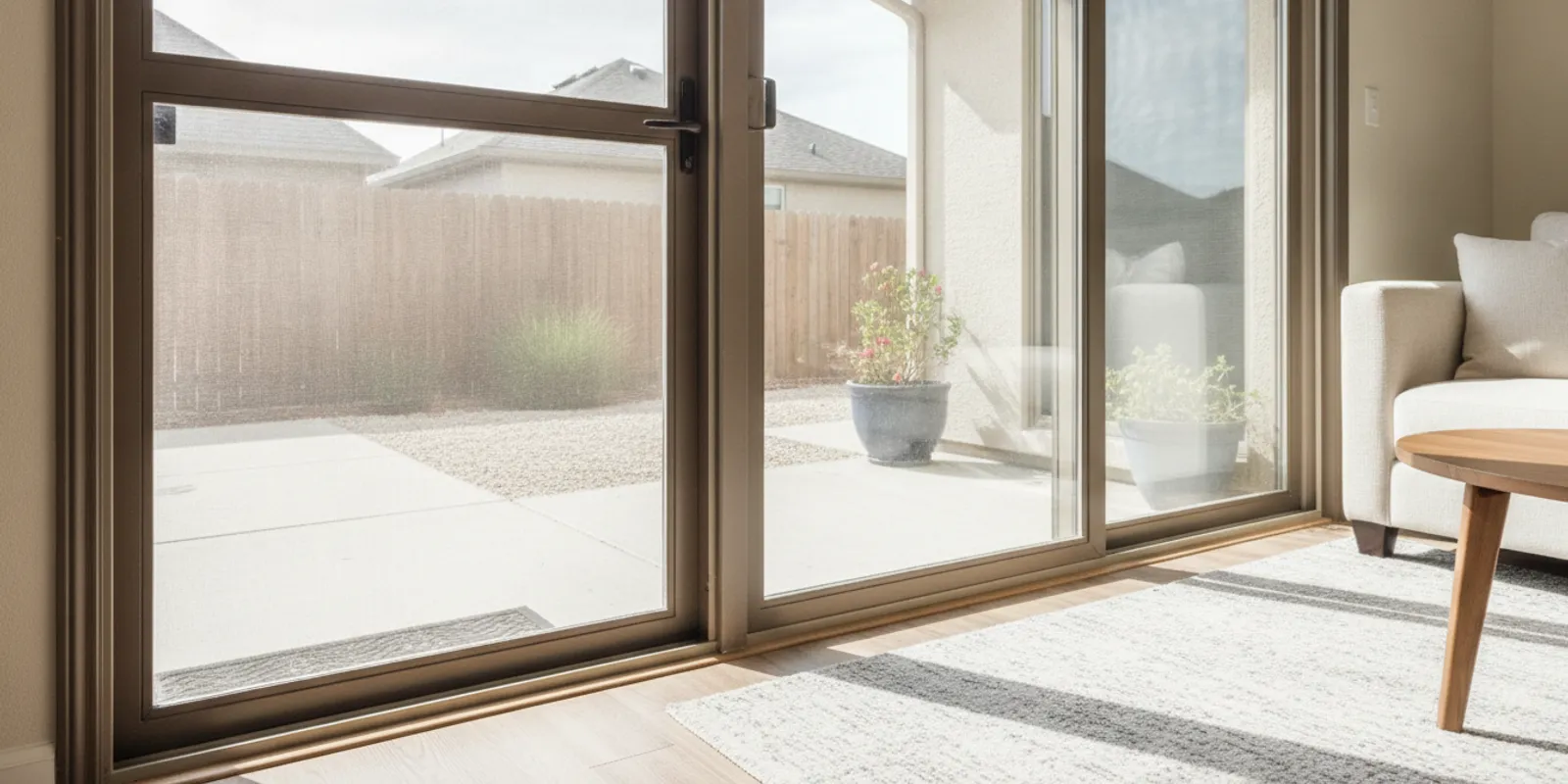
A sliding screen door can make a patio easier to use, but only when it fits the opening and moves smoothly. If your sliding screen door drags, jumps its track, leaves uneven gaps, or has damaged mesh, a few careful checks can help you understand what may be happening. This guide covers fit, movement, screen condition, and compatibility, and explains when the patio door itself may need a closer look.
Request a no-pressure door consultation
What should a sliding screen door do?
A screen panel should travel along its guide without excessive force, stay upright as it moves, and reach its intended closed position. Its mesh should be intact enough for its intended use, while the handle and latch should be usable. These are practical checks, not a promise that a screen panel will close or insulate like a solid exterior door.
Screen panels are not necessarily interchangeable. The right fit depends on the opening dimensions, track arrangement, frame, and hardware. A panel that looks similar may still be too tall, too short, or incompatible with the track. When you are evaluating the broader door system, review SunSmart's patio door installation information and sliding patio door buyer's guide to frame the questions you may want to ask.
How can you check sliding screen door fit?
Begin with a visual inspection while the panel is closed. Look along the top and sides for uneven spacing, and check whether the panel appears square in the opening. A small, consistent clearance may be part of the system's design. A gap that is noticeably wider at one corner may point to a panel out of position, a roller concern, or an alignment issue elsewhere. Do not assume the screen panel alone is responsible before checking the surrounding opening.
Then move the panel slowly from one end of its travel to the other. Watch whether it stays upright and within its guides. Notice where it binds, scrapes, rattles, or needs extra effort. Stop if it catches sharply rather than forcing it. Forcing a stuck panel can damage parts or make the original symptom harder to assess.
- Check the top and bottom edges: Look for a panel that tilts, sags, or rides out of its guide.
- Compare the gaps: Note whether the visible clearance is similar along both sides and across the top.
- Test the full travel: Move it gradually and note where resistance or noise begins.
- Observe the closed position: Check whether it reaches its stop and whether the latch lines up without lifting or pushing hard.
Write down what you observe and when it happens. For instance, does the panel drag all the way across, or only near the center? Does it move smoothly until it reaches the closed position? Does the gap change as it travels? Specific observations are more useful than a general description such as “it feels off.” They can help separate a track or roller symptom from a fit or alignment concern.
What can cause a sliding screen door to drag or jump?
Debris in the track is one possibility. Dust, leaves, and small particles can interfere with rolling. Inspect only the visible track and remove loose debris gently. Avoid tools or force that could scratch, bend, or otherwise damage the track. If the panel still binds, or the track looks bent or damaged, cleaning may not address the underlying issue.
Rollers can wear, shift, or lose adjustment over time. A panel that sags, scrapes, or moves unevenly may have a roller or alignment concern. Loose or damaged guides, a bent frame, and a damaged track can create similar symptoms. Because these causes overlap, sound or feel alone cannot confirm which part is responsible.
Pay attention to the pattern. Resistance over the entire travel may lead you to inspect the visible track and note the panel's position. A scrape at one point may correspond to a localized obstruction or track damage. A panel that becomes difficult only as it closes may have a fit, alignment, or latch issue. These are clues to report, not instructions to adjust parts without knowing how the system is designed.
Do not remove the panel unless you know how its retention and roller system works and can handle it safely. Screen panels can be awkward to control, and an unstable panel can fall or twist. If removal is needed for inspection or repair, professional help can reduce the risk of damage. For a separate overview of sliding door symptoms, see this sliding door repair guide; it addresses the broader door system, not just the screen.
How should you assess screen mesh and hardware?
Look over the mesh in good light. Check for holes, tears, loose edges, or a section pulled out of its channel. A small tear may not prevent the panel from moving, but it affects the mesh in that area and can grow with handling. Also inspect the frame for bends or separated corners. Replacing mesh alone will not solve a problem if the frame is distorted or no longer fits the opening.
Test the handle and latch gently. The latch should meet its counterpart without requiring you to lift or shove the panel. If a handle is loose, a latch misses, or the panel will not stay in its intended position, record that as a separate symptom from mesh condition. A screen panel may roll smoothly but still fail to close as intended.
Take a few photos of the full opening, the visible track, any damage, and the panel in its closed position. Photograph the main patio door separately if it also has a movement or closure issue. Keep fingers and measuring tools clear of a moving track, and do not dismantle hardware just to document it. A simple record can help a professional understand what you are seeing before looking at the system in person.
When might the patio door opening be part of the problem?
A screen panel shares an opening and often a track area with a patio door system. If the main glass door also sticks, closes unevenly, or shows a visible alignment concern, the issue may extend beyond the screen. Check the solid panel's movement and closure separately. A screen-panel adjustment should not be treated as a fix for a concern with the main door.
Several symptoms together can justify looking at the broader opening: both panels drag, they do not meet evenly, or the track appears damaged. A professional can assess how the door, frame, and opening work together and discuss appropriate options. SunSmart serves homeowners in Rockwall, Dallas, Fort Worth, and the wider DFW area. Its DFW exterior door planning guide and door frame guide offer useful background when considering the surrounding assembly.
If you are weighing a screen-only concern against a broader door project, first distinguish what is damaged and what still operates as intended. The mesh, panel frame, rollers, track, latch, main door, and opening are related but not identical parts. A professional assessment can clarify whether the observed symptoms are limited to the screen or call for another scope. SunSmart's door replacement planning guide can help you prepare to compare the relevant questions without assuming that replacement is necessary.
If the main patio door is being considered for replacement, you may also be weighing energy performance. ENERGY STAR is a starting point for information about energy-efficient products; a screen panel itself is not a substitute for the insulated glass door. Focus any efficiency discussion on the main door product and the specific opening, rather than expecting a screen to provide the same function.
Which screen-door symptoms point to different checks?
Use this table to organize observations, not to diagnose a component. More than one issue can create a similar symptom, and the full door system may need inspection.
| What you notice | What to inspect visually | What it may suggest |
|---|---|---|
| Dragging along most of the track | Loose debris, visible roller movement, and track condition | An obstruction, roller concern, or track damage |
| Panel jumps out of its guide | Panel position, guides, and frame shape | A shifted or worn component, or a fit concern |
| Uneven gap when closed | Panel position, frame corners, and opening alignment | The panel or opening may not be square |
| Mesh is torn or loose | Mesh edges, channel, and frame condition | Mesh work may be needed; check whether the frame is sound |
| Latch misses its catch | Handle, latch, and closed panel position | A hardware or alignment concern |
| Screen and main patio door both bind | Movement of both panels and the shared opening or track area | The concern may extend beyond the screen panel |
How should you compare repair and replacement possibilities?
A symptom list is a starting point, but the best next step depends on which parts remain sound and whether a compatible solution is available. A tear in otherwise secure mesh is a different situation from a bent frame, a panel that repeatedly leaves its guide, or a main patio door that also fails to move or close as expected. Avoid choosing a remedy based on one symptom alone.
When discussing options, separate the screen panel from the main door. Ask whether the concern appears to involve mesh, the screen frame, rollers, the track, the latch, or the patio door itself. Ask what was observed and how that observation connects to the recommendation. If more than one part is involved, request that the proposed scope explain which symptom each part of the work is intended to address.
Fit is also a practical comparison point. A replacement screen panel needs to work with the existing opening, track arrangement, and hardware. Before ordering one, confirm compatibility rather than relying only on a measurement or a visual match. If a professional recommends a broader patio door project, ask what condition of the existing door or opening supports that recommendation. The purpose is not to favor repair or replacement in advance, but to understand the condition and available choices.
For example, a panel that rolls consistently but has a small mesh tear presents a different set of questions from a panel that sags, scrapes, and will not latch. In the first case, frame condition and the mesh channel are relevant observations. In the second, alignment, rollers, and the opening may deserve attention together. If the glass patio door shares the same movement problem, mention that clearly so the screen is not assessed in isolation.
SunSmart's door replacement and installation information can help you understand the broader service context. Use a consultation to ask for a clear explanation of fit, compatibility, and scope, then take time to consider the information before deciding.
How can you prepare for a professional assessment?
A short record of the symptoms can make a consultation more productive. Note the approximate age of the door if known, when the problem began, and whether it happens across the full travel or at one spot. Photograph visible damage without dismantling components. Mention whether the main patio door has separate movement or closure issues.
- Describe whether the screen panel drags, rattles, sticks, or jumps its guide.
- Identify visible mesh damage, bent frame sections, or track wear.
- Explain whether the latch aligns when the panel is closed.
- Say whether the glass patio door has similar symptoms.
- Ask what parts of the system will be inspected and what options are compatible with the opening.
If you are considering a replacement panel, gather any manufacturer or product information you already have, but do not assume that appearance or approximate dimensions confirm compatibility. A suitable fit depends on the particular opening, track arrangement, and hardware. For another screen style, SunSmart's retractable screen door guide explains a different format and its planning considerations. For service context, you can also learn about SunSmart's education-first approach or review its Rockwall, Dallas, and Fort Worth pages.
When comparing next steps, ask what the assessment covers, whether the issue appears limited to the screen panel, and what details support any proposed scope. A clear explanation should connect the observed symptom with the part or parts being considered. SunSmart's window and door services page provides broader service context, while the dedicated door services information is relevant if the main patio door may also be involved.
Talk with SunSmart about your patio door
Frequently asked questions
Can I keep using a screen door that has a small tear?
A small tear does not necessarily stop the panel from moving, but it reduces the usefulness of the mesh in that area and may grow with handling. Check whether the surrounding frame and mesh edge remain secure. If the frame is bent or the mesh has pulled loose, assess both rather than assuming a patch addresses the whole concern.
Why does my screen door slide smoothly in one direction but drag in the other?
Different resistance by direction can result from debris, roller wear or adjustment, a damaged track, or panel alignment. Note where the movement changes and avoid forcing the panel. The symptom alone cannot confirm which component is responsible.
Should I replace the screen door if the patio door still works?
Not automatically. A screen-only concern may involve mesh, hardware, rollers, or panel fit. If the glass patio door also binds, closes unevenly, or has a related track concern, have the broader system assessed before deciding that a screen-only solution is appropriate.
How do I know if a replacement screen panel will fit?
Compatibility depends on the opening, panel dimensions, track arrangement, and hardware. Measurements are useful, but approximate dimensions or similar appearance are not enough to confirm fit. Verify that a replacement is designed for the specific patio door system before ordering.
Is a screen door the same as an energy-efficient patio door?
No. A screen panel serves a different purpose from the main glazed patio door. If you are evaluating energy performance, focus on the main door product and the needs of the opening, and consult reliable product information such as ENERGY STAR rather than treating the screen as an insulating component.
A careful check of fit, movement, mesh, and hardware can clarify whether the concern appears limited to the screen or involves the patio door system. If symptoms persist or several parts appear affected, a professional assessment can help you understand the options before deciding on next steps.