
Guide
Exterior Doors
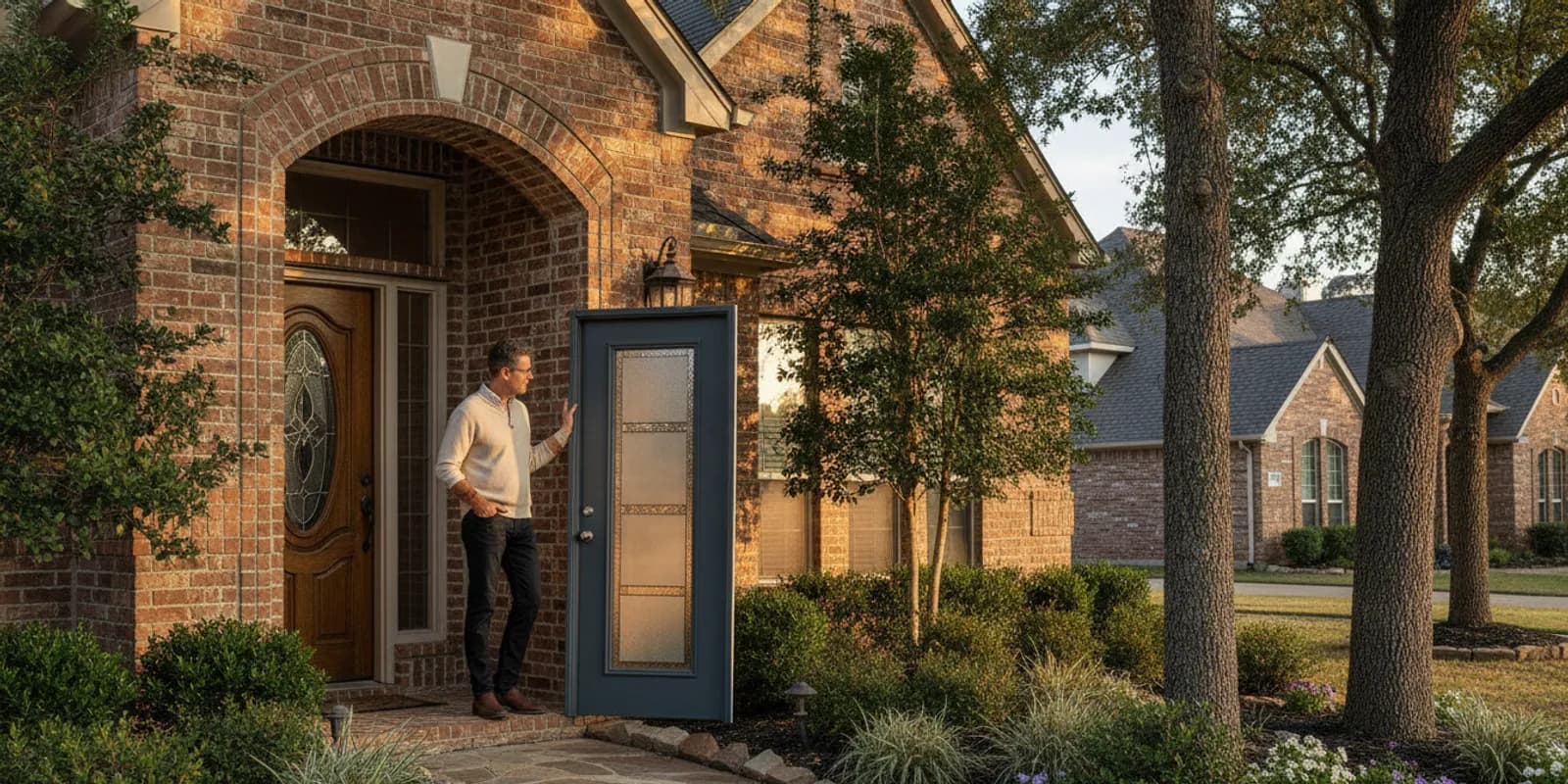
Choosing exterior doors is about more than picking a color. The right choice should suit the opening, the way your household uses it, the home's exterior, and the comfort you want indoors. For homeowners in Rockwall, Dallas, Fort Worth, and across DFW, a little planning can make the options easier to compare before a project begins.
Talk through your exterior door plans
What should you decide before comparing exterior doors?
Start with the job each door needs to do. A front entry creates the first impression and is used throughout the day. A patio door connects indoor and outdoor living and may need to provide a wide passage or a clear view. A side or rear entry may be more utilitarian, but it still needs to close securely and suit the opening. Listing the location and everyday use helps narrow the field without starting with a style or material that may not fit.
Walk around the house and note each opening separately. Ask who uses it, how often it is opened, whether furniture or groceries pass through, and whether the door needs to accommodate a particular access requirement. Consider the approach outside, too. A door that swings into a tight landing or conflicts with nearby furniture can be frustrating even if it looks right in a photograph.
- Entry: Decide how much privacy, daylight, and visual emphasis you want at the main entrance.
- Patio: Think about the amount of clear opening, the path through the room, and the view beyond the glass.
- Secondary entrance: Focus on dependable operation, weather exposure, and how the door works with the surrounding trim.
SunSmart's exterior door replacement service covers planning and installation options. For background on entry-specific considerations, see the entry door buyer's guide.
How do exterior door materials compare?
Material affects appearance, upkeep, feel, and how a door fits the home. There is no single best choice for every opening. Compare the actual product construction and finish, not just the material label. Ask how the chosen door is designed to handle sun exposure, moisture, temperature changes, and regular use in its specific location.
| Option | What to consider | Questions to ask |
|---|---|---|
| Fiberglass | Can offer a range of styles and finishes, including designs that suggest a traditional wood appearance. Review the product's construction and finish requirements. | How does this model look up close? What care does the finish need? |
| Steel | Often selected for a clean, durable entry-door look. Compare panel style, finish, and the complete door system rather than judging the slab alone. | What is included in the unit, and how should dents or finish wear be handled? |
| Wood | Offers natural grain and a distinctive appearance. Exposure and ongoing care are important parts of the decision. | How will this location affect maintenance, and what finish schedule is recommended? |
| Glass-containing designs | Glass can bring daylight and an outdoor view, while affecting privacy and the overall look of the entrance. | What glazing and privacy options are available for this door? |
These are broad categories, not a guarantee of how any particular product will perform. Specifications differ by manufacturer and model. Request the exact product information and compare the whole assembly, including the frame, threshold, hardware, and glazing where included. SunSmart also offers a guide to choosing exterior doors that can help you organize questions before comparing proposals.
Which exterior door style works with your home's architecture?
Use the home's existing lines as a starting point. Look at the roof pitch, window shapes, trim, brick or siding, and other exterior details. A door does not have to match every element, but it should feel intentional beside them. In DFW, where brick homes and a wide range of suburban architectural styles are common, a simple comparison of the front elevation can prevent a design choice from feeling disconnected.
Consider these design details together:
- Panel pattern: Match the visual weight of the door to the home's facade. A highly detailed panel design may suit a traditional exterior, while a simpler face may work with a more streamlined one.
- Color: Compare samples outdoors, at different times of day, and beside the brick, paint, or trim. Sunlight can make a finish look different from a small indoor sample.
- Glass: Decide whether clear, textured, or more private glass better suits the entrance. Think about sightlines from the street and from inside the home.
- Hardware: Select hardware that is comfortable to operate and visually works with the door and nearby exterior fixtures.
- Surrounding details: Check the trim, sidelights, transom, and porch lighting as a group. The door may be only one piece of the entry composition.
If you are weighing a more prominent front entry, SunSmart's front door replacement guide covers decisions specific to that location. For a patio opening, compare how the door style relates to the sliding patio door options and the room's layout.
How should you think about glass, daylight, and privacy?
Glass can make an entry feel brighter and provide a view, but the right balance depends on where the door is and what is visible through it. A front door facing a street may call for more privacy than a patio door looking onto a fenced yard. Decide what matters before selecting a decorative pattern or glass area.
Stand inside and outside the entrance at the times it is most often used. Check what a visitor can see from the walkway and what household members can see from inside. If daylight is the priority, compare doors with glass while also considering whether window coverings or textured glazing will be needed. For a patio, consider glare, furniture placement, and whether the glass panel interrupts a preferred wall arrangement.
Energy performance is a product-specific question. Ask for the door's ratings and documentation, and compare like with like. ENERGY STAR provides information about energy-efficient products and its qualification program at ENERGY STAR. Use the program information as a reference, then verify whether the exact door under consideration is qualified and appropriate for the project. Do not assume that a glass pattern or a material name alone tells you how energy efficient the complete door will be.
How do operation and security affect your exterior door choice?
A door should be easy to operate for the people who use it and suit the way the entrance is approached. Before selecting a style, think about the direction the door swings, the room or landing on either side, and how much clearance is available. A larger or heavier door may feel different to operate than the one it replaces. Where access needs or mobility are a concern, make those needs part of the conversation early rather than assuming every configuration will work equally well.
Security is also a system question, not just a feature on the slab. Consider the frame, hinges, lock preparation, hardware, and how the door closes and latches. Ask what hardware is included, whether the existing frame is being replaced, and what the installation scope covers at the jamb and threshold. If you want a particular lock or smart-home accessory, check compatibility with the selected door before ordering. No single material or decorative detail guarantees security, so compare specific product and installation information rather than relying on a broad label.
Test the handle height and feel of the hardware when possible. Think about who needs to unlock the door, whether hands are often full, and whether the lock is straightforward to use from both sides. For glass near a lock or handle, discuss layout and available product choices with the project professional. The goal is a door that supports everyday entry, privacy, and the level of protection you are seeking without sacrificing practical operation.
What should you check about fit and installation?
A well-chosen door still depends on accurate measurements and a sound installation plan. Existing openings can vary, and the visible slab does not tell the whole story. Before choosing a replacement, confirm the opening dimensions, swing, frame condition, threshold, and nearby trim. Note any signs of water entry, soft or damaged material, sticking, or gaps. These observations are useful context for an assessment, but they are not a substitute for a professional inspection.
- Identify the opening: Record whether it is an entry, side, rear, or patio door and how it is used.
- Check operation: Note rubbing, difficult latching, drafts, or a door that will not remain in position. Describe when and where the issue occurs.
- Look at the surrounding assembly: Inspect the frame, trim, threshold, and adjoining wall for visible damage or signs of moisture.
- Confirm the configuration: Review handing, swing direction, size, glass arrangement, and any sidelights or transom with the project professional.
- Discuss the installation scope: Ask what removal, preparation, sealing, finishing, and cleanup are included, and how the opening will be protected during the work.
Installation details matter because the door has to operate as part of the opening, not just look right as a product sample. For general project-planning context, read the door replacement guide for homeowners. If the opening or shape is unusual, raise that early so the measurements and product options can be reviewed before a final selection.
How can you compare exterior door proposals?
Compare proposals by matching their scope and product details. One quote may describe only a door slab, while another may specify a complete unit and associated work. A fair comparison should make clear what is being supplied, what installation includes, and what assumptions still need confirmation. Ask for explanations in plain language rather than relying on a headline price or a broad product category.
- Write down the manufacturer, model, material, finish, glass configuration, and hardware for each option.
- Check whether the frame, threshold, trim work, removal, and disposal are included or excluded.
- Confirm how the opening will be measured and what happens if concealed conditions are found.
- Ask how the installation will be sealed and insulated, and how the finished area will be left.
- Review the stated project schedule and what access or preparation is expected from the household.
- Get unclear terms or changes documented before approving the scope.
Do not assume two proposals are equivalent because both use the same words, such as fiberglass, steel, or insulated. Look at the specific model and installation details. A door replacement cost overview can help you think through what to ask about scope, while the Dallas front door planning article offers local context for an entry project.
What makes an exterior door practical for a DFW home?
Consider the exposure of each doorway rather than treating the whole house as one condition. A west-facing entry may receive stronger afternoon sun than a shaded rear entrance. A patio opening may have a different relationship to rain, landscaping, and indoor traffic. Observe the actual location and bring those details into the product discussion.
Also consider daily habits. Does a household member carry groceries through the side entrance? Do children or pets use the patio door frequently? Is low-maintenance care a priority? Are you trying to add daylight, improve privacy, or update a dated entry? Clear answers help a professional suggest relevant options without starting from a long list of styles.
SunSmart is a family-owned window and door replacement company serving Rockwall, Dallas, Fort Worth, and the wider DFW area. Its approach centers on education, precision planning, professional installation, and transparent guidance. Learn more about SunSmart's local approach before deciding whether to arrange a conversation.
Request a no-pressure exterior door consultation
Frequently asked questions
Should every exterior door in a home match?
They do not have to be identical, but a consistent design language can make the exterior feel coordinated. Consider related colors, panel details, and hardware, while choosing glass and operation to suit each opening.
Is a door with more glass always better for daylight?
More glass can bring in more daylight, but it can also affect privacy, views, and how the entrance looks. Compare the specific glass layout from inside and outside before deciding.
Can I choose a replacement door before the opening is measured?
You can explore styles and materials first, but the opening should be measured and the configuration confirmed before the order is finalized. Existing frames and openings can differ from standard assumptions.
What should I bring to an exterior door consultation?
Bring photos of the door and surrounding exterior, notes about sticking or drafts, your preferred style and privacy level, and questions about scope. If you have a specific color or product in mind, bring its details so it can be discussed alongside the opening and installation needs.
A thoughtful exterior door plan connects appearance, daily use, product details, and installation scope. Compare the actual options for each opening, ask questions until the proposal is clear, and choose a solution that fits your home and priorities.