
Guide
Louvered Doors
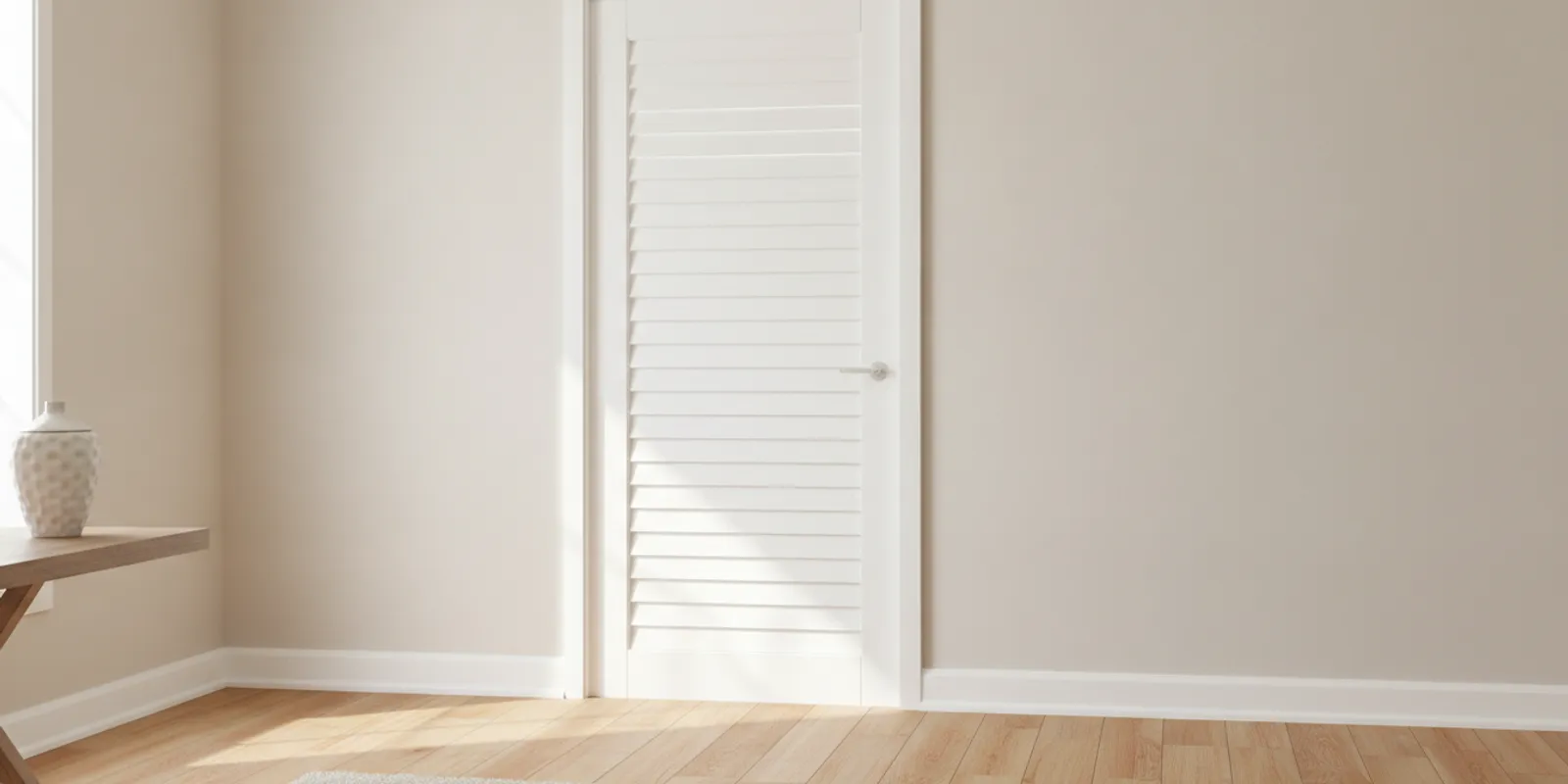
Louvered doors have angled slats that allow air to pass through the door while adding a distinct visual texture. If you are considering louvered doors for a DFW home, the right choice depends on the room, your need for privacy, and whether ventilation matters more than blocking light or sound. Here is what to compare before choosing a style or planning a replacement.
Talk through your door project
What are louvered doors, and how do they work?
A louver is a slat set at an angle within a door panel. The gaps between slats let some air move between spaces. Depending on the door, the slats may be fixed in place or adjustable. Louvered panels can appear across the full door or in a limited section combined with solid panels.
That open construction is the key difference from a solid door. A louvered door can help a room or closet feel less sealed off, but the openings also allow some light, sound, and views through. The exact result depends on slat spacing, angle, door construction, and the conditions on each side. A louvered door is not a substitute for a designed ventilation system, and its airflow should not be assumed to meet a particular building or equipment requirement.
Before shopping, decide what the door needs to do. Is the priority airflow, a less imposing look, access to stored items, or a specific design? If the opening is an exterior entry or patio door, weather protection and security become central too. Compare that project with the options on SunSmart's exterior door replacement page; do not assume an interior-style louvered slab is suitable for an exterior opening.
Where do louvered doors make sense in a DFW home?
Louvered doors are often considered for interior spaces where some air movement or a lighter visual feel is useful. Their suitability still depends on the room's purpose and any equipment or ventilation needs. Check the product guidance and applicable requirements for the specific installation rather than relying on a general rule.
- Closets: A louvered closet door can allow more air movement than a solid panel. Consider whether the contents need protection from dust, light, or visibility.
- Laundry areas: The slats may make the space feel less closed off. Follow appliance installation instructions and local requirements for clearances and ventilation; a louvered door alone does not establish that an appliance has adequate ventilation.
- Utility or storage rooms: The style may suit a space where a solid visual barrier is not essential. Check whether stored items, sounds, or light should be screened.
- Interior design transitions: A louvered panel can add texture between rooms. Think about how the openings affect privacy and the view from nearby spaces.
For a bedroom, bathroom, or room where privacy and quiet matter, carefully weigh the gaps before choosing this style. If you are planning a broader project, SunSmart's window and door services overview can help you distinguish door replacement from other types of home upgrades.
Which louvered door style should you compare?
Start by comparing the construction, not just the appearance. Fixed louvers have slats that stay at one angle. Adjustable louvers can be tilted to change the opening, where the product design permits it. Some doors use partial louvered sections, while others use a louvered panel across most of the door. Materials and finishes vary by product.
| Option | What to consider | Questions to ask |
|---|---|---|
| Fixed louvers | Simple, consistent openings; slat angle cannot be changed. | Does the fixed opening provide the balance of airflow and screening you want? |
| Adjustable louvers | Slats can be repositioned on products designed for adjustment. | How is the adjustment operated, and can you reach it comfortably? |
| Partial louvered panel | Combines an open section with a more solid area. | Where should the louvers sit, and does the remaining solid area meet your privacy needs? |
| Full louvered panel | More of the door surface has openings, so light, sound, and sightlines may pass through more readily. | Is the room appropriate for a door with openings across most of its panel? |
Product terminology and construction can vary. Ask for the exact door configuration, measurements, finish, and operating details in writing. If you are comparing other exterior door designs, SunSmart's exterior door buying guide and entry door guide offer useful questions for a different, more weather-exposed use case.
How should you evaluate fit and day-to-day use?
The door needs to work in the actual opening, not just look right in a sample. Think through how people move through the room and what sits near the doorway. A door that opens into a narrow hall, a laundry basket, or stored items may be awkward even when its panel style fits the decor. Check the swing and the usable clearance on both sides before choosing a configuration.
Consider the way the slats will be cleaned, too. Dust can settle on horizontal surfaces, and the cleaning method depends on the material and finish. Ask whether the manufacturer recommends a soft cloth, a particular cleaner, or other care steps. If slats are adjustable, ask how to operate them without forcing the mechanism and whether any parts can be serviced if they become loose or damaged.
Look at the full door assembly. The slab, frame, hinges, latch, and any trim all affect how the finished door fits and operates. Replacing only the slab may not address a damaged or out-of-square frame. Conversely, changing the frame can affect surrounding trim and the finished opening. Before work begins, agree on who will verify measurements and what the installation includes, including removal of the old door and cleanup if those items are part of the proposed scope.
For households with children, pets, or mobility considerations, review the product's operation and the doorway clearance for the people who use it. Do not assume an adjustable feature is easy for every user to reach, or that slats are safe to grasp or climb. Ask the product supplier for its specific safety and care guidance, and consider a different panel if the openings or controls are a poor fit for the household.
How do louvered doors compare for airflow, privacy, and comfort?
Louvered doors trade a more open panel for less separation. Air may move through the slats, but the amount is not guaranteed and varies with the design and conditions in the home. If airflow is the reason for the purchase, ask the manufacturer for product-specific information and confirm whether the door is appropriate for the room's actual ventilation needs.
Privacy is another tradeoff. Angled slats may obscure a direct view from some positions, but they do not make an opening opaque. Light can pass through, and voices or other sounds may be more noticeable than through a well-fitted solid door. Walk around the doorway and consider sightlines from hallways, windows, and adjacent rooms.
For a space where visual separation or sound reduction is important, compare a solid door or another configuration. Review SunSmart's exterior door planning guide if the project concerns an outside opening, and keep interior airflow needs separate from exterior weather performance.
Energy performance also needs context. An interior louvered door does not replace the thermal boundary of an exterior wall, window, or properly specified exterior door. For exterior product research, ENERGY STAR provides information about its efficiency program at ENERGY STAR. Check the exact product and applicable category rather than assuming that a louvered design is certified or appropriate for an exterior entry.
What should DFW homeowners check before ordering?
Temperature swings, strong sun, and frequent use can make careful product selection and fitting worthwhile in North Texas. Rather than choosing by a product photo, work through the opening and the room's needs first.
- Identify the location. Record whether the door is inside the home or exposed to the outdoors. An interior closet door and an exterior entry door have different performance and safety demands.
- Measure the existing opening. Note the door slab dimensions, swing direction, frame condition, and clearance. Confirm who will take final measurements before an order is placed.
- Set the priority. Decide how much airflow, privacy, light control, and sound separation matter. Rank those needs so the style is not chosen on appearance alone.
- Check special requirements. If the room contains equipment or has a specific ventilation requirement, use the equipment instructions and consult a qualified professional as needed. Do not treat slats as proof of compliance.
- Compare construction and care. Ask what the door is made of, how the finish should be cleaned, how slats are repaired or replaced, and whether adjustment hardware needs maintenance.
- Confirm installation details. Discuss frame condition, fit, hardware, trim, and how the finished door will operate. A suitable door still needs accurate measurements and careful installation.
If a door replacement is part of a larger plan, compare the intended work with SunSmart's door replacement guide. For local project information, see the pages for Rockwall, Dallas, and Fort Worth; confirm the specific product and project scope during a consultation.
What should you ask before choosing louvered doors?
Bring practical questions to a product discussion. Clear answers help you compare the door's function with the needs of the opening.
- Are the louvers fixed or adjustable, and what is the slat angle or range of movement?
- How much visibility remains through the closed door from each side?
- What are the material, finish, and cleaning instructions?
- Is this exact product intended for an interior or exterior application?
- What measurements, frame work, hardware, and installation steps are included in the proposed scope?
- Are there room, appliance, building, or ventilation requirements that must be checked before installation?
For an exterior door, also ask how the assembly addresses weather exposure, security, and the fit of the complete door system. SunSmart offers door replacement guidance for homeowners in the DFW area, but the right recommendation depends on the opening and selected product. A guide to exterior door replacement considerations can help you prepare questions without assuming a price for a specific project.
Request a no-pressure door consultation
Frequently asked questions
Do louvered doors provide privacy?
They can screen a direct view to some degree, depending on the slat angle and viewing position, but the openings are not opaque. Check sightlines from both sides and consider a solid door if full visual privacy is needed.
Can louvered doors help air circulate?
The openings allow some air to pass, but the amount depends on the door and conditions. Do not rely on a louvered door to meet a specific ventilation requirement without checking the relevant product and room guidance.
Are louvered doors suitable for exterior entries?
Not every louvered design is made for outdoor exposure. An exterior entry needs a complete door system selected for the opening's weather, security, and performance requirements. Confirm that the exact product is designed for exterior use before considering it.
Are fixed or adjustable louvers better?
Neither is best for every room. Fixed louvers keep one opening arrangement, while adjustable designs let you change the slat position if their mechanism allows it. Compare how each operates and whether the resulting privacy and airflow suit the space.
What should I do before replacing a louvered door?
Identify whether it is an interior or exterior door, measure the opening, inspect the frame, and list your priorities for airflow, privacy, light, and sound. Confirm the product details and installation scope before ordering.
A louvered door can be a practical design choice when its openness suits the room, but it is not a universal answer for privacy, ventilation, or exterior protection. Compare the specific construction with the opening and your priorities before deciding.