
Guide
Front Door Replacement: A Complete Buyer's Guide
A well-planned front door replacement balances the installed cost with material durability, energy performance, security features, and the condition of the existing frame. In 2026, a standard prehung entry door commonly falls in the $1,200 to $6,000-plus range installed, with glass, sidelights, custom sizing, and structural repairs affecting the final price.
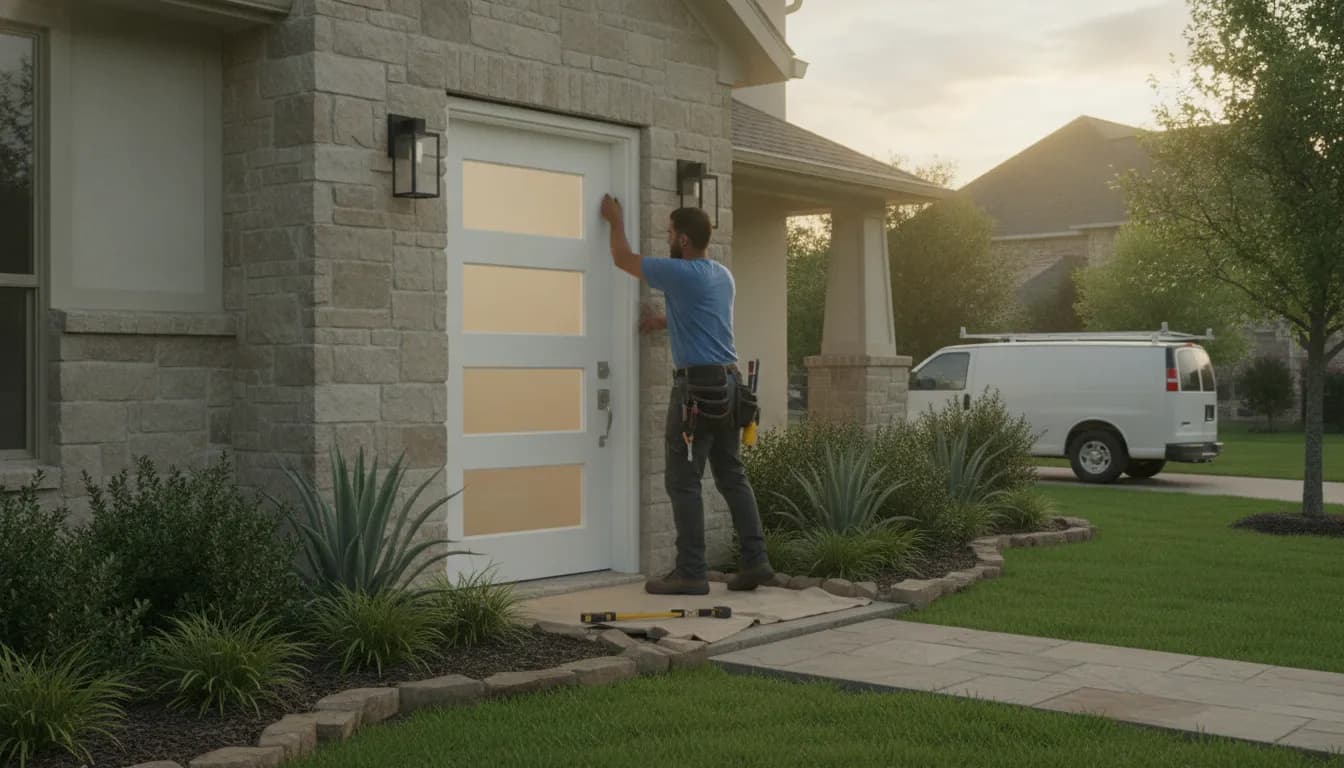
What Does Front Door Replacement Cost in 2026?
For a standard prehung entry door, front door replacement commonly runs from $1,200 to $6,000 or more installed in 2026. That broad range reflects more than the door slab. The frame, threshold, weather sealing, labor, hardware, and finish all affect the final quote. In Dallas-Fort Worth, home age, opening dimensions, and the condition of the existing frame can matter as much as the material you select.
Door prices also vary by whether you are buying the unit alone or a complete installed system. The following ranges provide a practical starting point, not a substitute for measuring the opening and inspecting the frame.
| Material | Unit alone | Typical installed range | Durability and maintenance | Energy considerations |
|---|---|---|---|---|
| Steel | $200-$1,500 | About $600-$1,000 for common installations | Strong and security-minded, but dents and exposed edges can develop rust. Usually low maintenance when properly finished. | Foam-core construction can improve insulation compared with solid wood. |
| Fiberglass | $500-$3,000 | About $800-$2,000 for common installations | Resists routine wear and typically needs less upkeep than wood. Some fiberglass doors can last more than 50 years with minimal maintenance. | Foam cores provide strong insulating performance and help reduce heat transfer. |
| Wood | $500-$5,000 | About $1,500-$4,000 for common installations | Warm, customizable appearance, but requires more frequent staining, painting, and protection from moisture. | Performance depends heavily on the construction, core, weatherstripping, and quality of the installation. |
| Composite | Varies by construction and design | Request a project-specific estimate | Often selected for a wood-inspired appearance with less maintenance, but the exact durability depends on the system. | Compare the manufacturer's published insulation rating and the complete door system, not just the surface material. |
The material-only ranges for steel, fiberglass, and wood come from Dayton Door Sales. The complete-installation ranges are corroborated by Capstone Phoenix, while a separate 2026 estimate places standard prehung replacement at $1,200-$6,000 or more installed.
What can raise the installed price?
A basic replacement can become a larger project when the opening needs correction or the design includes several upgrades. Ask whether the estimate includes these items:
- Frame replacement: Rot, movement, water damage, or an out-of-square opening may require more than a new slab.
- Decorative glass: A decorative glass upgrade can add about $300-$1,800.
- Sidelights: Each sidelight can add about $1,200-$2,800, depending on the size and configuration.
- Custom sizing: Nonstandard dimensions, unusual wall conditions, and a new rough opening can increase material and labor costs.
- Labor and finishing: Removal, disposal, trim adjustments, painting, staining, upgraded hardware, and additional air sealing may be separate line items.
For a useful comparison, request an itemized quote that separates the door unit, frame, glass, sidelights, hardware, labor, and finish work. That makes it easier to compare options fairly and choose improvements that fit your DFW home's needs rather than paying for features that do not solve a real problem.
Front Door Materials: Steel, Fiberglass, Wood, and Composite
The material you choose affects more than appearance. It influences how the door handles North Texas heat, how much maintenance it needs, and how long it can serve your home. Compare the full ownership experience, not only the price on the estimate.
Fiberglass: the practical all-around choice. Fiberglass is often the strongest fit for a DFW homeowner who wants durability, efficiency, and manageable upkeep. Quality fiberglass doors can last more than 50 years with minimal maintenance. Many models also mimic the grain of natural wood without requiring the same refinishing routine.
Energy performance depends on the complete door system, including the core, weatherstripping, frame, and installation. Still, fiberglass doors with insulated foam cores generally outperform solid wood doors. Polyurethane or polystyrene foam cores can provide up to four times the R-value of wood. One contractor reports that fiberglass represents roughly 95 to 98 percent of its new door installations, which reflects its popularity rather than a guarantee that it suits every opening.
Steel: strength and security with maintenance considerations. Steel is a compelling option when impact resistance and a solid feel are priorities. It can provide excellent strength and security, especially when paired with a quality frame, deadbolt, and properly installed lockset. Steel doors with foam cores can also be more efficient than solid wood.
The tradeoff is maintenance. Steel can dent, and exposed edges may eventually rust if the finish is damaged or moisture reaches the metal. In a covered entry with prompt touch-ups, that risk is easier to manage. Ask how the door is protected at the edges and how repairs are handled before choosing steel for an exposed location.
Wood: distinctive and customizable, but higher upkeep. Wood offers a traditional appearance, natural warmth, and broad customization options. It can be the right choice when architectural character matters more than minimizing maintenance. However, wood requires regular attention to help prevent environmental damage. Sun, moisture, and seasonal movement can affect the finish and fit over time.
For many homeowners, wood makes sense when they are comfortable budgeting for inspections, refinishing, and occasional adjustments. A lower initial material price does not always mean a lower long-term ownership cost.
Composite: engineered flexibility. Composite doors combine manufactured materials to create a consistent, low-maintenance alternative to traditional wood. Their performance varies substantially by construction, so ask about the skin, core, frame, warranty, and tested energy ratings. Do not treat the word composite as a performance rating by itself.
For most DFW homes, fiberglass is the best starting point because it balances energy efficiency, durability, security options, and maintenance. Steel may be preferable when strength is the top priority, while wood or composite can make sense for specific design goals.
How Energy Efficient Is a Front Door Replacement?
A front door is part of your home's thermal envelope, not just a focal point for curb appeal. If the door, frame, or weather-stripping allows conditioned air to escape, your HVAC system has to work harder through a long Dallas-Fort Worth summer. A properly selected and installed replacement can improve comfort near the entry and reduce avoidable heating and cooling waste.
The U.S. Department of Energy identifies windows, doors, and skylights as significant parts of the home envelope. Improving their efficiency can reduce heating, cooling, and lighting costs while making rooms more comfortable. ENERGY STAR's criteria for energy-efficient windows, doors, and skylights also emphasizes tight-fitting construction and weather-stripping.
Start with the door's insulation rating. When comparing products, look at the U-factor. It measures how well the door resists heat transfer. A lower U-factor generally means better insulation, which helps slow heat from entering during summer and keeps conditioned air inside.
The core material matters as much as the exterior finish. Polyurethane or polystyrene foam inside a fiberglass or steel door can provide up to four times the R-value of wood. Fiberglass and steel doors with foam cores are generally more efficient than solid wood doors, although the complete assembly still matters. The frame, threshold, glass, and installation all affect real-world performance.
Pay attention to glass and summer heat. Glass can be the weakest thermal point in an entry door, especially when the door faces strong afternoon sun. Check the Solar Heat Gain Coefficient, or SHGC, for any glass package. A lower SHGC blocks more of the sun's heat before it enters the home. That can be particularly useful in DFW, where direct solar gain can make an entryway feel uncomfortably hot and add to the cooling load.
Low-E glass is another feature worth discussing with your installer. It uses a thin coating to help manage radiant heat while still allowing natural light through. Ask how the glass package, orientation, and surrounding shade work together rather than choosing a decorative option based on appearance alone.
Check the seal, not just the door slab. Energy performance depends on the perimeter seal. Look for durable weather-stripping at movable joints, a well-fitted threshold, and a frame that sits square and plumb. A door that closes tightly but operates smoothly is a better sign than a heavy slab by itself.
Sealing a leaky entry can cut annual heating and cooling costs by up to 15 percent. Actual savings depend on the home's existing condition, ductwork, insulation, thermostat settings, and door exposure. Still, stopping a persistent draft can improve comfort immediately, especially in the rooms nearest the entry.
For homeowners comparing options, prioritize an ENERGY STAR-qualified assembly when available, a low U-factor, a glass package with an appropriate SHGC, a foam-insulated core, and complete weather-stripping. A careful measurement and professional installation help those specifications translate into a tighter, more comfortable front entry.
Front Door Security: Locks, Frames, and Reinforcements
A secure entry system depends on more than the door slab. During a front door replacement, homeowners can improve the lock, frame, strike area, and glass together. That matters in the Dallas-Fort Worth area, where an entry door must handle daily use, seasonal weather, and the practical security needs of a busy household.
Choose the right locking system. A quality deadbolt remains a basic security feature, but a multipoint locking system adds several engagement points along the jamb instead of securing the door in one place. Pella describes multipoint locks as systems that lock in multiple places, giving homeowners another option when planning entry-door security.
Ask whether the lockset is compatible with the door construction and frame. A strong lock cannot perform well if the strike plate is attached only to thin trim. Long screws that reach the structural framing, a properly reinforced strike area, and a deadbolt with smooth, reliable operation can make the entire assembly more dependable.
Do not overlook the core and frame. Steel doors are valued for strength and security, although exposed steel can dent or rust if it is not properly protected and maintained. Fiberglass can also provide a durable exterior, while a solid or insulated foam core helps the door resist flexing and improves its overall performance.
The frame is equally important. A reinforced frame should sit square, remain firmly anchored, and align with the slab across the full height. Installation quality affects how well the deadbolt extends, how evenly the weatherstripping seals, and whether the door stays seated when it is closed. A replacement that looks substantial but is shimmed loosely or leaves gaps around the jamb does not deliver its full security potential.
Use glass strategically. Glass can bring daylight into an entryway, but security glass and carefully considered panel placement can reduce vulnerability compared with a lightly protected, easily reachable pane. Discuss laminated or impact-resistant options with your installer, especially if the glass sits close to the lock. The goal is a balanced assembly that provides visibility and light without making the locking hardware unnecessarily accessible.
For a DFW home, the best security upgrade is usually a complete, correctly installed entry system rather than a decorative slab alone. Review the door material, core, multipoint or deadbolt hardware, reinforced frame, strike plate, and glass as one decision.
When Is It Time to Replace Your Front Door? Signs to Watch
North Texas weather puts an entry door through intense sun, heat, wind, and sudden temperature changes. A door can still open and close while its seals, frame, or core gradually lose performance. These signs can help you decide whether a repair is enough or whether front door replacement makes more sense.
Drafts, leaks, and rising energy bills. Stand near the edges of the closed door on a windy day. Moving air around the jamb or beneath the threshold often points to compressed weather-stripping, a poor fit, or gaps in the frame. You can also check with a thin piece of paper. If it slides out easily when the door is latched, the seal may no longer be doing its job.
A sudden increase in heating or cooling costs does not prove the door is responsible, but it is a useful clue when paired with noticeable drafts. Sealing a leaky entry can reduce annual heating and cooling costs by up to 15 percent. Replace the unit when the slab, frame, and seals are all contributing to the problem.
Rot, warping, rust, or visible damage. Inspect the bottom corners, exterior edges, and the area around the lockset. Soft wood, bubbling finish, swelling, or a door that rubs against the frame can indicate moisture damage or warping. Many doors installed more than five or ten years ago are wood, and older wood units may be more susceptible to wear.
Steel doors deserve a different inspection. Deep dents, peeling paint, and rust at exposed edges can weaken appearance and allow corrosion to spread. Minor surface damage may be repairable, but extensive rust or a distorted skin usually supports replacement rather than another coating.
Failed seals, fogged glass, and moisture. Cracked or loose weather-stripping is often a simple repair. However, replacement becomes more practical when new seals fail repeatedly because the frame has shifted or the door has changed shape. Condensation between glass panes, cloudy panels, or moisture collecting around the glass can signal a failed seal. Persistent dampness near the sill also deserves attention before it reaches the surrounding trim or flooring.
Security or appearance no longer meet your needs. A loose lock, weak strike area, or frame that flexes when the door is locked should not be dismissed. Have a professional assess the jamb and reinforcement before relying on a new lock alone. If the door is structurally sound, a hardware upgrade may solve the concern. If the slab and frame are compromised, a complete unit is the safer path.
Finally, an outdated, faded, or damaged entry can affect curb appeal even when it remains functional. If you are weighing appearance, energy performance, and security together, review our guide to front door replacement in Dallas for the local decision factors.
- Photograph gaps, measure visible movement, and inspect the threshold without removing the door.
- Replacing a full unit involves leveling, shimming, flashing, weatherproofing, and precise lock alignment.
- Professional installation typically takes four to six hours.
- If the frame is damaged, the opening is out of square, or moisture is present, get a professional evaluation before choosing between a repair and replacement.
How Long Does a Front Door Replacement Take and How Does It Work?
A professional front door replacement typically takes four to six hours, assuming the opening is sound and the new unit is ready to install. The exact timeline depends on the door style, frame condition, and whether the project involves a pre-hung unit or a door slab. In Dallas-Fort Worth, careful sealing and leveling matter because heat, humidity, wind, and sudden weather changes can expose small installation problems quickly.
Is it easy to replace a front door yourself? A confident DIY homeowner may handle a straightforward slab swap, but the work requires accurate measuring, shimming, structural judgment, and reliable water and air sealing. Professional installation reduces the risk of an uneven frame, damaged trim, security gaps, or premature weather-related problems. If the opening is out of square or shows moisture damage, professional assessment is the safer choice.
- Measure and confirm the size. The installer measures the existing opening, jamb depth, swing direction, threshold, and clearance. Accurate measurements determine whether the replacement fits the opening or requires framing adjustments. This is also the time to confirm glass, sidelights, handing, finish, and hardware details.
- Remove the old door. The existing slab, frame, trim, threshold, and fasteners are removed carefully. The opening is protected while the installer checks for hidden damage, moisture intrusion, or movement around the jamb.
- Inspect and prepare the frame opening. Any damaged framing or deteriorated material must be corrected before the new door is set. The rough opening should be clean, square, plumb, and properly supported. Skipping this step can leave a door that sticks, leaks air, or fails to latch smoothly.
- Choose a pre-hung unit or slab replacement. A pre-hung door arrives with the slab already mounted in its frame, which generally simplifies alignment and weather sealing. Replacing only the slab is possible, but it is more difficult because the existing frame and hinges must match precisely.
- Set, level, and secure the new door. The installer seats the unit in the opening, checks the reveal around the slab, and uses shims to keep the frame plumb and square. Fasteners secure the jamb to the surrounding structure without distorting it. The door should open and close evenly before the trim is replaced.
- Install weather-stripping and flashing. Proper sealing around the threshold, jambs, and head helps limit drafts and water entry. In DFW, the installer should pay close attention to exposed thresholds and transitions where wind-driven rain can test weak seals. Flashing and compatible sealants help the assembly handle seasonal weather.
- Install the hardware and locks. The handle, deadbolt, strike plates, and any optional multipoint hardware are fitted and adjusted. The lock should engage cleanly without forcing the door or lifting the handle.
- Complete the final inspection. The installer tests the swing, latch, deadbolt, threshold, weather seal, trim, and finish. They should also explain basic care and confirm that the door operates securely from inside and outside.
Does a Front Door Replacement Add Value to Your Home?
Yes, a well-planned front door replacement can support your home's value in several ways. It improves the first impression from the street, makes the entry feel more secure, and can reduce drafts and unwanted heat transfer. Those benefits matter to your family now, and they also give future buyers practical reasons to view the home more favorably.
Resale value is not based on the door alone. Condition, installation quality, neighborhood demand, and the overall appearance of the home all influence what you recover. Still, real-estate reports consistently list door replacements among the highest cost-recoup projects at resale. Industry guidance on energy-efficient exterior doors supports that pattern, and the annual Cost vs. Value report from Zonda regularly places steel entry-door replacement among the stronger-returning exterior improvements, with national results often falling in the roughly 60 to 90 percent or higher range depending on the year, project scope, and region.
Curb appeal is part of the return. A front door is a focal point. A proportionate design, fresh finish, attractive glass choice, and clean hardware can make an older exterior look better without requiring a full facade renovation. Buyers often form an opinion before they step inside, so a door that looks solid and well maintained can strengthen the home's first impression.
Efficiency adds ongoing value. A replacement can contribute to value beyond appearance when it closes tightly and includes an insulating core. Sealing a leaky entry may cut annual heating and cooling costs by up to 15 percent. Fiberglass and steel doors with foam cores are generally more efficient than solid wood. And some polyurethane or polystyrene cores provide up to four times the R-value of wood. In a Texas climate, that can also make the entry more comfortable during hot weather.
The best investment is usually a quality mid-range door fitted to the opening correctly, not the cheapest available option or an oversized luxury package. Choose durable materials, dependable weather seals, hardware that suits your security needs, and professional installation. If you are weighing design, efficiency, and resale goals, schedule a free SunSmart consultation to review practical options without pressure.
Frequently Asked Questions
Here are the questions DFW homeowners most often ask us about replacing a front door in 2026.
Ready to Start Your Front Door Replacement?
A new front door is a meaningful investment in security, comfort, and curb appeal. The right choice depends on your budget, your home's style, and how much you want to save on energy. SunSmart is a family-owned window and door company serving Dallas-Fort Worth, and we take an education-first, no-pressure approach to every consultation.
Share a few details about your entry door and your goals. Our team will walk you through material options, likely costs for your opening, and honest guidance on what is worth changing and what is not. There are no high-pressure tactics, no today-only deals, and no obligation to decide on the spot.
Sources
- Dayton Door Sales — Choosing your entry door material (wood, steel, or fiberglass)
- Capstone Phoenix — Front door replacement cost
- Energy Home Improvements — Entry door replacement cost 2026
- ENERGY STAR — Key Product Criteria: Residential Windows, Doors & Skylights (US EPA)
- Pella — Multipoint entry-door locks
- Statewide Remodeling — Energy-efficient exterior doors guide
- Ivy Lea Construction — Signs you may need to replace your front door
- Asher Lasting Exteriors — Entry door installation options
- Zonda — 2025 Cost vs. Value Report