
Guide
Fiberglass vs Steel Entry Doors: Best Choice for Dallas Homes
Fiberglass is the stronger all-around choice for a sun-exposed Dallas front door, and steel wins where budget and raw security matter most. Fiberglass resists dents, rust, and heat conduction while mimicking real wood grain. Steel offers top-tier forced-entry resistance at a lower upfront cost but can dent and rust if scratched.
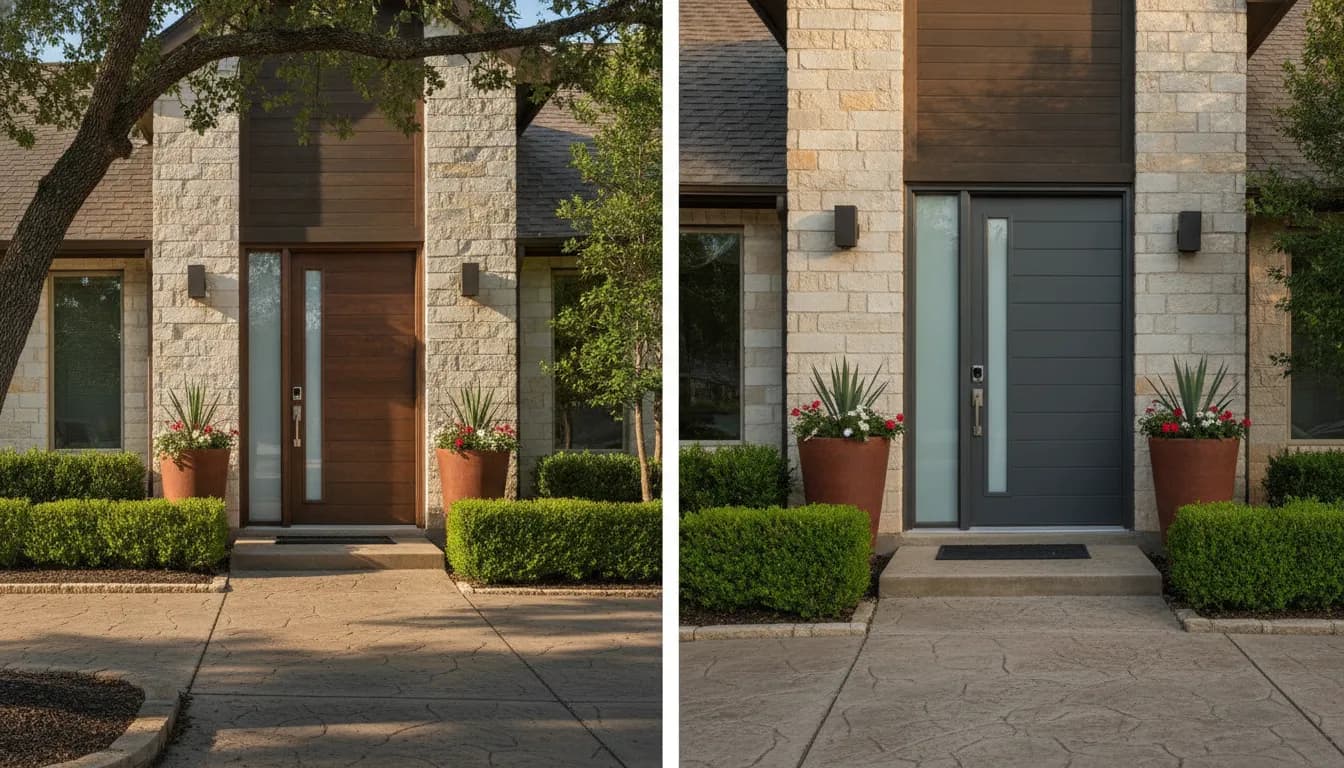
Understanding the two contenders
A warped front door lets hot Texas air pour directly into your air-conditioned living room. When summer temperatures climb past 100 degrees, an inefficient entryway drains your wallet and ruins your comfort. Choosing fiberglass vs steel entry doors Dallas homes need can protect your property from extreme weather while helping control your energy bills.
Both options are far stronger than old wood doors and block heat much better, but they are built in very different ways. Knowing those differences helps you make the right choice for the North Texas climate.
Fiberglass entry doors use a fiber-reinforced plastic shell with a polyurethane foam core. They resist dents, rust, and warping while mimicking real wood grain. Steel entry doors use a steel skin over a foam core. They offer superior forced-entry resistance at a lower price but can dent and rust if the finish is scratched.
How each door is built
Steel doors are known for their high strength and long life, but they do not have a solid metal body. They use a durable steel skin over a polyurethane foam insulation core. This dense foam core is light but stops heat from passing through, and most steel doors include a magnetic seal to stop air leaks around the edges.
Fiberglass doors are made from a fiber-reinforced plastic shell molded under high heat and pressure, again with a thick foam core in the middle. The outer fiberglass skin does not dent or rust, and makers can texture it to mimic the look of real wood grain without the upkeep of actual timber.
Dallas weather puts great stress on exterior doors. Summers often top 100 degrees, with high humidity and sudden storms common. Both steel and fiberglass handle these forces well, and the foam core in each acts as a shield that keeps cool indoor air from escaping.
Energy efficiency in the Dallas climate
Summer heat in Texas is a real test for any home, and your front door must act as a shield against the sun. Both steel and fiberglass entry doors offer R-values between R-5 and R-6, roughly five times the insulation of a solid wood door. However, fiberglass does not conduct heat the way steel does, so its surface stays cooler under direct Texas sun.
- Steel doors: R-5 to R-6 insulation. The metal skin conducts heat, so the door surface gets hot in direct sun and can transfer heat into the home.
- Fiberglass doors: R-5 to R-6 insulation. The non-conductive surface stays cooler, making it a better fit for sun-exposed entries.
- Wood doors: R-1 or lower. Roughly five times less insulation than steel or fiberglass, and they warp and fade in Texas heat.
While both doors block heat well, they act differently in direct sun. A steel door's metal skin conducts heat quickly, so the surface can become very hot to the touch and push heat back into the home, forcing your air conditioner to work harder. Fiberglass does not conduct heat the way metal does, which helps keep the entry cooler through a long summer afternoon.
For Texas homes, look for a door with a low Solar Heat Gain Coefficient (SHGC), which measures how much solar heat the door lets inside. A lower SHGC number means less heat gets in, which helps lower your power bills. Fiberglass doors with efficient glass inserts can block a large amount of solar heat while still letting in natural light.
No matter which type you choose, the door will not save energy if it is not installed correctly. Proper installation and weatherstripping matter for both steel and fiberglass doors to stop air leaks, because even a tiny gap can let hot, humid air seep into your home.
Durability and security in DFW weather
Dallas weather is hard on exterior doors. The hot sun and high humidity can warp, fade, or rot common materials, so you want a product built to handle these swings. Fiberglass resists dents, rust, and warping even during severe storms and humid stretches. Steel offers stronger forced-entry resistance but can dent from hail or debris and rust if its paint finish is scratched.
- Fiberglass: Resists dents, scratches, and rust. Will not warp or decay under direct sunlight. Ideal for main front entries.
- Steel: Strong against forced entry. Prone to dents from hail or impacts, and rusts if the paint is scratched. Best for shaded or secondary entries.
- Wood: Prone to warping, rot, and fading, and requires constant maintenance. Not ideal for the Dallas climate.
High summer humidity can cause some doors to rust, but fiberglass stays intact. Steel doors provide strong security, yet in the humid Dallas air a simple scratch can lead to rust if you do not repaint it quickly, and they can dent if hit by hail or flying debris during storms. For side entrances that are shaded, steel remains a solid option. For the front door, fiberglass offers a better mix of safety and long-term durability.
Both doors can last between 15 and 30 years with proper care, but their upkeep differs. Steel doors require regular painting to prevent rust, while fiberglass needs almost no upkeep beyond an occasional wash. This low-maintenance quality is why many Dallas homeowners choose fiberglass for their main entryways.
Curb appeal and style
The front door is the first detail guests see, and for many Dallas homeowners matching the style of the house is a top goal. Fiberglass doors can be molded with wood-grain textures that mimic oak, cherry, or mahogany and accept stain or paint, giving you the look of a premium wood door without warping, fading, or rot. Steel doors offer a sleek, modern look with clean lines but cannot replicate natural wood grain.
A high-quality fiberglass door mimics wood grain through textured finishes, giving you the rich warmth of oak or cherry without the heavy upkeep of real timber. Natural wood warps, fades, and cracks under the hot Dallas sun, while fiberglass stands up to swelling and high humidity.
Steel doors offer a sleek, smooth look that suits modern homes, with clean lines and flat faces. Most come with a tough factory coat that resists weather and daily use, and both steel and fiberglass are paintable and stainable for plenty of style choices. For most front entries in Dallas, fiberglass tends to win on style because it delivers classic charm without the rot or warp.
Cost, maintenance, and long-term value
Budget matters when choosing a new front door. Steel is the lower-cost entry point, typically about $500 to $1,200 installed, which makes it a strong choice for budget plans and rental homes. Fiberglass needs a larger upfront investment, often $800 to $2,500 or more, but requires far less upkeep over time.
| Feature | Steel entry doors | Fiberglass entry doors |
|---|---|---|
| Upfront cost | Lower. Roughly $500 to $1,200 installed. | Higher. Roughly $800 to $2,500+ installed. |
| Maintenance needed | Needs paint if scratched to stop rust from forming. | Occasional cleaning with mild soap and water. |
| Resale value | Up to a 268% recoup rate when installed well. | Strong long-term value with low upkeep. |
| Best fit | Budget plans, rentals, shaded or secondary entries. | Sun-exposed front doors and low-maintenance buyers. |
The true cost of any door includes the work needed to keep it in good shape. Steel is strong, but it can dent and will rust if the surface gets scratched, so you must paint it again to prevent rust. Fiberglass doors resist dents and rust, and usually only need a quick wash with mild soap and water once in a while to stay looking fresh for twenty years or more.
A new entry door is one of the better home improvements for resale value. The experts at Bob Vila note that both door types use a foam core that blocks summer heat, and a well-installed front door can return a meaningful share of its cost at resale. Fiberglass costs more up front but holds up for decades, which is why it has become a top replacement choice for Dallas homeowners.
Which door wins for Dallas homes?
Dallas weather is tough on exterior doors. When weighing fiberglass vs steel entry doors Dallas homes need a choice that handles the extreme summer heat and sudden storms. Fiberglass is the best choice for a sun-exposed front entry, because it does not get hot to the touch like metal, does not conduct heat as fast, and mimics real wood grain without warping or constant paint touch-ups.
High-quality fiberglass resists dents and rust, keeps cool air inside, and stands up to heavy rain and high humidity without losing its shape. Many Dallas families want the warm look of a solid wood door, and fiberglass delivers that style without the work that real wood demands.
Steel is a strong option for other doorways around the house. If you have a shaded front door, a back door, or a side entry, steel offers strong protection at a lower upfront cost and works well for a sleek, modern style. Just keep in mind it can dent on hard impact and rust if the paint is scratched, and a metal door in direct sun can get too hot to touch.
At SunSmart, we help you find the best door for your budget and your home without high-pressure sales. Our team is ready to help you compare replacement entry doors in Dallas and schedule a free, no-pressure home consultation.
Ready to choose the perfect entry door?
An old, drafty entry door lets your cool air escape, which forces your system to work harder and raises your summer cooling bills. Leaving a worn or warped door in place also opens the house to rot, water leaks, and potential security gaps. SunSmart offers professional exterior door replacement for Dallas-area homes.