
Guide
Signs Windows Are Not Energy Efficient: What to Check
.
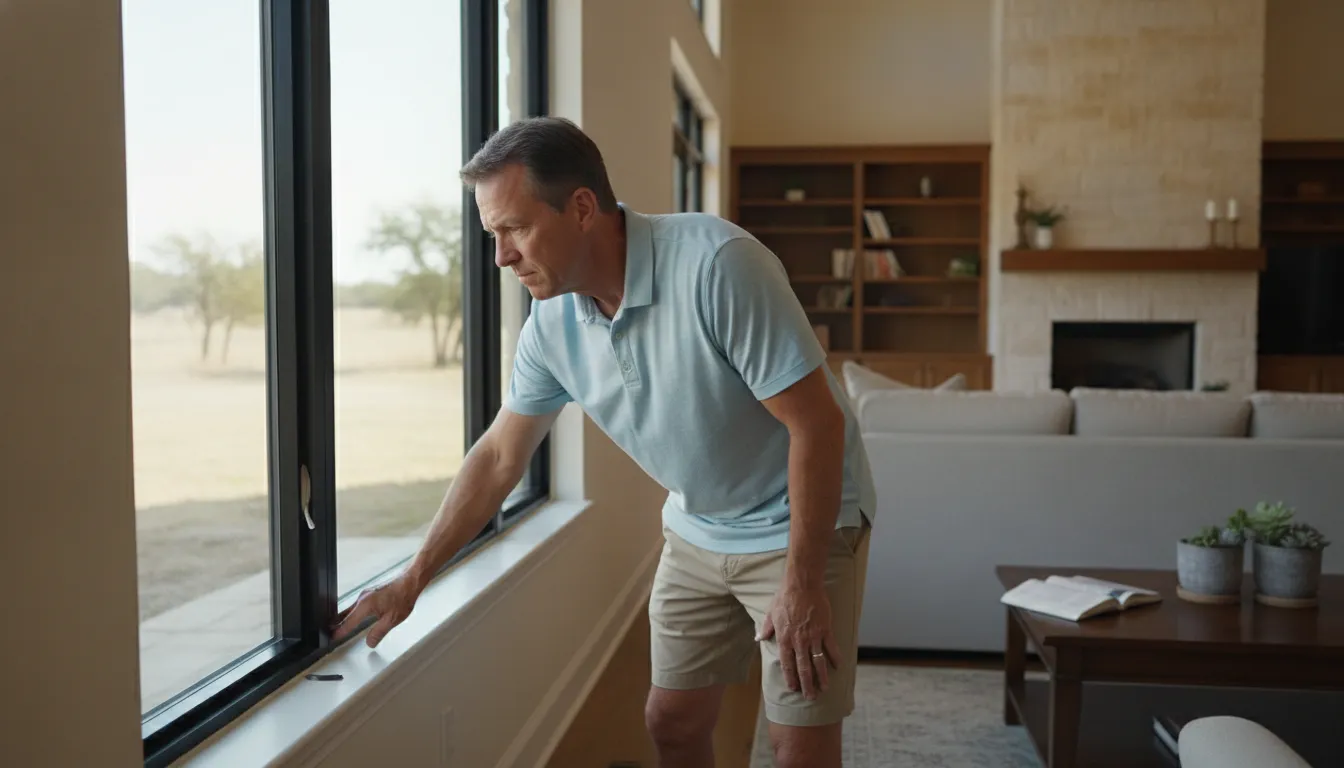
Notice a draft near a closed window? Or a room that is hard to keep comfortable? Either is a reason to take a closer look. These clues do not prove the window is the cause, but ENERGY STAR notes that drafty or degraded windows can make it harder to maintain indoor temperatures. ENERGY STAR explains why window condition matters.
Common signs windows are not energy efficient include drafts near closed frames. Uncomfortable areas beside the glass, trouble opening or closing a sash, and moisture or cloudiness between panes. These symptoms can point to leaks, wear, or a failed seal, but one clue alone is not a diagnosis.
Request a no-pressure window assessment
For broader context on glass choices and ratings in North Texas, see this guide to energy-efficient window options for Dallas. Then consider what you can observe at home: the pattern across rooms, the window's condition, and whether it operates and seals as expected.
What Are the Signs Windows Are Not Energy Efficient?
One uncomfortable window does not prove the window itself is failing, but recurring symptoms around the same unit are worth checking. ENERGY STAR notes that air leaks, drafts, and degraded sills or sashes can waste energy and make nearby areas uncomfortable. Use these signs as prompts to investigate, not as an automatic replacement checklist.
- You feel a draft near a closed window. Air movement around a shut window can point to an air leak or a sealing problem. Notice whether it happens consistently at the same window, especially when outdoor conditions change. A draft is a useful clue, but it does not by itself identify the precise source.
- The area beside a window feels uncomfortable. A seat or work area next to a window that repeatedly feels less comfortable may merit a closer look. ENERGY STAR describes drafty windows and degraded sills or sashes as uncomfortable places to sit near when it is cold and windy. This observation alone does not confirm that the glass or frame is the cause.
- You notice air leakage around the window. If you can feel air coming through around the unit, record where and when it occurs rather than assuming that every window has the same issue. Leaks and drafts are associated with energy waste, but the observation is a starting point for checking the window and its condition.
- The sill or sash looks degraded. Visible deterioration on these parts deserves attention, particularly when it appears alongside drafts or discomfort. ENERGY STAR identifies degraded sills and sashes as conditions that can affect comfort and energy use. Appearance alone cannot tell you how much performance has changed, so consider it together with how the window feels and operates.
- The room is harder to keep comfortable near a particular window. If a room repeatedly feels uncomfortable in more extreme outdoor weather, check whether the pattern centers on a window and whether the other signs are present. Old, drafty, poorly made, or degraded windows can make a home work harder to maintain indoor temperatures, according to ENERGY STAR. A room-level comfort problem, however, is not proof that the window is responsible.
Look for patterns across time and across windows. Several clues appearing together make a closer inspection more useful than reacting to one isolated symptom. ENERGY STAR's guidance on window leaks, drafts, and degraded sills or sashes explains why these conditions can affect comfort and energy use. If what you observe is unclear, an assessment can help distinguish a window concern from a broader home comfort issue.
What Do Drafts and Uneven Room Temperatures Tell You?
A cool or warm spot near a window is a useful clue, but it does not identify the cause by itself. If you feel moving air beside a closed window, check whether it happens consistently and whether the sash is fully closed. ENERGY STAR notes that air leaks, drafts. Or degraded sills and sashes can waste energy and make the area near a window uncomfortable, especially when it is cold and windy outside. A draft felt near a closed window may also indicate that it is not sealing correctly.
Uneven temperatures deserve the same careful approach. Note which rooms feel different, when you notice the change, and whether the sensation is strongest right beside a particular window. A localized, repeatable pattern can help you decide what to inspect; it is not proof that the window itself is the problem.
Check for a repeatable draft safely
With the window closed and locked, slowly move your hand near the frame and sash to see whether you can feel air movement. Do not use a candle, lighter, or other open flame to test for leaks. You can also compare the same areas around several closed windows on a calm day, then repeat the check when the weather changes. Write down the location and conditions rather than relying on a single moment.
Look for visible gaps, worn or damaged areas around the sash, and sills or sashes that appear degraded. These observations can guide a closer inspection, but avoid assuming a particular repair is needed from appearance alone. ENERGY STAR identifies leaks and degraded window components as possible contributors to energy waste and discomfort.
Notice whether the window operates as it should
Try opening and closing the window only if it is safe to do so. If it will not open, is painted shut, or is difficult to use, record that separately from the temperature symptoms. ENERGY STAR explains that windows that do not open can limit ventilation and make cleaning and maintenance harder. An operation issue is worth addressing, but it does not by itself confirm an energy-efficiency problem.
Bring your notes together: which window, what you felt or saw, whether the window was shut and locked, and when the issue occurs. These notes give a homeowner or evaluator a clear starting point. They help separate a window-sealing concern from a broader comfort issue without treating one symptom as a diagnosis.
Sources: ENERGY STAR guidance on windows and storm windows; Thermal Windows on signs of a window-sealing issue.
When Foggy Glass or Frame Damage Points to a Problem
Moisture on glass can be unsettling, but its location matters. Water or fog on the room-facing surface is different from cloudiness that appears trapped between panes. You can wipe surface condensation away; moisture inside a sealed glass unit cannot be reached from either side. In an older double-pane window, cloudiness or moisture between the panes can indicate that the seal has failed and insulating performance has declined. Though the symptom alone does not confirm the exact cause.
A pane is a sheet of glass. Two sheets separated by a space make a double-pane window, while one sheet is single-pane. That construction can help you interpret what you see, but do not assume every bit of condensation means a failed window. Note whether the moisture is on the room side or between the panes, whether it clears, and whether the same pattern occurs in other windows. Learn how Low-E glass works for more context on the features that can affect window performance.
Look for damage beyond the glass
Check the frame, sash, and sill for visible deterioration, soft or damaged areas, and signs of water intrusion. Degraded frames or sashes can allow water into the wall assembly and create openings for insects or other pests. If you see staining or recurring dampness around a window, record where it appears and whether it follows rain. Moisture near a window deserves attention, but its presence does not by itself prove that the glass seal is the source.
Cracks and chips need a closer look
Cracked or chipped glass is more than a cosmetic issue. It can compromise insulation and safety, so avoid pressing on damaged glass or trying to assess its stability by touch. A small-looking chip may warrant professional evaluation, particularly if the damage is spreading or the sash no longer closes securely.
Consider these clues together rather than treating one symptom as a verdict:
- Fog or moisture that seems enclosed between panes, especially when it does not wipe away.
- Visible frame or sill deterioration, staining, or signs of water entry.
- Cracks or chips in the glass, or damage that affects how the window closes.
Photograph what you notice and keep track of when it occurs. A clear record helps distinguish a recurring condition from a one-time surface issue and gives a window professional useful context for determining whether the concern involves the glass unit. The frame, or another source of moisture.
Can Higher Energy Bills Point to Inefficient Windows?
A higher utility bill can be a reason to look more closely at your windows, but it cannot tell you on its own what caused the change. ENERGY STAR notes that old, drafty, poorly made, or degraded windows can make a home work harder to maintain indoor temperatures. That makes window performance one possible part of the picture, not an automatic diagnosis. ENERGY STAR explains how window condition can affect comfort and energy use.
Start by looking for a pattern alongside the bill trend. Do certain rooms feel uncomfortable near closed windows? Can you feel air movement around the frame? Are the rooms with those symptoms harder to keep comfortable? Air leaks, drafts, and degraded sills or sashes can affect comfort and energy use. So matching a bill change with observable window symptoms gives you a more useful reason to investigate.
A bill is also shaped by conditions beyond the windows. Weather changes can affect heating or cooling demand, and HVAC operation or air leakage elsewhere in the home may contribute. Energy Trust of Oregon advises considering insulation improvements and sealing air leaks because those measures may have a larger effect on comfort and energy use. In other words, a draft near one window deserves attention, but it does not prove that replacing the window is the right answer.
Compare bills across similar periods and consider whether household routines or heating and cooling use changed. Then inspect the windows associated with any comfort issues: check whether they close securely. Look for visible gaps or worn areas around the frame, and note whether the same issue appears in more than one room. Treat those observations as clues to discuss, rather than proof of a specific fault.
If your bill has risen but you cannot find drafts, discomfort, or visible deterioration, widen the investigation instead of assuming the windows are responsible. A careful assessment can help distinguish a window sealing concern from insulation, air leakage, or another factor in the home. The goal is to identify the source of the problem before deciding what, if anything, needs to change.
How Can You Check Window Efficiency at Home?
A quick home check can help you spot patterns, but it cannot confirm the cause of a draft or uneven temperature. Look for repeatable differences from one window to another, and treat what you find as a reason to investigate further, not a diagnosis.
- Inspect the glass, frame, and sash. In daylight, look for visible gaps, damaged weatherstripping, deteriorated seals, or warped areas around each window. Check for staining or moisture damage near the sill as well. Do not remove trim or take the window apart. Air leaks and degraded sills or sashes can affect comfort and energy use, but a visible defect does not by itself establish whether the whole window needs replacement. ENERGY STAR describes common window leak and condition issues.
- Compare comfort around closed windows. On a day when the heating or cooling system is running, close and lock windows as you normally would. Move your hand slowly near the frame and sash to notice a distinct air movement, then repeat at several windows in similar rooms. Avoid open flames for leak testing. A cooler-feeling surface or a draft-like sensation is only an observation; wind, sunlight, curtains, and nearby vents can affect what you feel. A pattern isolated to one window may be useful to note, but it does not identify the repair needed.
- Check operation without forcing anything. Open and close each accessible window gently, then make sure it latches as intended. Note windows that stick, do not close fully, or feel loose. Do not force a jammed sash or climb to inspect an unsafe location. Difficult operation can have several causes, so record which window is affected and whether the issue is consistent.
- Compare readings only as a screening step. If you have an infrared thermometer, take readings at similar points on comparable windows under similar conditions. Treat differences as clues, not a pass/fail test: sun exposure, indoor airflow, and measurement conditions can change surface temperatures. Record the location and conditions if a difference repeats.
- Read the label if it is available. If a window has an NFRC label or you have its product information, note the U-factor and solar heat gain coefficient (SHGC). A lower U-factor indicates greater insulating performance; a lower SHGC means more solar heat is blocked. Which values are appropriate depends on climate, so use ENERGY STAR's residential window guidance rather than treating one number as universally best. Many existing windows may not have a readable label.
| What you notice | What it may suggest | What it does not prove |
|---|---|---|
| Draft near a closed sash. | Possible air leak or sealing concern. | Which component needs repair. |
| Moisture between panes. | Possible insulated-glass seal failure. | That the full window needs replacement. |
| Higher bill alone. | A reason to review energy use and comfort. | That windows caused the change. |
| Worn sill or frame. | Possible deterioration worth inspecting. | The extent of hidden damage. |
\n
Keep a short list of the windows, symptoms, and conditions you observed. If several checks point to the same area, a qualified evaluation can help separate a window issue from sealing, insulation, or other factors in the home.
When Is a Window Evaluation Worthwhile?
A single clue does not automatically mean a window needs to be replaced. An evaluation can be useful when drafts, discomfort near the glass, or visible deterioration keep returning. Especially if you cannot tell whether the cause is the window, its seal, or another part of the home. ENERGY STAR notes that old, drafty, poorly made, or degraded windows can make it harder to maintain comfortable indoor temperatures. But the symptom alone does not identify the right fix. ENERGY STAR explains when window replacement may be worth considering.
Start by describing what you notice and when it happens. Is the discomfort limited to one window or room? Does the sash close and latch as expected? Can you see damaged caulk, gaps, or deterioration around the frame? These observations help focus an assessment without treating a draft or a higher bill as proof of a failed window. Window performance also depends on climate, so any discussion of replacement should account for the conditions where the product will be installed. The Department of Energy's FEMP guidance explains that fenestration performance and product selection vary by climate.
Ask whether a practical repair or air-sealing step could address the issue before assuming the whole window must go. ENERGY STAR identifies air leaks, drafts, and degraded sills or sashes as sources of wasted energy and discomfort. Energy Trust of Oregon recommends considering insulation improvements and sealing air leaks, which may have a greater effect on comfort than window replacement in some situations. That is a reason to assess the broader home, not a guarantee that insulation work will solve a specific window problem.
A useful evaluation should connect the concern you observed with a plausible cause and explain the available options. Including whether a repair, sealing, or a wider insulation improvement is worth exploring. If the window itself is degraded, that condition may affect comfort, but it still does not make replacement the only possible recommendation without an assessment. Climate matters too: the Department of Energy notes that the energy impact of windows varies by climate. So replacement performance should be considered for the installation climate rather than judged by a generic label or assumption.
If replacement does appear relevant, keep that decision separate from choosing a product. This article is about diagnosing possible efficiency problems, while this Fort Worth guide to broader replacement timing covers the related question of when an upgrade may make sense.
Request a no-pressure window evaluation
Frequently Asked Questions
What does fog trapped between window panes usually mean?
Cloudiness or moisture between the panes of an older double-pane window can indicate a failed seal and reduced insulating performance. It is a useful clue to have assessed, not a stand-alone diagnosis of the entire window. ENERGY STAR explains how seal failure can affect comfort and clarity.
Why can a room feel hot even when I do not notice a draft?
Air leakage is not the only way windows affect comfort. Sunlight can bring heat through the glass, so consider whether the discomfort is strongest near a sunny window and whether it changes with sun exposure. ENERGY STAR notes that hotter Southern climates emphasize blocking solar heat through glass. Read ENERGY STAR's window guidance.
Does a higher electric bill mean my windows need replacing?
No. A higher bill can be a reason to investigate, but it does not identify windows as the cause. Changes in weather, equipment, insulation, or air leaks elsewhere may also matter. Check for window-specific clues such as drafts or degraded frames, and consider the whole home before deciding on a repair or replacement.
Are single-pane windows automatically a reason to replace every window?
Not automatically. Single-pane windows provide limited insulation against cold and typically lack coatings that block summer solar heat, but that fact alone does not confirm what work your home needs. Consider their condition, comfort, and exposure, then get a window-specific assessment before choosing a next step. ENERGY STAR describes single-pane window performance.
Ready to Get a Clearer Read on Your Windows?
Not every comfort issue points to a window that needs replacing. A focused evaluation can help you understand what may be contributing and whether sealing, repair, or another next step is worth considering. Before reaching out, note which rooms feel uncomfortable and what you have observed, such as drafts or visible moisture. These details can help guide a useful conversation about your concerns.
Contact SunSmart to request a no-pressure window evaluation.