
Guide
Commercial Glass Repair: What It Covers, Costs & When to Call a Pro
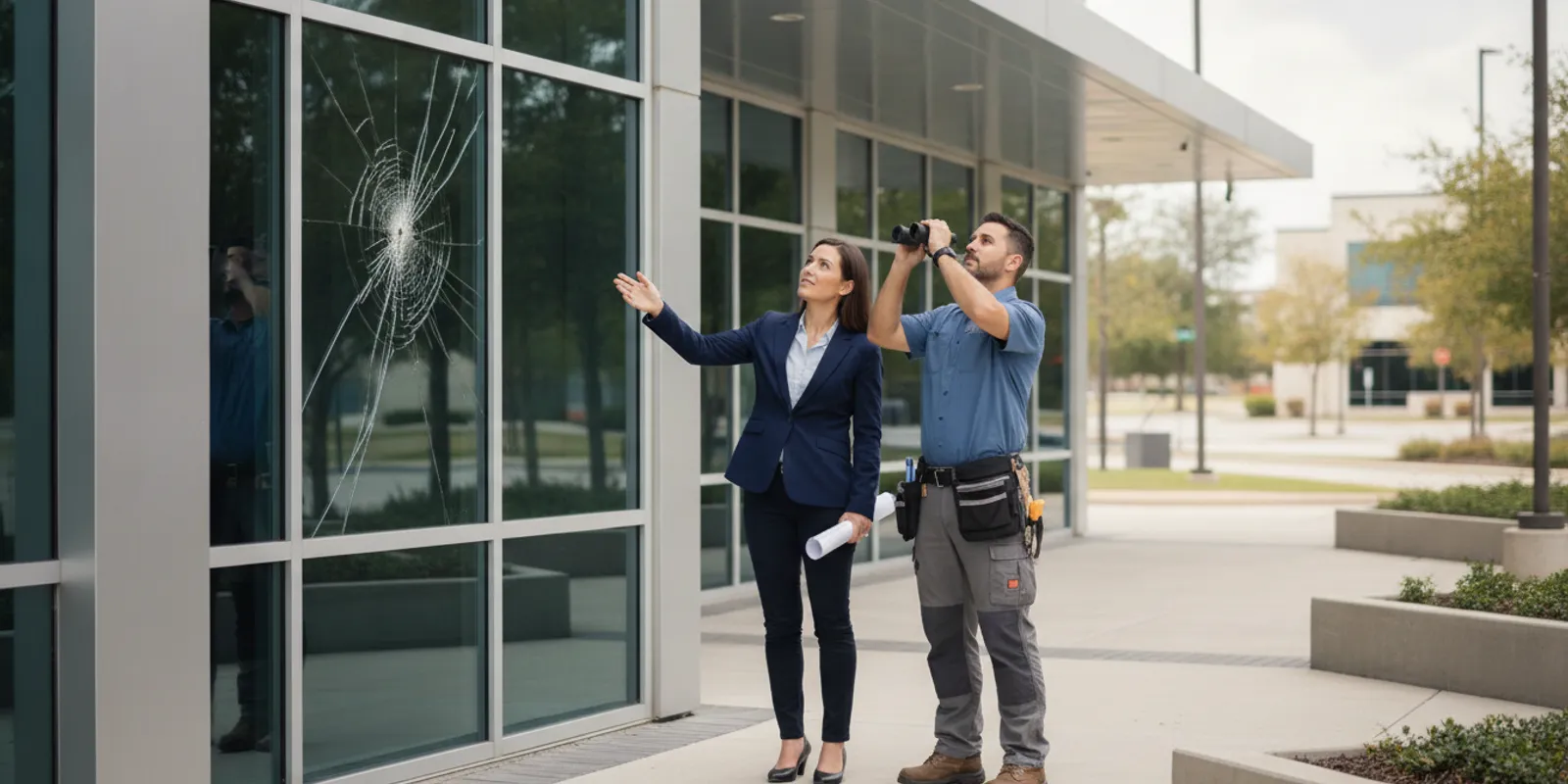
A cracked storefront pane, a fogged office window, or a door glass panel damaged after an impact can disrupt business and create a safety concern. Commercial glass repair starts with identifying the glass system, the extent of damage, and what the opening needs to do next. For DFW property owners, the right decision may be a limited repair, a replacement pane, or a larger window replacement project.
Discuss your commercial window needs
What does commercial glass repair cover?
Commercial glass is used in storefronts, offices, schools, retail spaces, and other non-residential buildings. The term can refer to fixing a glass component, replacing a pane, or evaluating an entire window assembly. The scope depends on the glazing type, frame, location, damage, and applicable building requirements.
Common situations that prompt a call include:
- Cracks or chips: Impact, stress, or movement in the frame may leave a mark or crack. A small defect can still require professional assessment, especially when it is in a door, near an entrance, or in a large pane.
- Shattered or missing glass: A broken pane can expose people and property to weather or unauthorized entry. Keep people away from the area and arrange an assessment rather than handling loose pieces.
- Fog or moisture between panes: Persistent haze inside an insulated glass unit can indicate a failed seal. Wiping the inside and outside surfaces will not clear moisture trapped between panes.
- Loose, rattling, or poorly sealed glazing: Movement, air leakage, or water intrusion can relate to glazing, seals, hardware, or the frame. The visible symptom does not always identify the source.
- Scratches or surface damage: The location, depth, and type of glass affect whether the damage can be addressed or whether a pane must be replaced.
Commercial systems are not all alike. A storefront may use a broad fixed pane, while an office may have operable windows or insulated glass. Before discussing a remedy, document where the damage is, what happened, whether it is changing, and whether the frame or surrounding wall also appears affected.
How do you decide between commercial glass repair and replacement?
The word repair can mean several things. Some problems involve adjusting or resealing a component. Others require removing and replacing the damaged glass unit. If the glass is broken, a pane replacement is often the practical path, but the frame and full assembly still need to be evaluated. Replacing glass alone will not resolve a damaged frame, continuing water entry, or a problem with how the opening operates.
Use these questions to frame the decision with a qualified professional:
- Is the glass safe and stable? A crack, loose pane, or opening exposed to the public needs prompt attention. Do not press on damaged glass or try to remove it.
- What part has failed? Ask whether the issue is limited to the pane, or whether the frame, seals, hardware, or adjacent construction also needs work.
- Can the existing assembly still perform as intended? Consider weather resistance, operation, visibility, privacy, and the needs of the space, not only the appearance of the glass.
- Is a compatible replacement available? The professional will need to confirm dimensions and relevant glass and frame details before specifying a replacement.
- Would the proposed work address the cause? If the source of the damage or leakage remains, a quick surface fix may not solve the underlying problem.
When damage is confined to a replaceable pane and the rest of the window is sound, replacing that glass unit may be appropriate. When there is frame deterioration, repeated leakage, extensive damage, or several failing windows, consider evaluating the full window system. SunSmart's commercial window replacement service is focused on replacement planning and installation, rather than representing every glass repair as a service it provides.
For older or inefficient windows, it may help to compare a single-pane replacement with a broader upgrade. SunSmart's guide to energy-efficient windows for buildings explains factors to consider when planning an efficiency-focused project. The appropriate specifications depend on the building, climate, orientation, and intended use.
What kinds of commercial glass damage need attention?
Damage is not only a cosmetic question. Think about where the glass sits and what could happen if it breaks further. A pane beside a public walkway, entrance, or occupied work area presents a different immediate concern than a small flaw in a secured, unused space. In either case, avoid touching the glass and restrict access to the affected area if you can do so safely.
Cracked glass: A crack can spread with vibration, temperature change, or pressure, though how it behaves depends on the glass and its condition. Avoid leaning objects against it or trying to stabilize it yourself. Photograph the damage from a safe distance and note whether the crack has changed.
Broken glass: If shards are present, keep employees and visitors away. Do not sweep or handle pieces unless your workplace has an appropriate trained response process. For workplace hazard information, consult OSHA's occupational safety resources and follow your organization's procedures. If the damage creates an immediate danger, contact emergency services as appropriate.
Failed insulated glass: Condensation or haze between panes can affect the view and indicate that the sealed unit is no longer performing as intended. Record when the fog appears and whether it is between the panes, then ask an expert to inspect it.
Frame or seal concerns: Water stains, drafts, rattling, or difficulty operating a window may be related to more than the glass. Describe these symptoms during the assessment. A careful inspection can help distinguish a glass issue from a broader window-system issue.
What affects commercial glass repair costs?
There is no reliable one-price answer for commercial glass work without details about the opening and the proposed scope. A small, accessible pane and a large, custom-sized unit are different projects. The following factors commonly shape an estimate:
- Dimensions and glass type: Size, thickness, configuration, coatings, tint, and whether the pane is part of an insulated unit affect material requirements.
- Access and building conditions: Height, interior access, site constraints, and the need to protect nearby occupants or finishes can affect labor and planning.
- Frame condition: If the frame or surrounding opening is damaged, correcting it may add work beyond replacing glass.
- Quantity and consistency: One opening differs from a group of windows. For a multi-window project, the condition and specifications may vary from one elevation to another.
- Special requirements: Safety, security, visibility, operation, and energy goals can affect the specification. Confirm requirements for the particular building and location instead of assuming all commercial glass is interchangeable.
- Scheduling and coordination: Access hours, tenant needs, site rules, and the availability of a compatible unit may influence the project plan.
Ask for a written description of what is included: which openings are covered, whether the scope includes glass only or frame work, how the site will be protected, and what assumptions affect the estimate. If more than one approach is proposed, ask what each option addresses and what it does not. This makes it easier to compare scope rather than focusing on a single total.
| Condition or scope | Typical next step to discuss | Cost considerations |
|---|---|---|
| Limited damage to one pane, frame appears intact | Assess glass-unit replacement and confirm matching specifications | Pane dimensions, glass type, access, and availability |
| Fogging between panes | Inspect the insulated unit and verify the source of moisture | Unit size and configuration, plus access and installation needs |
| Broken glass at an entrance or public area | Secure the area, assess promptly, and plan safe replacement | Urgency, site protection, glass type, and work-hour coordination |
| Repeated leaks, frame concerns, or multiple failing windows | Evaluate the complete window assembly and compare replacement scope | Number of openings, frame condition, specifications, and project phasing |
The table is a planning guide, not a price quote or diagnosis. A site assessment is needed to confirm the right scope.
How quickly should a business respond to damaged glass?
Response timing depends on the severity and location of damage, site access, the assessment needed, and whether a suitable replacement unit is available. A provider should not promise a particular repair time without understanding those details. For a broken pane at a busy entrance, the first priority is protecting people and controlling access. For fogging or a minor defect in a restricted area, you may have more time to plan, but should still arrange an evaluation.
When you contact a provider, share information that helps them triage the request:
- The business address and the best site contact.
- Which window or opening is affected, including floor or side of the building.
- Whether the glass is cracked, loose, shattered, missing, or fogged between panes.
- Whether the area is accessible to staff, customers, tenants, or the public.
- Any visible damage to frames, seals, nearby walls, or window operation.
- Photos taken from a safe position, if you can provide them without approaching the damage.
- Building access hours, site rules, and any need to coordinate with tenants or facilities staff.
Ask what can be done first to make the area safe, what information is still needed for a final scope, and whether a temporary measure is being proposed or permanent work. Clarify who is responsible for controlling access and protecting the area while you wait. These questions support a realistic plan without treating a temporary safeguard as a completed repair.
How can DFW property owners plan commercial window work?
In Rockwall, Dallas, Fort Worth, and across the wider DFW area, building age, exposure, and day-to-day use differ from site to site. Note which elevations receive strong sun, where occupants report drafts or glare, and whether water entry or operating problems repeat in particular openings. This information can help an assessment focus on the actual conditions rather than treating every window as identical.
For properties with several concerns, make a simple opening list before requesting proposals. Record the location, visible condition, approximate dimensions if known, and whether the window opens. Separate urgent safety issues from planned upgrades. Do not climb, remove trim, or take measurements from an unsafe position just to complete the list.
SunSmart is a family-owned windows and doors company serving residential and commercial property owners in Rockwall, Dallas, Fort Worth, and the wider DFW area. For broader planning, review the company's window and door replacement services, its company background, and the window and door guides for homeowners and property owners.
If a project is specifically about windows, regional information may also help you prepare. See SunSmart's pages for Dallas window replacement, Rockwall window replacement, and Fort Worth window replacement. Those pages provide local context; an assessment is still needed to determine whether a particular commercial opening requires repair or replacement.
What should you ask before approving the work?
A clear scope helps your business compare proposals and coordinate with occupants. Ask the provider to identify the affected openings and describe the work in plain language. Confirm whether the proposal covers glass replacement, frame work, sealing, removal, site cleanup, and protection of nearby areas. Ask which details remain subject to confirmation after measurements or inspection.
Also discuss how the work may affect access, visibility, operations, or tenant schedules. If several openings are involved, ask whether work can be staged and what areas need to remain clear. For an energy-focused project, ask how the proposed glass and assembly relate to the building's goals, rather than assuming a product label alone guarantees a particular outcome.
Finally, distinguish an immediate safety measure from a permanent solution. A temporary barrier or board-up, if proposed, may help manage exposure while a custom unit is prepared, but it does not establish that the window system is fully repaired. Get the expected next steps and responsibilities in writing.
Request a conversation about your commercial window project
Frequently asked questions
Can a crack in commercial glass be repaired without replacing the pane?
It depends on the glass type, crack, position, and intended use. Do not assume a crack can be filled or safely left in place. Have a qualified professional inspect it and explain whether a repair is suitable or whether the glass unit needs replacement.
Does fog inside a commercial window mean the whole window must be replaced?
Not necessarily. Fog trapped between panes can indicate a failed insulated glass seal, but an inspection is needed to determine whether a glass unit can be replaced while keeping the existing frame. Frame condition and system compatibility matter.
What should staff do while waiting for an assessment?
Keep people away from the damaged area and follow your workplace safety procedures. Do not touch, press on, or remove broken glass. If the condition presents an immediate danger, contact emergency services as appropriate, then coordinate assessment and site protection.
Can a window replacement project be completed in phases?
Phasing may be possible, depending on the number and condition of openings, access, specifications, and business needs. Ask for the proposed sequence, what each phase addresses, and how the site will remain protected between visits.
What information helps a provider assess commercial glass damage?
Provide the building location, affected opening, type of visible damage, access conditions, and any related symptoms such as leaks or operating trouble. Safe-distance photos can be useful, but do not approach unstable or broken glass to take them.
Careful assessment helps DFW businesses choose a response that addresses safety, building performance, and the condition of the full window assembly, rather than relying on a quick guess from a photograph.